
Industrial Conveyor Machine for Efficient Powder Handling
Moving powders efficiently through a production facility can be challenging. The right conveying system helps manufacturers maintain steady material flow, reduce manual handling, and improve overall production efficiency.
Fine powders may create dust, compact inside hoppers, separate during transportation, or behave differently depending on moisture content, particle size, and density. At Yinda Machinery, we provide conveying and powder processing solutions for food, pharmaceutical, chemical, mineral, and related industries, with systems configured around different materials, capacities, layouts, and processing requirements.
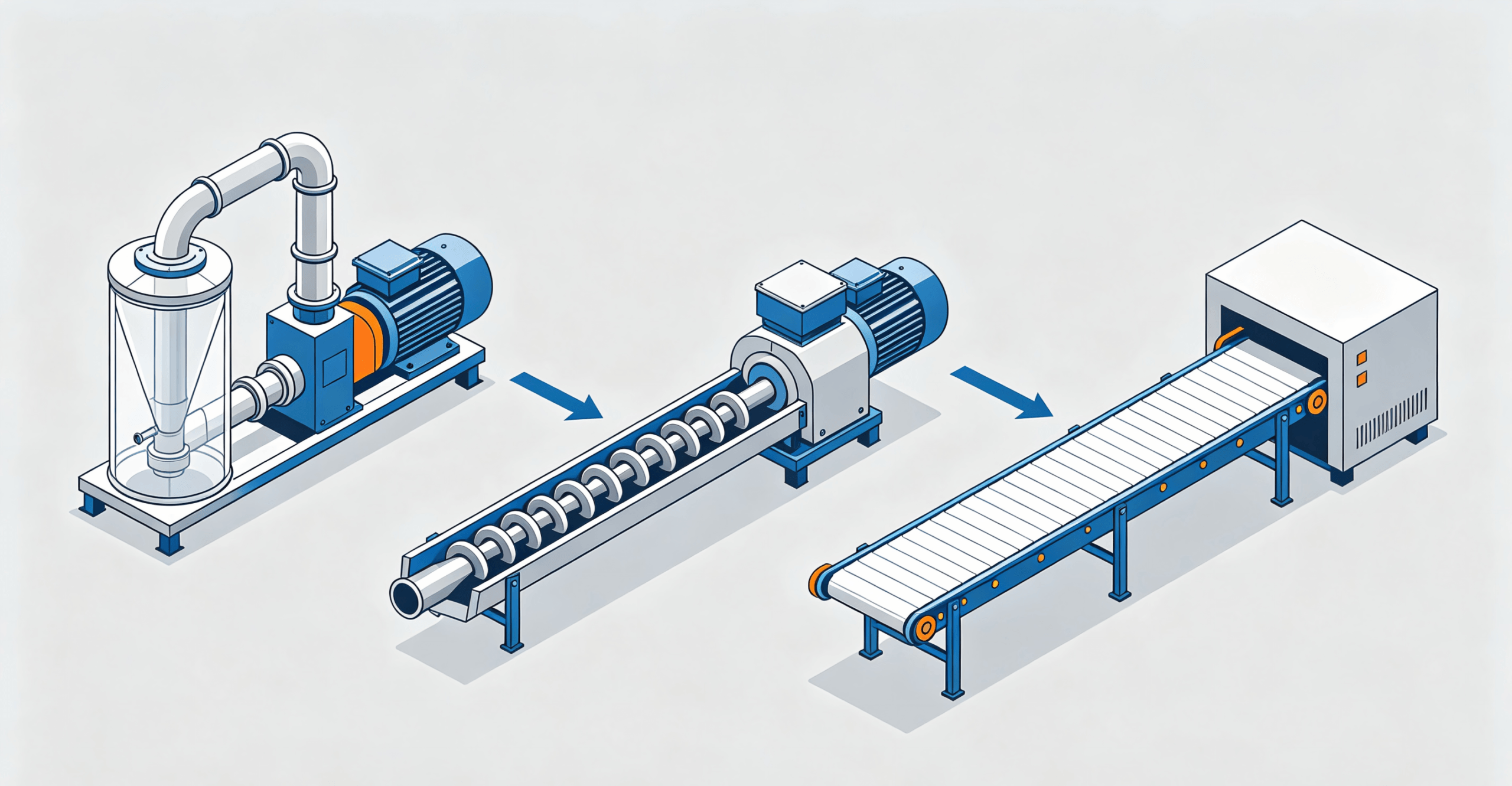
Powder & Granule Transfer
Designed to move powders, granules, particles, bags, and bulk materials between processing stages.
Flexible Configurations
Conveying systems can be adapted to different materials, production capacities, distances, and factory layouts.
Complete Process Integration
Connect grinding, pulverizing, mixing, screening, drying, feeding, filling, and packaging operations.
Customized Solutions
Yinda can support equipment selection, testing, installation, commissioning, training, maintenance, and upgrades.
1. What Is an Industrial Conveyors Machine?
An industrial conveyors machine is designed to transport materials from one processing stage to another with minimal manual intervention. Depending on the material and application, a conveyor can move powders, granules, particles, bags, or other bulk materials horizontally, vertically, or across different sections of a production line.
For powder processing plants, conveying equipment is particularly important because it connects individual stages such as:
- Crushing and grinding
- Pulverizing
- Mixing and blending
- Screening and sieving
- Drying
- Feeding
- Filling and packaging
A properly selected conveying system helps maintain a continuous production flow and reduces unnecessary material handling between machines.
2. Why Powder Handling Requires the Right Conveying System
Powders do not always flow in the same way as larger granules or solid materials. Fine particles can become airborne, form compacted sections, bridge inside hoppers, or behave differently when exposed to vibration and air.
These characteristics can create several production problems, including:
Dust Generation
Fine powders can easily become airborne during transfer. A suitable conveying solution can help control material movement and reduce unnecessary powder loss.
Inconsistent Material Flow
Changes in particle size, bulk density, moisture, and material characteristics can affect how a powder moves.
Material Build-Up
Certain powders can stick to equipment surfaces or accumulate around transfer points, making equipment design and cleaning requirements important.
Product Segregation
Some blended powders can separate during aggressive transportation. A suitable conveying method can help maintain a more consistent product mixture.
3. Types of Industrial Conveyors for Powder Handling
Different materials and production processes require different conveying technologies. Yinda Machinery offers several conveying options that can be adapted to powder and granular processing applications.
Flexible Screw Conveyors
A rotating flexible screw moves powder and granular materials through a conveying tube. The flexible design can make it easier to work around existing plant layouts. Suitable applications include food powders, pharmaceutical powders, chemical materials, spices, granular products, and dry ingredients.

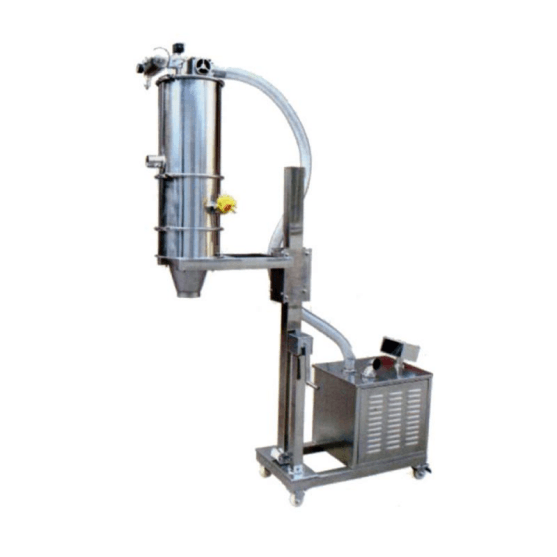
Vacuum Conveyors
Vacuum conveying uses controlled airflow to transport powder through an enclosed conveying line. It can be useful where cleanliness, dust control, and controlled material transfer are important.
Belt Conveyor Systems
Belt conveyors use a continuous belt to move materials between points and are commonly used for larger particles, granules, packaged products, and certain bulk materials.
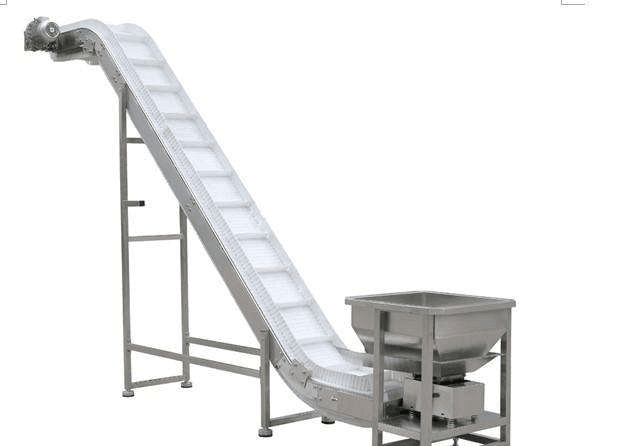
Yinda’s PVC belt conveyor systems can be used across food, pharmaceutical, and chemical applications, depending on the material and production requirements.
4. Choosing the Right Powder Handling Equipment
There is no single conveying machine that is suitable for every powder. The correct solution depends on the material, production requirements, and factory layout.
Before selecting equipment, manufacturers should consider:
Material Characteristics
Particle size, bulk density, moisture content, flowability, temperature, abrasiveness, cohesiveness, and sensitivity to segregation.
Required Production Capacity
The conveyor should handle the required material volume without becoming a bottleneck. Capacity, motor configuration, transfer distance, and operating conditions should be evaluated.
Conveying Distance
The distance between machines can significantly influence conveyor selection, from short transfers to movement across an entire production area.
Factory Layout
Available floor space and equipment positioning should be considered while maintaining convenient access for cleaning and maintenance.
Cleaning & Hygiene
Food and pharmaceutical applications may require appropriate materials, accessible surfaces, and cleaning procedures suitable for the application.
5. How Conveyors Improve Powder Processing
Installing the right conveying system can provide several practical benefits throughout a production line.
Reduced Manual Material Handling
Automated material transfer reduces the need for workers to manually move powders between machines, improving productivity and reducing unnecessary handling.
More Consistent Production Flow
Conveyors maintain a continuous connection between processing stages and reduce interruptions caused by manual transfer.
Better Integration Between Machines
A conveying system can connect grinders, pulverizers, mixers, sieves, dryers, and packaging machines into a more coordinated production process.
Improved Workplace Cleanliness
Enclosed or appropriately designed conveying systems can help reduce unnecessary powder release during material transfer.
Greater Production Efficiency
Smooth material movement can reduce unnecessary waiting time and improve the overall utilization of processing equipment.
6. Integrating Conveyors With Powder Processing Equipment
Conveyors are most effective when considered as part of the complete powder processing line.
Typical Production Flow
Yinda Machinery manufactures equipment covering several of these processing stages, including grinding machines, pulverizers, mixers, vibrating screens, dryers, and conveying systems. This makes it possible to develop a more integrated powder processing solution rather than selecting unrelated machines for each stage.
Depending on the application, a conveying system can be positioned between processing machines to automatically transfer material and maintain a continuous workflow.
7. Industries Using Powder Handling Equipment
Powder conveying and processing systems are used across many industries where dry materials need to be transported, processed, mixed, or packaged.
Food Processing
Common materials include flour, sugar, starch, spices, food additives, and seasonings.
Pharmaceutical Manufacturing
Powder handling equipment can transfer and process pharmaceutical ingredients where controlled and hygienic material handling is essential.
Chemical Industry
Conveying systems can transport chemical powders, additives, pigments, and other dry materials according to their specific properties.
Minerals & Industrial Materials
Powders and granular minerals may require conveying between crushing, grinding, screening, and other processing stages.
Animal Feed & Agriculture
Dry feed ingredients, additives, and agricultural powders can benefit from automated material transfer.
8. Why Choose Yinda Machinery for Powder Handling Solutions?
Yinda Machinery focuses on powder and particle processing equipment for industrial applications. Its product range includes conveying systems as well as machines for grinding, pulverizing, mixing, screening, and other powder-processing operations.
Rather than choosing a conveyor based only on its capacity or price, Yinda can consider the complete application, including:
- Material characteristics
- Required capacity
- Conveying distance
- Production process
- Equipment configuration
- Factory space
- Cleaning requirements
- Automation requirements
Yinda also provides customized powder-processing solutions, including equipment selection, testing, installation, commissioning, training, maintenance, and upgrades.
Frequently Asked Questions
What is the best industrial conveyor for powder?
The best conveyor depends on the powder’s characteristics and production requirements. Flexible screw, vacuum, and belt conveying systems can each be suitable for different materials and applications.
Can conveyors be used with powder processing machines?
Yes. Conveyors can connect grinders, pulverizers, mixers, vibrating screens, dryers, hoppers, and packaging equipment to create a more continuous production process.
What factors should I consider when selecting powder handling equipment?
Consider particle size, bulk density, flowability, moisture, abrasiveness, capacity, conveying distance, factory layout, cleaning requirements, and the type of processing equipment the conveyor will connect.
Does Yinda Machinery provide customized conveying solutions?
Yes. Yinda provides conveying systems in different configurations and can develop powder-processing solutions around specific material and production requirements.
9. Final Thoughts
The right industrial conveyors machine can make a significant difference to the efficiency and reliability of a powder processing operation. A suitable conveying system keeps materials moving between production stages, reduces manual handling, supports cleaner processing, and helps individual machines work together as part of a continuous production line.
However, conveyor selection should always begin with the material and the process. Factors such as powder flowability, particle size, bulk density, required capacity, conveying distance, hygiene requirements, and factory layout all influence the final equipment choice.
With its range of conveying and powder handling equipment, Yinda Machinery can help manufacturers develop practical solutions for transferring and processing powders and granular materials across different industrial applications.
Need an Industrial Conveying Solution?
Whether you need a standalone industrial conveyor or a complete powder handling system, Yinda Machinery can help develop a practical solution around your material and production requirements.