
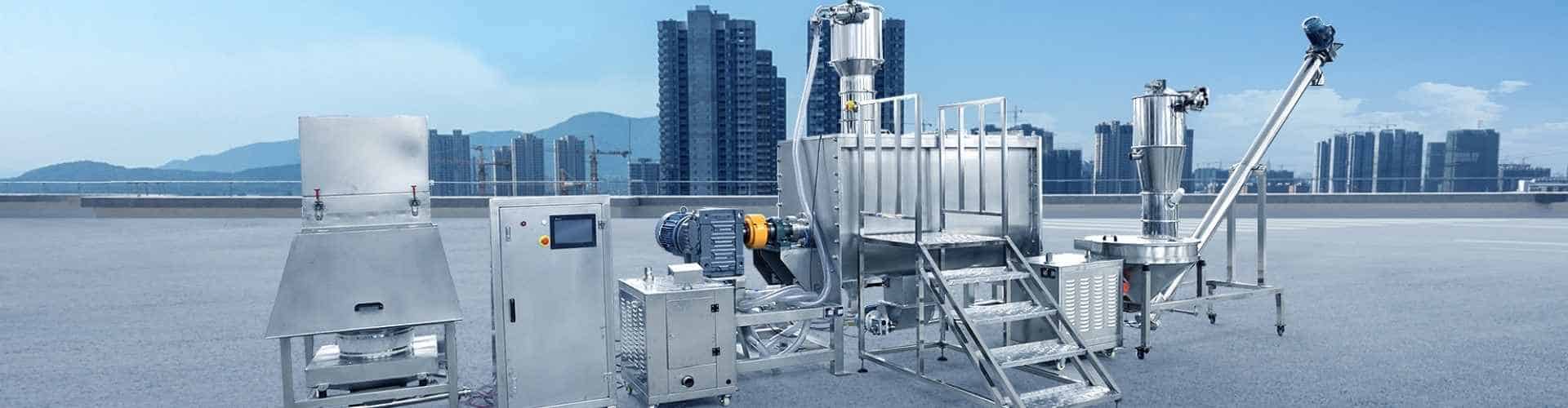
Pharmaceutical Powder Mixer
Cost-effective Pharmaceutical Powder Mixer Factory
As a professional Pharmaceutical Powder Mixer manufacturer and factory in China, we manufacture and supply all types of Pharmaceutical Powder Mixer with qualitative grades of raw materials and is designed in accordance with various quality standards.
Contact us and let us together with you working on pharmaceutical powder mixer task.


Yinda: Your Reliable Pharmaceutical Powder Mixer Supplier In China
1)if you project on powder processing needs to import Pharmaceutical Powder Mixer, then Yinda will be your best choice to manufacture your Pharmaceutical Powder Mixer orders.
2)Yinda is one of the leading Pharmaceutical Powder Mixer suppliers and all of our ribbon blenders can meet ISO/CE/GMP standards, and we will provide a competitive price based on your project.
3)Yinda will give you the best Pharmaceutical Powder Mixer solution based on your project’s requirements with our professional technical team, long experience, continuous development work, daily contact with our customers and the best machine solutions.
- Features
- Package And Shipment
- Ultimate service
- Industrial Applications
Pharmaceutical Powder Mixer adopt SUS 304/316L material with good treatment to achieve the GMP and CGMP standard.
Provide surface treatment control, cleanliness check, verification of alarms, critical alarms and interlocks are avaible for FAT certification.


Hot-selling Equipments For Your Powder Processing


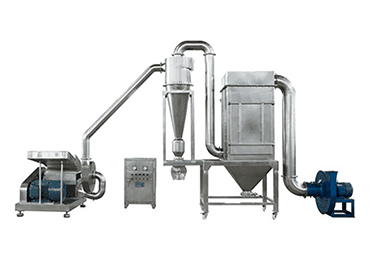


Pharmaceutical Powder Mixer – The Comprehensive FAQ Guide
From knowing and being aware of what pharmaceutical powder mixers are, to understanding what they’re for – these are things that you need to be fully knowledgeable about.
If ever you find yourself having trouble understanding pharmaceutical powder mixers even more, don’t fret because this guide will be here to save you!
For today’s guide, you’ll learn and find out the best ways to find the best pharmaceutical powder mixers in the market. But before we delve into that a little bit deeper, let’s first discuss bits of info about what pharmaceutical powder mixers are.
What is Pharmaceutical Mixing?
Even if you don’t have experience, you will easily be able to make out something when you hear the term pharmaceutical mixing.

Different powders you can use for pharmaceutical mixing
But, for the benefit of everyone, pharmaceutical mixing is the process or the procedure of mixing and blending powders and raw materials through various methods.
It does not limit the type of substances and materials you can mix. As a matter of fact, there are two (2) types of mixing involved in pharmaceutical mixing – solid mixing and liquid mixing. What this means is that you can mix and blend in even the most different and the most unique of materials like liquid and liquid, solid and solid, and even solid and liquid.
What is a Supplement Powder Mixer?
Supplement powder mixers are among the many machines and equipment used by pharmaceutical businesses and companies to blend, mix, and combine substances to produce supplement powder.
You’ll often use supplement powder mixers to produce various products such as dietary supplements, meal supplements, natural food supplements, nutritional products and substances, vitamins and pills, and the like.
What is pharmaceutical mixers?
Tight criteria, including pharmaceutical mixing equipment, apply to precision, homogeneity and sanitation of process equipment. These rules protect the safety, purity and efficiency of completed products. Pharmaceutical matching equipment is used for chemical and medicinal processing and manufacture. These components can be used to handle anything from small ingredients and large blending tanks, tanks and drums. The type of chemical mixer required changes depends on a number of parameters including amount, temperature, uniformity and the intended end product.
What are the role or mixer and blender and why it is use?
Mixing equipment plays a significant function in the production of medicine since it is decisive for the resultant lot quality. This processing stage. Pharmaceuticals must be easily sanitized and flexibly adjustable to produce batches of consistent homogeneity, purity, particle size distribution and stability to ensure that safe and sanitary medication with accurate amounts of active components.
What are the important mixer?
Biological Powders Mixer:
A mixer for all mixers is an biological powder blender. The materials are centric, with particular gravitational segregation, lamination and accumulation during mixing, utilized for the mix of high homogeneity powder and grain-state materials, pharmaceuticals, chemicals, food, light, electronics, mechanically, metallurgic ally, and others.

Ribbon mixer is an efficient and versatile mixer for homogeneous mixing of dry granules and powders. All kinds of materials can be mixed in the ribbon mixer in a gentle manner, especially when it comes to mixing food materials.
Powder Double Cone Blender:

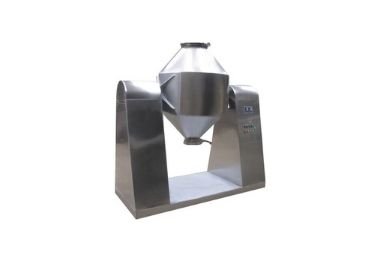
The Powder Double Cone Mixer is compliant with the GMP standard and is totally manufactured from stainless steel and is ideal for the mixing of dry powder particles that are as fluid in drug and other industries.
V mixing blender:

In the pharmaceutical, food, chemical or associated sectors, two or more kinds of dry particles or powdered materials are combined by the v-mixer mineral mixer. The mixture impact will be significantly better if the powder mix is sticky or foul and the stirrer advised. In particular, the raw components required might be mixed.
Why to choose Mixer from Yinda?
The regulatory supervision of pharmaceutical producers is exceedingly strict. In addition, processing equipment must be as versatile as possible to be thoroughly tweaked, tested, confirmed and inspected during the full pharmaceutical process. The revolutionary sanitary design and technologies are provided for our pharmaceutical pulvers to allow for complete discharge as well as easy cleansing.
What are the features of pharmaceutical mixer?
- Homogenous batches of 5 to 100 percent with different filling levels
- Soft yet thorough mixing retains delicate structure of particles.
- Mixtures without dust and with excellent sinking properties and solubility.
- Mixers are designed to conform to the highest hygiene standards
- Innovative processing, unloading and cleaning methods are available.
To assure health and safety of consumers, accurate mixing of pharmaceutical powder is vital.
Where Do You Use a Pharmaceutical Powder Mixer?
Not just because it’s labeled as a pharmaceutical powder mixer means that you’re limited to using it just for pharmaceutical powders, materials, and substances alone.
Pharma powder mixing process
Yes, they’re often designed and engineered to be the machines to use in producing supplements and vitamins, but you can also use them in a ton of other business industries, too.
Some of the most common ones include, but are not limited to the medical industry, the food industry, the animal feeds and pet food industry, the herbal medicine industry, and many more!
How Do You Use Pharmaceutical Powder Mixers?
Trying to use pharmaceutical powder mixers is not that hard and difficult.
It is, in fact, as simple as turning the machine or the equipment on, making sure that it’s well functioning, and deposit all the materials and substances needed.
To help you with it, here is how the usual process of how pharmaceutical powder mixers work:
- The machine or the equipment is prepared for operations. It’s plugged into power and it’s activated.
- When it’s turned on, the materials and substances are loaded to the vessel.
- Some pharmaceutical powder mixers contain an automatic feeding machine. This continuously spews out substances that are to be part of the mixture.
- The mixing process begins and it lasts for about 5 to 30 minutes. The length of the mixing depends on the type and the properties of the materials and the substances you’re dealing with, as well as the results you’re looking for.
- When the process is done, an expert checks and assesses the result. They’ll determine if the product or the substance needs to be sent back to the vessel for further mixing or if it’s already good to be used for the next step.
What is the Application of Mixing in Pharmacy?
There are multiple applications of the mixing process in the pharmaceutical industry. Although some might find it hard or difficult to understand, you will easily be able to figure it out when you read it through.
Here’s a quick and simple list of what the applications of mixing are in the pharmaceutical industry:
- To be able to get true solutions after mixing two (2) or more miscible liquids
- To enhance both the chemical and the physical reaction of mixed components
- To get and obtain uniform composition of the mixed components
- To develop and improve the diffusion, as well as the dissolution of the mixture
What Types of Mixers are Used For Powder Ingredients?
You have a multitude of options you can consider using when it comes to the blending of powder ingredients.
And to help you even further, here are some of the best and the most sought-after mixers and blending machines you can utilize.
Rotary Blenders
Rotary blenders, from the term alone, are the blenders that tumble, rotate, or spin to mix and blend the materials and the substances inside the vessel.
Usually, tumbler blenders operate within the speed parameter of 5 and 25 revolutions per minute (RPM).
Two (2) of the most common types of tumbler blenders are the V shaped powder mixer and the double cone blender.
Ribbon Blenders
Contrary to how tumbler mixers and blenders work, ribbon blenders don’t move the vessel. Instead, it contains corkscrew-like and helical metal or steel blades inside the blender, which rotates continuously, agitating the material and causing the easy and the simple process of convection and diffusion.
Agitators
Agitators are devices or machines that are part of the mixing and blending industry that performs the process by putting it into motion either by stirring or shaking.
They’re engineered to have a shaft, as well as an impeller to enhance the process of mixing and blending.
Think of a washing machine to have a better image and view of what agitators are. Washing machines contain agitators.
Paddle Mixers
Paddle mixers are equipment you can use to mix and blend substances and materials that aren’t designed to undergo continuous blending.
The principle of paddle mixers’ operation divides the materials, then blend them in through the process of mixing, generating a quick, fast, and urgent movement of each particle.
Emulsifiers
Emulsification is the procedure of combining two (2) or more immiscible liquids together to form and achieve a mixture that is semi-stable.
Emulsifier mixers are mixers that utilize centrifugal force and high-speed rotation to be able to get emulsified materials and substances.
These are the different classifications of pharmaceutical mixers and blenders in the industry. And in case you didn’t notice, these machines are identified through what they look like, as well as their physical properties.
What is Dry Mixing in the Pharmaceutical Industry?
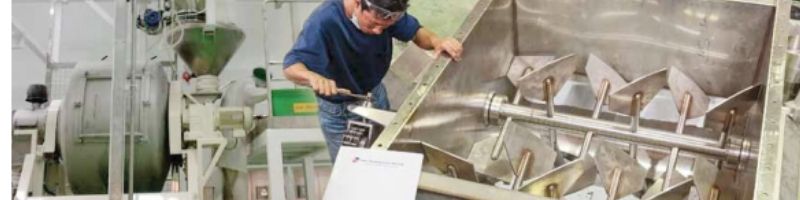
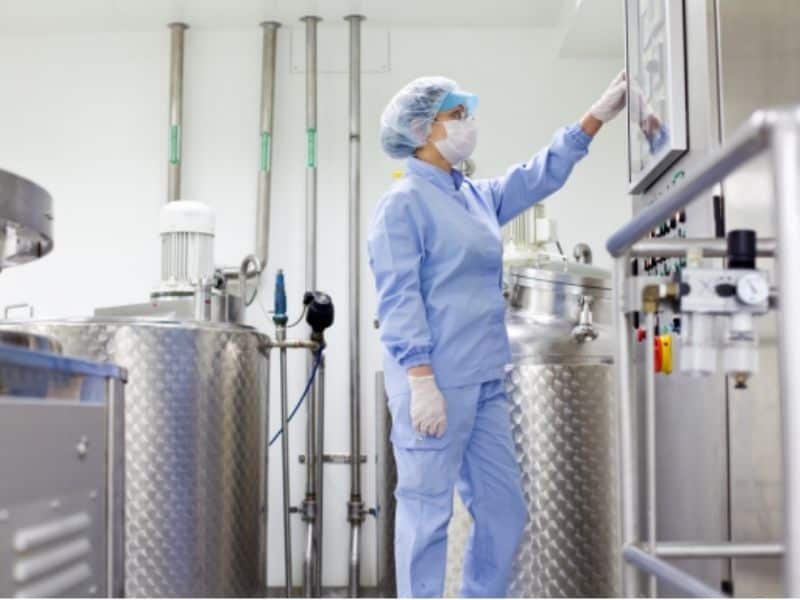
Image of a worker operating a dry powder mixing machine
Dry mixing in the pharmaceutical industry, or even when it comes to other industries, is the procedure of mixing dry ingredients before you use it to be blended, combined, mixed, and even produced.
Some of the most common and the most famous types of dry mixing examples include ad-mixtures, cement, aggregates, dry powders, and many more!
Powder Mixing Machine Price
Knowing how much pharmaceutical powder mixers are would be difficult, especially if you’re going to purchase them from different manufacturers.
In fact, if we gave you the powder mixing machine price now, you might get confused because the prices and the rates vary and depend on the functions and features, the manufacturer, the materials and the raw parts and components used, and so on.
However, the median or the average price of pharmaceutical powder mixers would be within the range of $5,000 to $30,000. Going below that might not be advisable because they would either be easy-to-be-worn out or they could be easily disposable.
Going above that, on the other hand, is easy as determining that they have advancements, features, and functionalities that are special or those that you wouldn’t be able to find in basic or regular powder mixers.
What is a Dry Powder Mixing Machine?
Dry powder mixing machines are powder mixers that you use in mixing dry powders or those that have initially been treated or heated to be dried.
And with dry powders, you’re not free to use whatever type of mixer or blender for it. You need to use dry powder mixers, like pharmaceutical powder mixers to successfully be able to carry out the operations that you require.
Pharmaceutical Powder Mixer Parts and Components
Understanding the inner workings of pharmaceutical powder mixers is important. This is so that when you receive your machines, you’ll have thoughts and ideas on what they are, how you can use them, and the like.
NOTE: The parts and components of pharmaceutical powder mixers depend on the shape and the physicality of it. Since V powder mixers, double cone blenders, and 3D mixers are all considered to be pharmaceutical mixers, we’ll just put emphasis on some parts and components that are common.
Feed Inlet or Feeding Port
The inlet or feed opening is the most common component known in all the different types and kinds of mixers and blenders.
It is the part where the substances and the materials enter the entire mixing system. Without it, the substances and materials wouldn’t be inserted to it.
Mixing Cylinder or Vessel
The mixing cylinder or vessel is the part or the component where the powders and substances are stored during the mixing process.
In a double cone blender, the vessel or the cylinder is divided into two (2) parts. One of the cylinders is shaped like an upward cylinder, and the other is pointed downward.
In a V shaped powder mixer, on the other hand, the two (2) cylinders are joined together, forming a V shape.
Drive Shaft
The drive shaft is the component of the pharmaceutical powder mixer that’s responsible for the transferring and transmitting of power, torque, as well as the rotation that the vessel needs in order for it to move and tumble.
You can think of it as the part that connects the vessel to the entire frame of the equipment or the machine.
Machine Frame
The machine frame is the standard base of the machine. It’s what holds all of the parts and components together.
More often than not, the pharmaceutical powder mixer is a machine standing within a rectangular steel frame, but other manufacturers are trying out a couple of variations for it already.
Control System or Control Client
This is the part or the component that’s responsible for the controls of the mixer. It’s where you set the rotation speed, the time, as well as the tilt or the axis of the vessel (if it has any).
Discharge Port or Outlet Valve
Last but definitely not least is the discharge port or the outlet. It is the part or the component where all of the outputs or the products exit the machine.
More often than not, this particular part of the machine is seen at the lower end of the vessel. However, there are designs where it’s up top instead of being at the bottom part; these machines use pressure to shoot up the discharge or the outputs out.
These are the most common parts and components of pharmaceutical powder mixers. Take note, though, that not all these parts are present and have the same title or label. Manufacturers might have named them differently.
What is a Pharmaceutical Blender?
Pharmaceutical blenders, from the term alone, is a type of machine that’s used in the pharmaceutical industry for the purpose of mixing, blending, and combining materials, particles, and products.

Figure 1 – An image of a 3D mixer that is one of the types of pharma blenders
It’s named as a “pharmaceutical” or a pharma blender because businesses in this industry use it to mix and combine powdered minerals to create medicine, drugs, supplements, and other types of medication.
Pharmaceutical blenders are often flexible as you’ll be able to use them for both wet and dry mixing.
What is Pharmaceutical Mixing?
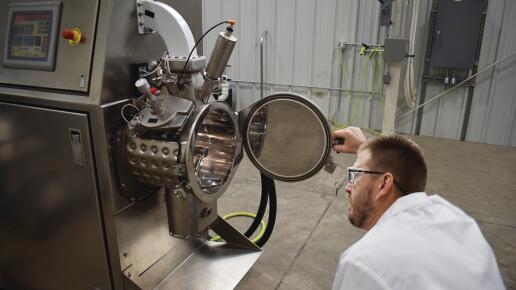
Figure 2 – A professional checking the mixing of a pharmaceutical mixing machine
Just like any other business sector, the process of mixing and blending is important because it combines and joins two (2) or more different materials and particles together.
The primary purpose of pharmaceutical mixing is to incorporate minerals and ingredients from one (1) type of material to another to achieve better results for when they’re used.
How Many Types of Blenders Are There in the Pharmaceutical Industry?
There’s a vast array of blenders that are considered as pharmaceutical mixers and blenders, but, among the most common of all these types include:
Ribbon Blenders
These are the blenders or mixers that are mixed using double helical blades or agitators in order to perform the mixing and blending procedure.
Paddle Blenders
Instead of using agitators, paddle blenders use blade paddles in order to break the materials down, causing them to mix and blend with each other.
Vertical Blenders
Best and considered the most ideal for the mixing of powders, granules, pellets, and other solids, these vertical blenders are blenders that stand upright instead of being laid out flat and horizontally.
Tumble Blenders
Lastly, tumble blenders are the blenders that don’t really have any type of component inside them that help with the mixture. The shells or the vessels of these tumble blenders and mixers “tumble” or “spin,” which suffices the “tumble blender” term that it has.
NOTE: These aren’t the only ways to determine what makes pharmaceutical blenders what they are. You’ll be able to find other terms for it, it’s just that, this is the most common way to identify the different types of pharmaceutical mixers.
Is an Octagonal Blender a Type of Pharma Blender?
An octagonal blender is one of the many different types of blenders in the market.
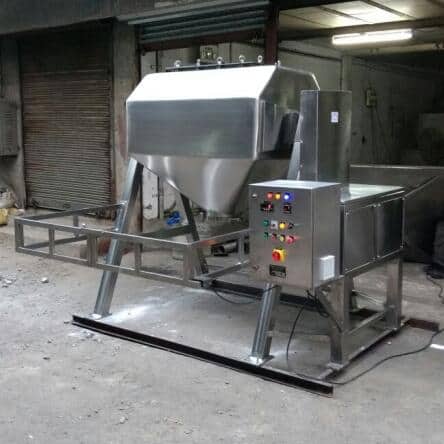
Figure 3 – An image of what an octagonal blender looks like
Yes, you can say that an octagonal blender is a kind or a type of pharmaceutical blender, but, don’t limit your knowledge to that only.
The term “octagonal” blender is due to the fact that the blender is made out of material that has eight (8) total sides. It functions more like V cone mixers and blenders, as well as double cone blenders.
Primarily, the major benefits of using or choosing octagonal blenders for your operations include:
- Less power consumption because the blending happens at low speeds
- Can be used for the mixing and blending of granules and powders
- The machine or equipment can easily be washed and cleaned
- It can easily be used and operated even by an inexperienced worker
Mass Blender vs. Octagonal Blender vs. Double Cone Blender
Many people still get confused when they’re faced with the question of how mass blenders, octagonal blenders, and double cone blenders are different.
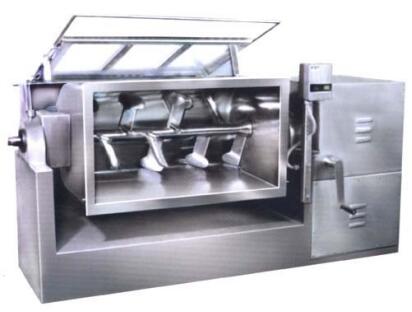
Figure 4 – A mass blender or mixing machine
Before we get to their comparison, let us first discuss too few points about what these blenders are:
A mass blender is a generic term that’s often used and thrown out to a general type of blender. All blenders that are capable of processing mass materials and powders can be categorized into “mass blenders.”
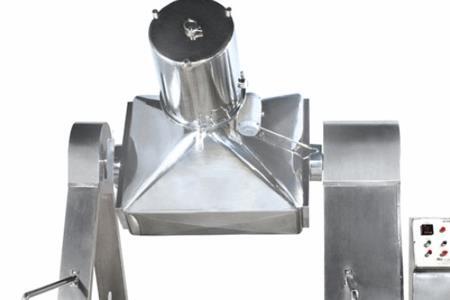
Figure 5 – What an octagonal blender looks like
Octagonal blenders, on the other hand, are one of the types of blenders.
It can be a subcategory of mass blenders because you can use it to process mass or bulk powders and particles. It’s named “octagonal” because it usually has eight (8) different sides.
Lastly, double cone blenders are blenders comprised of two (2) cones that are positioned on top of each other. They’re also mass blenders because you can use them to process bulk powders and particles.
Can They Really Be Compared?
This question is actually something that’s quite mind-boggling because of the fact that these types of blenders couldn’t actually be compared equally. They’re not the same in terms of what they are.
But, to help you with it better, here’s a quick table that’ll tell you about how they are different from one another.
| Double Cone Blender | Octagonal Blender | Mass Blender |
| A type of a blender that is more specific. It’s comprised of two (2) cones where one is at the top while the other is at the bottom. | A type of blender that is octagonal or that has eight (8) sides. | A general term for a blender; this basically means that the machine is capable of working on mass products and powders |
| Can be used not just for dry powders, but also heavy abrasive materials. | Best for gentle and subtle mixing of granules and dry powders. | Ideal for lump, dry, and wet mixing. |
| Big container or shell, usually applicable for mixing multiple materials. | Usually comes as a shallow thin vessel that has eight (8) sides. | Perfect for heavy mixing and shear-to-attrition principle. |
| The cones are well balanced and equal. | Just a thick-shaped octagonal shell that is symmetrical. | Usually shaped like a trough. |
V Blender Pharmaceutical
Yes, you can also consider V blenders as part of the primary blenders and mixers in the pharmaceutical industry.

Figure 6 – An example of a V blender you can use as a pharmaceutical blender
The primary difference that this type of mixer has with all other blender types is that the interior of this blender type doesn’t have any blades or agitators. The primary mixing and blending mechanism of this would be when the particles and the powders hit the walls of the shell.
Pharmaceutical Blender Price
It’ll be difficult to determine the price of how much pharmaceutical blenders are because there are several factors that go with it.
You’ll have to consider the make, the type of material, as well as the features and functionalities of the blender or the mixer.
To give you a rough estimate of how much pharmaceutical blenders may be priced in the market, they can go anywhere from $3,000 up to $20,000.
NOTE: There are pharma blenders that could go higher than $20,000, but, those would already be heavy-duty blenders which would also be purchased not only for blending but for other processes and methods as well.
Which Pharmaceutical Powder Mixer Manufacturer Can You Trust?
If ever you find yourself lost in choosing which pharmaceutical powder mixer supplier is best for your business, don’t ever think twice about contacting us here at Yinda Machinery.
For more than a decade, we have been considered as the best and the most trusted manufacturer of pharmaceutical powder mixers in the whole of China. Unlike our competitors, we never failed to provide all of the requirements our clients asked of us.
Through the use of the experience and the skills we have gathered, plus the fact that we are equipped with the most reliable and the most useful CNC-capable machines in the market, you can truly bank and count on us for all the dry powder mixing equipment you need!
What Other Products Can You Get From Us?
Besides pharmaceutical powder mixers, Yinda Machinery is the company or the business that you can run to if you need ribbon blenders, coarse crushers, trough mixers, vibro sifters – and many more!
If you’re about to do business with us, consider yourself lucky because you will be working with China’s top supplier of pharmaceutical powder mixers!
Get ahold of us today and receive a free quotation of all the machines and the products you need!