
The Complete FAQ Guide
While you may think that laboratory blenders are just like regular and traditional blenders, they’re actually not.
In this guide, you will be learning all things that involve laboratory blenders, as well as what the majority of people look for about it online! Furthermore, we will also help you understand and comprehend what laboratory blenders are more!
So, without further ado, let’s head right to the guide!
Contents
- The Complete FAQ Guide
- What is a Laboratory Blender?
- Laboratory Blender Uses
- Laboratory Mixer
- Types of Laboratory Mixers
- Double Cone Blender vs. V Blender vs. 3D Blender
- Laboratory Blender Applications
- What to Look For in a Laboratory Blender?
- Where to Find High Quality Laboratory Blenders?
- Contact Us Today!
What is a Laboratory Blender?

Figure 1 – Image of a small laboratory blender (V blender)
Laboratory blenders and mixers are instruments and machines that are used in a laboratory setting to aid and assist in the process of homogeneously mixing and combining two (2) or more particles and materials together.
The primary use of these blenders is to create a new product through the mixing and the combining of different ingredients, powders, and materials.
Laboratory Blender Uses

Figure 2 – You can use V laboratory blenders for a lot of different applications
Apart from their main use of blending or mixing particles and powders, you can also utilize laboratory blenders for other purposes, too, such as:
- Homogenizing samples before testing
- Further mixing and blending of highly different materials and powders
- Dissolve solid particles in liquid (low-viscosity rating)
- Help and assist poor-flowing materials to be a part of the main ingredient
- And many more!
As you can see, the use of laboratory blenders encompasses what it’s actually known for – which is just for mixing. It carries a lot more than this, so having one in your business would surely be helpful and beneficial.
Laboratory Mixer
Don’t be confused when you encounter the term laboratory mixer, because it’s the same as laboratory blenders!
Typically, a lot of experts like to tag laboratory mixers to be independent instruments that do not have any agitator or blade inside the machine. It’s accepted, yes, but, that’s not the main gist of it.
As a matter of fact, it’ll really be difficult to determine the distinctions and differences between them because they’re generally the same!
Types of Laboratory Mixers

Figure 3 – A double cone laboratory blender
There are multiple types and kinds of laboratory mixers in the market. But, the ones that are considered most recognized and most sought-after would be:
- 3D Mixers
- V Shaped Blenders
- Double Cone Blenders
All of these have their own benefits and advantages, take note, but they have their limitations as well. So, it’ll be better for you to learn what these are first before deciding on the type of laboratory blender you’ll be purchasing.
Double Cone Blender vs. V Blender vs. 3D Blender
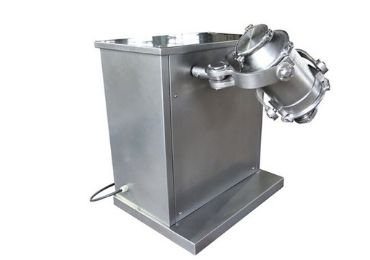
Figure 4 – A 3D blender/mixer you can use inside a laboratory
To help you out with the last question, here are the primary differences between these three (3) types of laboratory blenders:
| Double Cone Blenders | V Blender | 3D Blender |
| Made out of two (2) cone-shaped blenders that sit on top of one another. | Primarily consist of a V-shaped shell or vessel; two (2) shells welded to one another, forming a letter “V.” | Just a singular-shaped shell or vessel that’s aligned and structured vertically. |
| Performs the blending or mixing operation by tumbling the dual-cone shell. | Performs the blending or mixing operation by tumbling the V-shaped shell. | Performs the operation by rotating, spinning, or turning the shell in three-dimensional (3D) ways. |
| Contains subtle blades and agitators inside the machine. | Does not contain any type of agitator inside the machine. | Does not contain any type of agitator inside the machine. |
These aren’t the only differences between these three (3) laboratory blenders; in fact, these are only some of the most basic ones you’ll notice and see.
Laboratory Blender Applications
Its primary purpose, of course, is to blend and mix particles, powders, and materials together to form a new type of material.
However, that’s not the only purpose of these lab blenders; and you’re not limited to just using them inside the laboratory.
In fact, you’ll be able to benefit from using them even if you’re in other business sectors and industries, too, such as:
- Construction or Structural Industry
- Pharmaceutical Industry
- Chemical and Biochemical Sector
- Cosmetic Sector and Industry
- Oil & Gas Industry
- Mining Industry
- And Many More!
Laboratory blenders and mixers encompass the usual and traditional blending procedures that aren’t foreign to us!
So, now that we know all this, what do we look for in a lab blender? What are the things that we should know about before purchasing one in the first place?
What to Look For in a Laboratory Blender?
While it may be difficult to determine what the best one is, there are a couple of points and factors you can consider in order for you to ensure that you’ll be purchasing the lab blender that’ll truly benefit you and your business.
Some of the most important (not all) of these factors are:
Efficiency (Speed)
By far, the most important thing to note in choosing a lab blender is that it needs to be efficient. You need to purchase the blender that’ll be able to cater to your business’s needs and requirements.
Finding a good-quality and efficient lab blender is easy, you simply have to look at the specs of what you’re purchasing!
Safety and Security
The next would be the safety and security that it can guarantee you. And no, we’re not just talking about the safety of the particles inside – it also needs to be secure and safe enough for the operators and workers who’ll be using it!
Maintenance and Cleaning
How easy can the lab blender be cleaned?
Since you’ll have to clean and maintain it every after use, it is imperative to look for a laboratory blender that’s easy-to-clean and maintain.
Out of all the types of lab blenders, the easiest to clean would be the double cone blender as well as the V mixer. Since both of them have large holes, cleaning them wouldn’t necessarily be a problem.
Certifications and Compliance
Last, but most definitely not least would be the standard certifications and compliance of the machine. Have you checked if the machine was compliant to the industry’s standards? Was it certified against the standard that it’s supposed to be certified on?
This last factor is probably the most difficult one to guarantee because it usually has papers to show whether or not the instrument is certified.
You can always ask the lab blender manufacturer to show you proof of certification and compliance. However, if they’re note able to present them to you, think twice before purchasing it.
These four (4) are among the most relevant things that you have to look for in a laboratory blender. And while our list hasn’t proven anything, many corporations and businesses easily agree to what we’re saying because these things can help dictate the success that the instrument would have for your business.
So, where’s the best place to find good-quality laboratory blenders?
Where to Find High Quality Laboratory Blenders?
You will be able to find lots of high-quality laboratory blenders in the market, whatever industry you’re in! There are lab blenders in China, Singapore, Malaysia, Thailand, China, India, and more!
But, if you’re eager to get high-quality laboratory blenders without scraping off your pockets, go with a Chinese laboratory blender manufacturer or supplier and you will never be disappointed.
And out of all the Chinese lab blender suppliers in the market, you can place your complete trust in us here at Yinda Machinery.
Yinda Machinery’s laboratory blenders are all high quality to the extent that you wouldn’t be able to find a blender just like it or close to it. In fact, the common properties of our laboratory blenders include, but are not limited to:
- They’re made and produced from high-grade materials
- They are flexible and versatile
- All our laboratory blenders are carefully engineered and designed
- Your products will all be high-quality and efficient
With Yinda Machinery, you can never go wrong in purchasing laboratory blenders! Whether you need a small laboratory blender or a regular-sized blender, we’ll only be a call or an email away!
Other than out laboratory blenders, you can also trust and bank on us if you need coarse crushers, air classifier mills, trough mixers, pharmaceutical grinders, ribbon blender, and many more!
Contact Us Today!
Wherever you are in the world, as long as you need a powder processing machine, Yinda Machinery will surely be able to accommodate. Work with us and we will surely be able to get you the laboratory blender that you need!
To help you with it further, we can send to you a free estimate or a free quote of your orders! What are you waiting for? Give us a go and we’ll show you what it means to get world-class quality laboratory blenders!