

Cost-effective Industrial Mixing Machine Factory
As a professional Industrial Mixing Machine manufacturer and factory in China, we produce and supply all types of Industrial Mixing Machine with quality grades of raw materials and designed according to various quality standards.
Please contact us and let us know how we can assist you with your Industrial Mixing Machine, we are always here to help you.


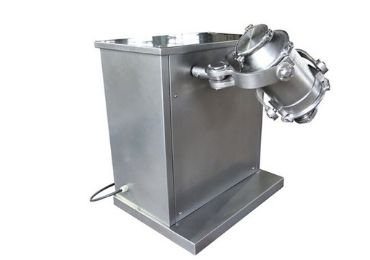
Yinda: Your Reliable Industrial Mixing Machine Supplier In China
1)if your project on powder processing needs to import a Industrial Mixing Machine, then Yinda will be your best choice to manufacture your Industrial Mixing Machine .
2)Yinda is one of the leading Industrial Mixing Machine suppliers and all of our Industrial Mixing Machine can meet ISO/CE/GMP standards, and we will provide a competitive price based on your project.
3)Yinda will give you the best Industrial Mixing Machine solution based on your project’s requirements with our professional technical team, and know more about powder and particle processing that we enjoy sharing with customers.
4) Drop us an email and send your detailed requirement now!
- Features
- Package And Shipment
- Ultimate service
- Industrial Applications
Industrial Mixing Machine is a mechanical device that uses mechanical force and gravity to mix two or more materials evenly.
It is widely used for mixing various powders and granules in chemical, pesticide, dye, pharmaceutical, food, feed, petroleum, metallurgical mining and other industries.
The common industrial mixers which yinda can provide include , V-shaped mixers, double cone blender, ribbon blender and three-dimensional mixers to help you get the best mixing efforts.


Hot-selling Equipments For Your Powder Processing
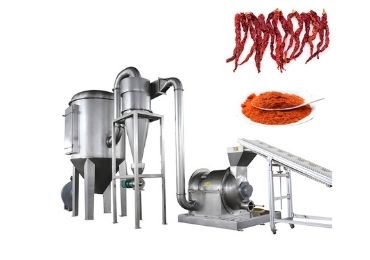


Industrial Mixing Machine
Yinda industrial mixing machine is a mechanical device that uses mechanical force and gravity to mix two or more materials evenly. During the mixing process, it is also possible to increase the contact surface area of the material to promote chemical reactions and also to accelerate physical changes.
It is widely used in chemical, pesticide, dye, medicine, food, feed, petroleum, metallurgical mining, and other industries for the mixing of various powder and particles.
Common Industrial mixing machines include ribbon mixer, gravityless mixer, V-shaped mixer, Double Cone Blender, three-dimensional mixer.
- Why choose Yinda Machinery?
- Need help in selecting an efficient industrial mixing machine?
- What Is Industrial Mixing Machine?
- What Are The Common Types Of Industrial Mixing Machines?
- What Are The Main Tank Options For Industrial Mixing Machines?
- What Are The Components Of Industrial Mixing Machines?
- How Does Industrial Mixing Machine Work?
- How Do In-line Mixers Work?
- What Are The Important Features Of An Industrial Mixing Machine?
- What Is Batch Mixing?
- What Are The Common Mixing Processes?
- What Mixing Methods Do Industrial Mixing Machines Use?
- What Horsepower Do I Need In My Industrial Mixing Machine?
- What Is the Difference Between An Industrial Mixing Machine And An Industrial Blending Machine?
- What Is A Static Mixer?
- What Is The Importance Of Baffles In An Industrial Mixing Machine?
- What Are The Different Types Of Impellers In Industrial Mixing Machines?
- What Are The Materials Used To Make The Industrial Mixing Machines?
- What Finishing Are Available For Industrial Mixing Machine?
- What Is The Importance Of Adding A VFD In An Industrial Mixing Machine?
- Which Safety And Quality Standards Should Industrial Mixing Machines Meet?
- What Is Emulsion Separation?
- What Is Vacuum Mixing, And When Does It Come In Handy?
- What Are The Common Applications Of Industrial Mixing Machines?
- What Are The Benefits Of Using An Industrial Mixing Machine?
- Which Post Mixing Processes Can Be Integrated Into An Industrial Mixing Machine?
- What Important Considerations Should I Make Before Buying An Industrial Mixing Machine?
- What Is The Degree Of Mixing And How Is It Measured?
- What Is A Mixing Index?
- Which Factors Determine Cost Of Industrial Mixing Machines?
- How Long Is The Warranty Of An Industrial Mixing Machine?
- What Are The Common Maintenance Practices For Industrial Mixing Machines?
- How Can I Troubleshoot My Industrial Mixing Machine?
- How Regularly Should I Service My Industrial Mixing Machine?
Why choose Yinda Machinery?
Yinda Machinery is the lead powder processing equipment manufacturer in China. By focus on overall powder solution over many years, we have developed rich and in-depth experience, and know a lot of technology and can give you more support on technical issues.
Long-term experience, continual development work, daily contact with our customers, and offer the best machine solution that is customized to your application for overall powder preparation.
Need help in selecting an efficient industrial mixing machine?
Please do not hesitate to contact us at dennie@yindamachinery.com or give us a call at 86-510-86381116. Our experienced team will help you to find the best powder processing solution to your need, taking all details and requirements into consideration.
Industrial Mixing Machine: The Ultimate FAQ Guide
I know you’re probably looking for the best industrial mixing machine.
Or, you would like to learn more about industrial mixing machine.
A reason this guide will answer all questions you have been asking about industrial mixing equipment.
Keep reading.
What Is Industrial Mixing Machine?
Industrial mixers are equipment that performs blending, emulsifying, homogenizing, or combines materials to create a homogenous product.
Mixers fully mix almost any solid, liquid, or gas required to produce an end product.
Industrial mixers can be used to mix: adhesives, paint, construction material, and many other materials. The machines can also be used in the food industry and the pharmaceutical industries.
What Are The Common Types Of Industrial Mixing Machines?

V mixer machine
There are different types of industrial mixers which include;
- Paddle Mixer– It is a kind of mixer used to mix, blend, and condition dry friable substances, sludges, and slurries. It is made up of big blades that spin around a horizontal axis.
- Static Mixers– This mixer has blades that are flattened, thin, and ribbon-shaped. As they have no movable parts, they are referred to as static mixers.
Static mixers have intentionally placed barriers that vigorously combine the contents. Because of the basic configuration of the blades, they are hygienic and easy to wash and maintain.
- High Shear Mixer– They operate at a higher speed than static mixers. They are made to minimize the size of the particles, disintegrate, disperse, emulsify, and homogenize a wide range of solid and liquid substances.
Their usage is ideally suited for sectors such as food preparation, paper & pulp, and pharmaceuticals.
- Drum Mixer– They are designed to mix materials of little to average viscosity, such as cement or adhesives. Drum mixers are made of gallon barrels that spin to mix ingredients with a wide range of granular sizes.
They mix substances such as slurries. Majorly, they are used in construction, among other sectors.
- Food Mixer– When combined with certain ingredients, these mixers provide cause a definite impact or look. They are frequently used for mixing, whisking, kneading, combining, or folding food substances.
Due to rigorous food and health laws, these mixers should comply with the required sanitary standards.
- Blender– Although blenders and mixers can be used interchangeably, blenders are high-speed mixers with sharp blades. These are ideal for breaking down substances into little bits.
- Planetary Mixer– They are machines with agitators that are used for cooking or mixing chemicals.
It gets its name from the orbital form of mixing that occurs around the outside borders of mixing bowls on an elliptical or spherical axis.
- Homogenizer– They are used in fully mixing and breaking down substances. Some industrial homogenizers are utilized for any sort of liquid or soluble that demands high-quality mixing outputs, such as oil, cosmetics, medicines, and food.
Some food products that use the homogenizer mixer are milk and cream.
- Emulsifier– These machines resemble homogenizers. It is a high-speed mixer that employs a porous screen to combine ingredients that would normally be tough to mix.
- Agitator– They are employed in the mixing of low viscosity material such as liquids. The agitating process is generally used as a processing assist, serving as a subsequent operation in the entire operation
- Batch Mixer– Batch mixers are primarily used to combine ingredients having different mixing times. The mixers mix one load of product before being replaced with the next ingredient or batch.
- Ribbon Mixer– They are fixed because they include no movable components. Rather, the flat, thin blades act as fixed obstacles that the items being mixed must navigate past. This procedure enables the components to blend and combine.
- Industrial Mixer– Industrial mixers are made up of a big vat or tank that holds the ingredients and blades that forcefully stir the mixture. Because industrial mixers can handle substances in huge volumes, they are usually used in industries involving large-scale commercial manufacturing.
- In-line Mixer– These types of mixers are installed within pipes and in the path of substance flow. Instead of being combined in the tank, the substances are mixed immediately within the pipe.
There are two types of in-line mixers; static in-line mixers and dynamic in-line mixers. Dynamic in-line mixers utilize both high velocities rotating components and pump pressure, whereas static in-line mixers use immobile contoured mixing elements.
- Stand Mixer– Stand mixers are placed at the top of their motor, allowing them to stand erect. Stand mixers are simple to customize. Consequently, they range from one-gallon countertop models to commercial models with capacities of up to twenty-five gallons.
- Portable Mixer– Portable mixers can be easily moved from one location to another place for mixing or blending purpose. As such, they are majorly used for small-scale off-site applications.
- Tank Mixer– Tank mixers are mixing equipment that combines ingredients in tanks. They are typically made of stainless steel material.
What Are The Main Tank Options For Industrial Mixing Machines?
There are two main tank options for industrial mixing machines that you can choose from; round tanks and square tanks.
They each have their advantages and disadvantages.
For instance, the square edges can function as baffles, enabling the agitator’s force to be infused more efficiently into the liquid.
A square or rectangle tank’s manufacturing costs may be higher than those of a round tank
Round tanks can be stronger.
However, if the mixer is in the middle and vertically placed, baffles are usually required.
What Are The Components Of Industrial Mixing Machines?

Components of V mixing machine
The components of various industrial mixing machines differ depending on the machine’s flexibility, efficiency, capacity, and output level.
However, the components listed below constitute most industrial mixing machines:
- Mixing container or mixing barrel, that is usually cone-shaped, for easier emptying and washing.
- Shelf
- Driving mechanism (motor)
- Servo mechanism for driving the shaft
- Y-type universal joint, particularly for multidirectional movements mixer that enables for multidirectional motion
- System for control
- Control panel with a touch screen
- Braking system
- Latex for silicone sealing
- I-bar and V-shell mixers with variable speed control
- Holding arm
- Ribbon mixer agitator
- Openings for material charging and discharge
- Safety guard
How Does Industrial Mixing Machine Work?
Generally, the working principle of industrial mixing machines will vary depending on whether the mixer has static or moving components.
We will focus on the industrial mixing machines with moving parts.
Usually, industrial mixing machines with movable parts comprise blades or paddles driven by motors.
The rotation or movement of these blades results in the mixing of the ingredients.
Notably, a vigorous movement of the blades or paddles results in increased homogeneity, decreased mixing time, and increased efficiency.
On the other hand, static mixers are mostly used in mixing gases or liquids.
Static mixers are tubular and mix gaseous or liquid compounds delivered into them via pumps or blowers.
These elements can either be inclined bars, corrugated metal, or helical metal.
Static mixers have various elements with a 90-degree orientation to mix the compounds in both horizontal and vertical directions.
How Do In-line Mixers Work?
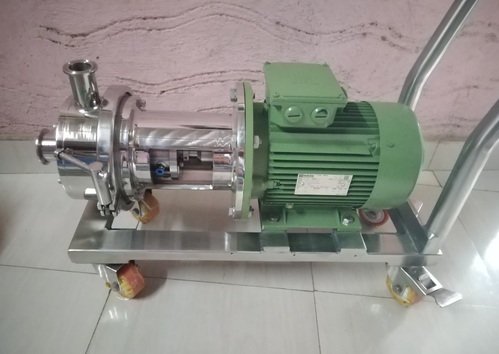
High shear inline mixer
In-line mixers are made up of a fixed stator and a high-speed inner rotor. The rotor-stator mechanism is housed in a case with an inlet and an outlet at either end.
Also, the rotor is powered by a seal.
The name in-line is coined from the way the components are delivered into the mixer. Typically, when a sample is pulled into one of the mixing heads as the blades revolve, it is ejected at high velocity via a hole in the stator.
In-line mixers input and output product in a continuous stream, permitting it to be properly hydrated, emulsified, or homogenized in one passage.
What Are The Important Features Of An Industrial Mixing Machine?
Some desirable features an industrial mixing machine ought to have include;
- Capability to Tilt to a Specific Angle– the industrial mixing machine should be able to tilt to a certain angle (20 or 30 degree) for it to carry out the mixing adequately.
- Great Efficiency and Mixing Coefficient– the machine should reach high efficiency in a short period.
- Capacity – Industrial mixing machines have a range of capacities. Both the output and input capacity of the industrial mixing machine should meet your production need.
- A fully automated mixing machine. This increases the efficiency and accuracy of mixing as compared to manual or semi-automated mixing.
- Efficient agitators/paddles – This helps in thoroughly mixing the various ingredients. You can choose an agitator of your liking.
- Customization – An industrial mixing machine that is customizable will be tailor-made to meet your needs.
- Safety– Most of our industrial mixing machines are equipped with automatic switches that powerdown the machine in emergencies.
What Is Batch Mixing?
Batch mixing is taking turns when carrying out the mixing. With each turn, you feed a constant amount of ingredients to be mixed.
What Are The Common Mixing Processes?
Mixing processes can either involve:
- Tumbler blender– this is used to mix dry products
- Ribbon blender– used for bulk solids and powder blending
- Paddle mixer– this is used for solids, wet-dry mixing, and viscous or slurry liquid mixing
- Agitator– it is used for liquid-liquid mixing or liquid-gas mixing
- Emulsifiers– it is used for mixing immiscible liquids.
What Mixing Methods Do Industrial Mixing Machines Use?

3D mixing machine
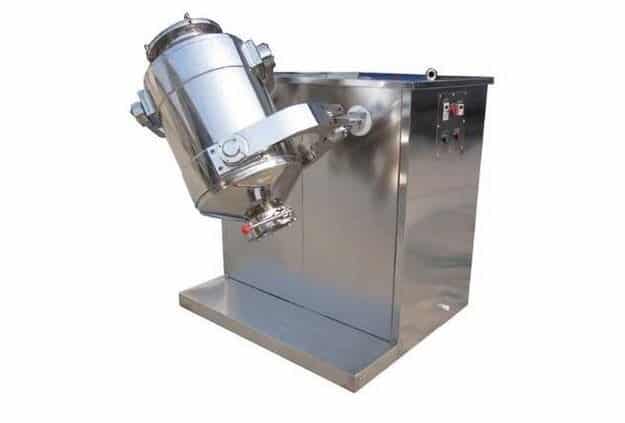
3D mixing machine
Miscible Liquids Blending
The liquids completely mix and form relatively stable mixtures. Because the two liquids are molecularly compatible, mixing miscible liquids does not need high shear or other forceful mixing procedures.
Soluble Solid-liquid Dissolution
Because of the different material forms, soluble solid-liquid dissolution frequently takes longer than mixing two miscible liquids. Whenever you want to incorporate a powdered material into a liquid, flow-driven mixing is probably the easiest method.
Chemical Reaction Facilitation
This is easier to achieve in small batches rather than larger ones. Flow is still the main means for these reactions. However, you should use minimal agitation to guarantee appropriate mixing and reactions throughout the batch.
A chemical reaction may occur if the mixture is heated or pressurized.
Depending on the finished product’s requirements, any other mixing methods can be combined with a chemical reaction.
Suspension Of Insoluble Material In Liquids
Even though correct mixing procedures are utilized, suspended components are more prone to settle. The suspension’s stability is determined by the materials utilized as well as how they are combined.
The application will determine the precise mixing conditions. However, the suspension of insoluble components will need mild to vigorous agitation with shear.
Dispersing Solids Into Liquids
Dispersion occurs when there is considerable shear near the mixer’s blades. When the agitator speed decelerates in many solid-liquid dispersion processes, the solids will settle at the base or agglomerate.
Emulsification Of Immiscible Liquid
For emulsification, vigorous agitation methods such as utilizing a high-shear impeller are still required.
What Horsepower Do I Need In My Industrial Mixing Machine?
The horsepower needed is determined by the impeller type, impeller diameter, specific gravity of the material being mixed, and shaft’s revolution per minute.
What Is the Difference Between An Industrial Mixing Machine And An Industrial Blending Machine?
The primary distinction between the two is that when blending, the materials involved are irreversibly mixed to form an altogether new product with its characteristics.
Product mixing does not result in the formation of a new chemical. Rather, the mixed components can separate back into their original forms over time.
What Is A Static Mixer?
Static mixers have blades that are flattened, thin, and ribbon-shaped. As they have no movable parts, they are referred to as static mixers
Static mixers work on two principles: lamina flow and turbulent flow.
The turbulent flow causes the mixer to regulate the flow of chemicals. This is accomplished by rotating internal parts in a predefined degree and number of times to obtain the necessary homogenization of the generated mixture.
The laminar flow principle repeats the substance that has to be mixed. Then, using static mixing components, split into numerous thin layers.
What Is The Importance Of Baffles In An Industrial Mixing Machine?
It is important when your mixer is mounted in a vertical position and at the middle, and you’re blending a low viscosity liquid.
You’ll almost certainly require baffles to produce an ideal axial fluid flow.
Baffles may not be necessary when mixing a high or medium viscosity fluid since there may be adequate viscosity for the mixer to force all of its torque on the fluid.
What Are The Different Types Of Impellers In Industrial Mixing Machines?
There are various types of impellers. Every impeller type interacts with the energy provided to it by the motor differently.

Impellers in high shear mixer
The common impellers include;
- Hydrofoil– It transforms the majority of the energy into product motion and relatively little into shear.
- Three-blade propeller– Similar to hydrofoil, it transforms the majority of the energy to product motion. However, it also transforms a greater proportion to shear.
- Axial flow turbine– It allocates an even larger proportion of energy to shear.
What Are The Materials Used To Make The Industrial Mixing Machines?
Most industrial mixing machines are made from stainless steel to maintain high sanitary standards and increase corrosion resistance.
Other materials that can also be used include aluminum, cast iron, steel, titanium, and thermoplastic.
What Finishing Are Available For Industrial Mixing Machine?
The common finishing for industrial mixing machine include:
Standard Mill Finishing
It involves using a sheet steel that undergoes annealing, pickling, and cold rolling, with a final pass utilizing refined rollers. The material is grey in hue, with grainy seams and a brilliant finish.
Mechanically Polished Finishing
Mechanical polishing, accompanied by buffing, produces a sequence of successively fine surface textures.
These finishings can either be made from abbrasives (buffing or lushing) or from satins. They are recommended where hygienic appliance performance is needed.
Electropolish
An electrochemical technique produces a gleaming, highly reflective surface. They have a surface roughness that is typically less than 20 Ra (micro-inches).
Electropolished materials are commonly used in bio-pharmaceutical mixing containers and related components.
What Is The Importance Of Adding A VFD In An Industrial Mixing Machine?
The use of a Variable Frequency Drive (VFD) on a mixer provides a great deal of functional adaptability and advantages.
It can begin the motor, check the amperage to the mixer, and change the mixer velocity as the tank fills or drains.
Which Safety And Quality Standards Should Industrial Mixing Machines Meet?
Some safety and quality standards industrial mixing machines should comply with include:
- CE standards for electrical components of the machine
- FDA requirements for machinery used in the food and beverages sector.
- ANSI standards for machinery safety.
- OSHA standards.
What Is Emulsion Separation?
Two or more immiscible liquids, when mixed, result into an emulsion. Thus, emulsion separation is the isolation of these liquids from the mixture.
What Is Vacuum Mixing, And When Does It Come In Handy?

Vacuum mixer machine
A vacuum is defined as a space with a pressure lesser than air pressure. Generally, a vacuum has fewer gas molecules per unit volume than the surrounding atmosphere.
Thus, vacuum mixing can be deductively defined as mixing under pressure less than the air pressure.
Vacuum mixing comes in handy when the products you are mixing are moisture sensitive. Vacuum mixing will minimize the introduction of water to the batch.
Also, vacuum mixing changes the characteristics of the finished products. Some of the characteristics are a more see-through appearance and better dispersion of the solids.
What Are The Common Applications Of Industrial Mixing Machines?
Industrial mixing machines are commonly applied to these industrial sectors;
- Food industries
- Glass, metals, cement, and ceramic
- Adhesive and sealants
- Electronic- utilized to improve batching accuracy and efficiency of gels, slurry, pastes, powders, and solutions, amongst other things
- Pharmaceutical and medical industries
- Agriculture
- Brewing and distilling industry
- Pulp and paper industry
- Wastewater
- Oil and gas
- Ink, coatings, and paintings
- Cosmetics
- Ethanol and bio-diesel.
What Are The Benefits Of Using An Industrial Mixing Machine?
The benefits of using industrial machines are that they are consistent, efficient, easy to use, and they are durable.
Mixing with other methods is possible but not nearly as fast as the industrial mixers or as consistent.
Which Post Mixing Processes Can Be Integrated Into An Industrial Mixing Machine?
Post mixing processes that can be combined with an industrial mixing machine include; an extruder feed, an agglomerator, coater, dryer, milling capabilities, or a granulator.
What Important Considerations Should I Make Before Buying An Industrial Mixing Machine?
You can make the below considerations before purchasing an industrial mixing machine;
- The characteristic of the material to be mixed. Different materials have different consistency; therefore, they require different types of mixers. For example, low viscose products will be easier to mix, and therefore, you can use a tumble blender or ribbon blender.
- Products you want to blend, whether it’s only one product type or they are various products.
- Size of the batch being produced. The machine capacity ought to hold the batch you intend to mix .
- Mixing time for the products. The mixing time of an industrial mixing machine should be convenient for your mixing needs.
- Simplicity in operating and maintaining the machine. This will go along way in making the mixing process efficient, contamination-free and less cumbersome.
- Mixing process. Be sure to go for an industrial mixing machine that has the appropriate mixing process for your products.
What Is The Degree Of Mixing And How Is It Measured?
The degree of mixing measures the relative level of mixing of molecular age in a continuous flow system.
It is determined by adding all particle distances for each particle, and then all the sums of each particle will be finally summed together. Later, this will be scaled based on the number of particles.
What Is A Mixing Index?
A mixing index measures the degree to which fluid flow encourages the dispersion of dissolved solutes or suspended solids in the fluid, resulting in homogeneity.
Which Factors Determine Cost Of Industrial Mixing Machines?
Factors that determine the cost of an industrial mixing machine include:
- The size and the capacity of the industrial mixing machine
- Finishing type of the mixing equipment
- The type of the industrial mixing machine.
- Efficiency and mixing coefficient of the machine
- Additional features, such as the safety features
How Long Is The Warranty Of An Industrial Mixing Machine?
Typically, the warranty period of an industrial mixing machine lasts about one year to three years.
However, this may vary depending on where you purchase the machine.
What Are The Common Maintenance Practices For Industrial Mixing Machines?
- Observe the manufacturer’s recommendations for how much material your mixer can manage.
- Never leave your mixing machine unsupervised.
- Mixers must always be switched off and disconnected before you start to clean, and they must never be submerged in water.
- After each usage, wipe your machine with a wet cloth and a sanitizer.
- Do not change gears on the fly unless your mixer allows it.
How Can I Troubleshoot My Industrial Mixing Machine?
| Problem | Possible Cause | Solution |
| Output material too dry/ is not consistent | Insufficient amount of wetting agent
Dry feed material Inconsistent feed rate Inadequate retention time in the mixer Clogged spray openings Feed size too large |
Increasing amount of wetting agent
Checking moisture content of the feed material Consistent feeding Adjusting the retention time Cleaning the spray openings Regulate the feed size |
| Excessive noise during mixing | Foreign object or a loose component in the mixer
Geer teeth broken or chipped |
Ensure there is no foreign or loose object
Replacing damaged gears |
| Paddle driveshaft not rotating | Broken coupling | Install new coupling |
| Incorrect consistency of material at discharge | ||
| Output material too wet | An excessive amount of wetting agent
Too much retention in the mixer Spray openings being worn out |
Regulating the wetting agent
Regulating the retention time Replacing worn-out or leaking parts |
How Regularly Should I Service My Industrial Mixing Machine?
You should change the machine’s oil at a regular interval of between six to twelve months, depending on the usage.
Advisably, a professional should also do this.
Service technicians should perform annual -biannual checks to prevent the machine from breaking down.
At Yinda, we give you high performance and reliable industrial mixing machines for specific needs of your applications.
Contact us today for all your industrial mixing machine needs.