
Mace Grinding Machine: Low Temperature Grinding Line for Mace Powder Processing
A practical B2B grinding solution for aromatic mace powder production, designed to improve temperature control, protect natural aroma and color, reduce sticking risk, and support stable 40–60 mesh spice powder processing.
For mace grinding, especially when the target powder fineness is around 40–60 mesh, Yinda usually recommends a low temperature grinding production line including the YDGS series hammer mill and YDLF series air cooled chiller. Mace is an aromatic spice with natural oil content, strong fragrance, and relatively sensitive material characteristics. During grinding, excessive temperature may cause sticking, aroma loss, darker powder color, and unstable flowability. That is why the key point in mace powder processing is not only fineness, but also temperature control during the grinding process.
1. Why Does Mace Need Low Temperature Grinding?
Mace is different from dry grains or hard minerals. It is a spice material with natural aroma, oil, and color. When ground at high speed, friction and impact inside the grinding chamber generate heat. Without cooling support, several production problems may appear.
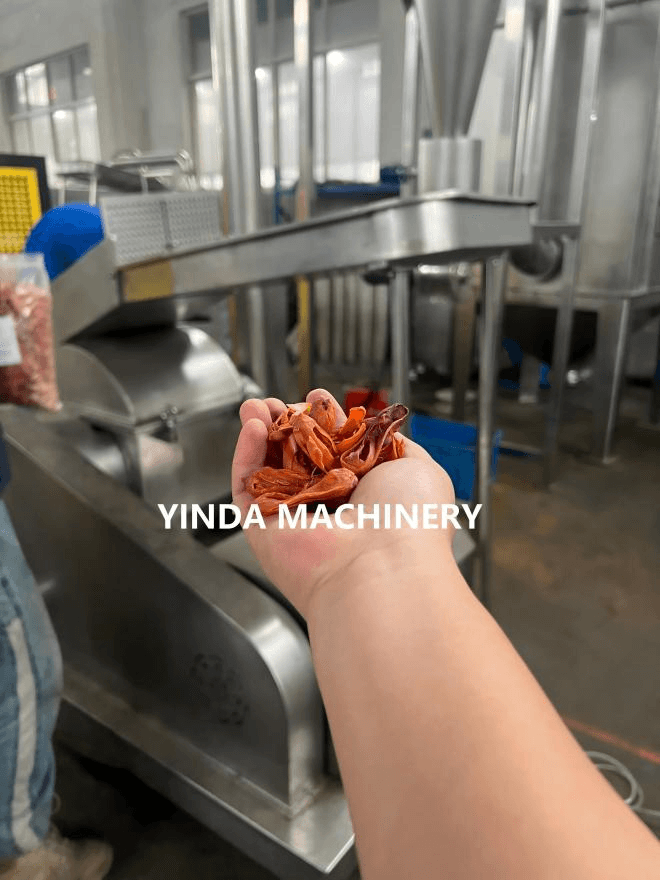
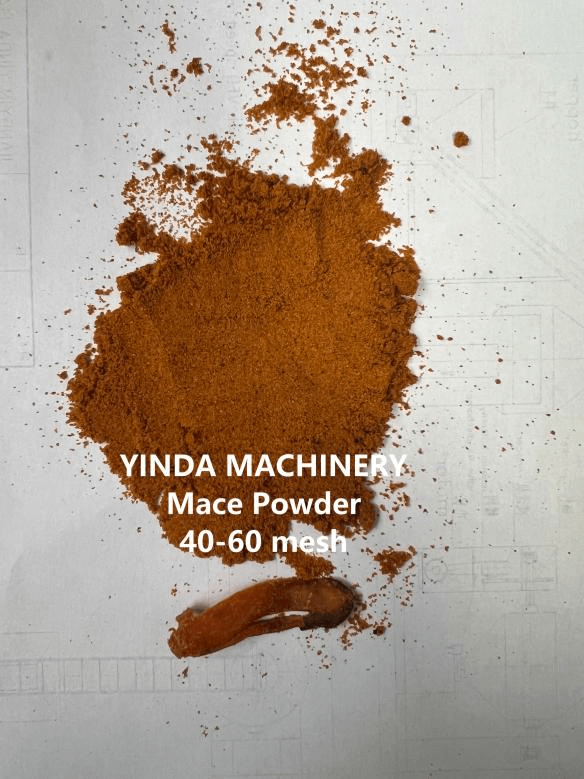
Problems Caused by Excessive Grinding Heat
- Aroma may be reduced because volatile oil is sensitive to heat
- The powder may become sticky if temperature rises too much
- The final powder color may become darker
- The screen may become easier to block during continuous operation
- The powder flowability may become unstable
2. Recommended Mace Grinding Machine: YDGS Series Hammer Mill
The YDGS series hammer mill is suitable for grinding spices, food materials, dried herbs, and other materials requiring medium-fine powder. For mace powder production, it can help reach common spice powder fineness such as 40–60 mesh, depending on raw material condition, feeding speed, screen size, and cooling effect.
Working Principle
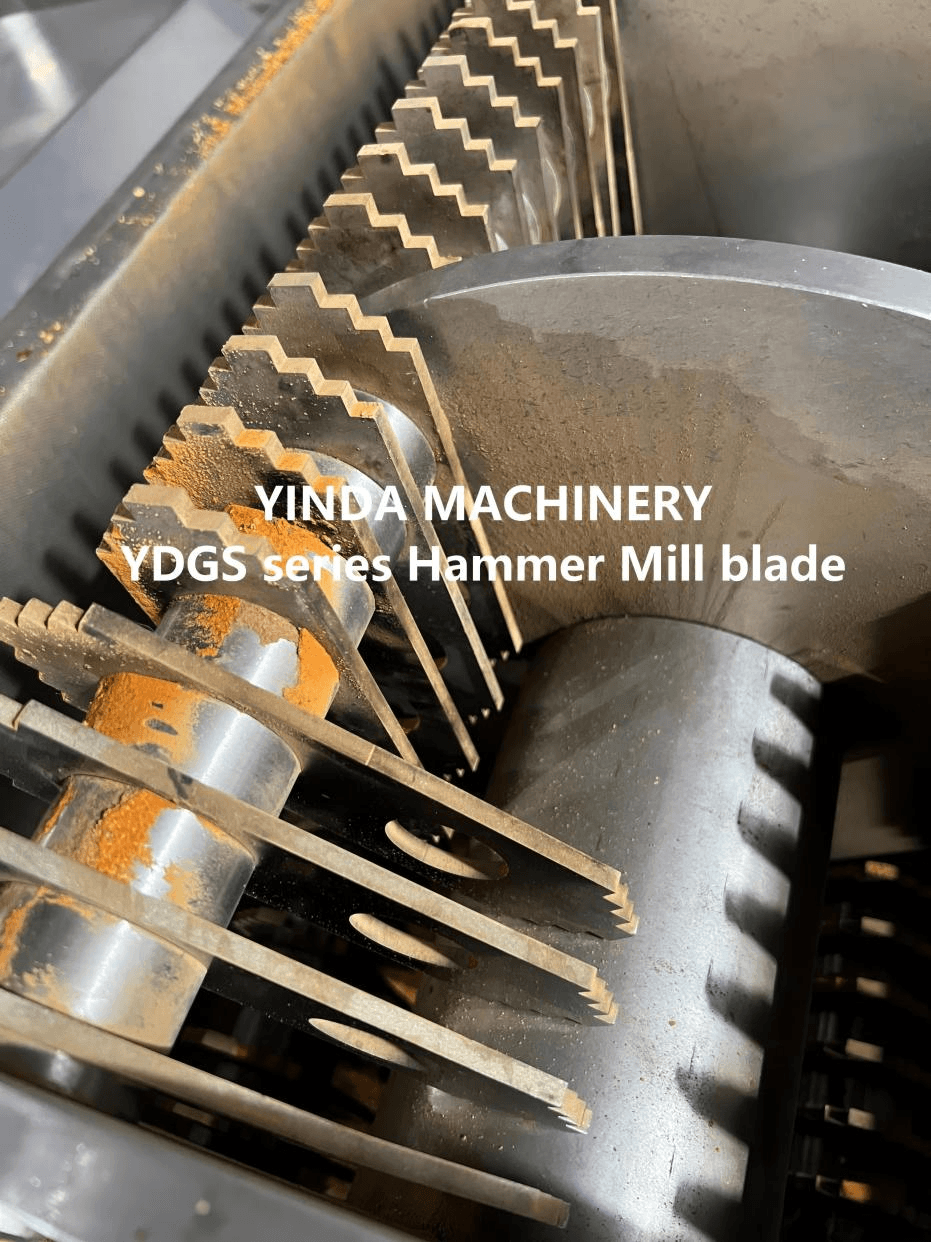
The hammer mill works through high-speed impact and shearing. The material enters the grinding chamber and is crushed by high-speed rotating hammers. The final powder size is mainly controlled by the screen. Only powder that reaches the required particle size can pass through the screen and discharge from the machine.
For mace, this working principle is practical because it can reduce material size efficiently while keeping the final powder range under screen control.
3. Why Add a YDLF Series Air Cooled Chiller?
For ordinary dry materials, a single hammer mill may be enough. But for mace, Yinda recommends adding the YDLF series air cooled chiller because it can introduce cold air into the grinding system and help reduce temperature during operation.
How the Cooling System Helps
The cooling unit does not grind the material directly. Its role is to support the grinding process by supplying cold air to the system. When the hammer mill runs, the airflow generated by the grinding system helps bring cold air into the grinding area. This helps remove part of the grinding heat and keep the material in a more suitable processing condition.
Lower Temperature Rise
Helps reduce heat buildup during grinding.
Better Aroma Protection
Helps protect the natural aroma and oil of mace.
Reduced Sticking Risk
Lowers the chance of material sticking inside the chamber.
Better Continuous Stability
Supports longer and more stable spice powder production runs.
4. Complete Low Temperature Mace Grinding Line
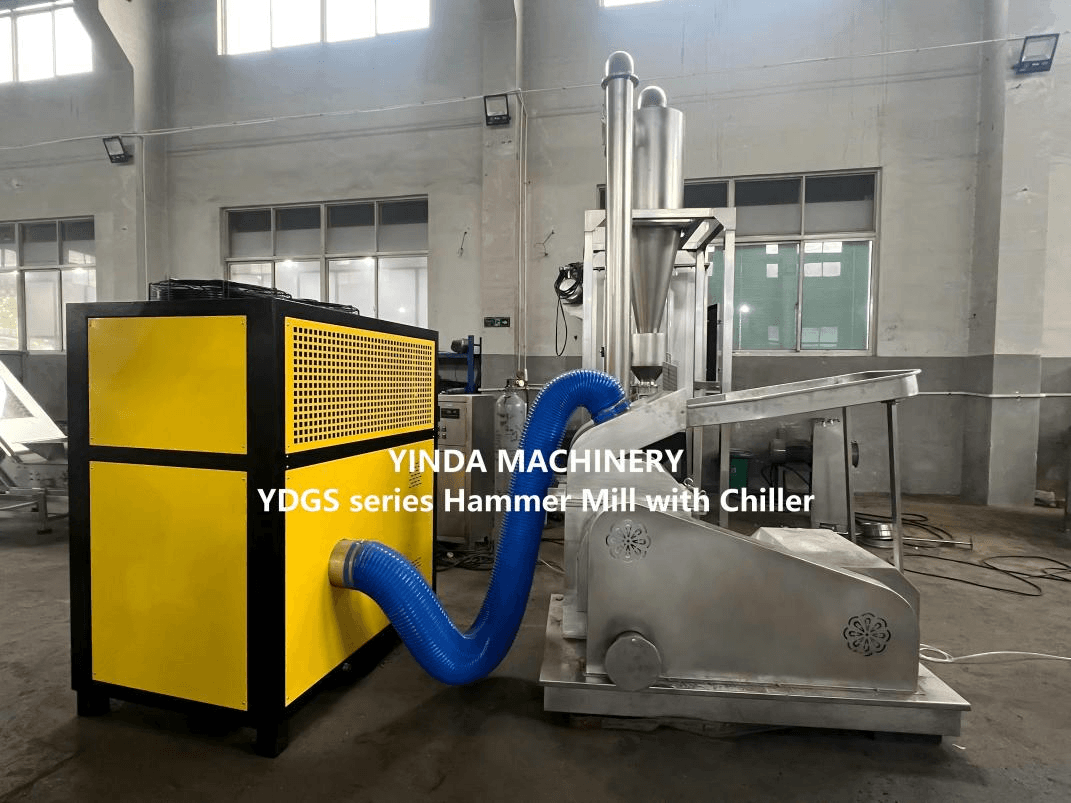
A typical low temperature mace grinding line can include the following units:
Feeding System
Feeds mace into the hammer mill evenly. Stable feeding helps reduce overload and supports better fineness control.
YDGS Series Hammer Mill
Main grinding machine that crushes mace into the required powder size through impact and screen control.
YDLF Series Air Cooled Chiller
Supplies cold air and supports grinding temperature control.
Cyclone Separator / Dust Collection
Collects powder and reduces dust during operation to improve powder recovery and workshop cleanliness.
Control System
Controls machine operation, feeding speed, and related system functions. VFD control can also be customized if needed.
5. What Powder Fineness Can Be Achieved?
For mace grinding, common powder fineness is usually around 40–60 mesh. This range is suitable for many spice powder applications, including food seasoning, spice blending, and commercial mace powder production.
The Final Fineness Depends On
- Raw material moisture content
- Oil content of the mace
- Feeding size
- Screen mesh size
- Feeding speed
- Grinding temperature
- Required final powder standard
If the customer needs finer powder, such as above 80 mesh or 100 mesh, material testing is usually recommended first. Because mace contains natural oil and aroma components, very fine grinding may increase the risk of heat buildup, sticking, and screen blocking.

6. Applications of Mace Powder
- Seasoning powder
- Spice blends
- Meat processing seasoning
- Bakery and dessert flavoring
- Sauce and soup powder
- Instant food seasoning
- Food ingredient processing
In these applications, customers usually care about powder fineness, aroma retention, color, hygiene, and production stability. A low temperature mace grinding machine can help improve these points during processing.
Why Choose Yinda Low Temperature Mace Grinding Machine?
Yinda Machinery provides not only a single mace grinding machine, but also a complete powder processing solution based on the customer’s material and production requirements.
Our mace grinding solution focuses on:
- Suitable grinding structure for spice materials
- Low temperature grinding support
- Stable powder fineness control
- Dust collection and powder recovery
- Customized production line layout
- Material testing before final model confirmation
7. Mace Grinding Machine Selection Suggestions
Before selecting a mace grinding machine, Yinda recommends confirming the following information first:
- Raw material condition: whole mace, broken mace, or pre-cut material
- Moisture content and oil content
- Target powder fineness, such as 40 mesh or 60 mesh
- Required capacity per hour
- Continuous working time
- Food-grade or other industry requirements
- Whether low temperature grinding is required
- Local voltage and frequency
- Workshop layout and dust control requirement
With these details, Yinda can recommend a more suitable machine model and production line configuration.
Conclusion
For mace powder production, the recommended solution is a low temperature mace grinding machine line, using the YDGS series hammer mill together with the YDLF series air cooled chiller.
This solution is suitable for heat-sensitive spice materials and can help reduce temperature rise during grinding, protect aroma and color, reduce sticking risk, and improve continuous production stability. If your target is around 40–60 mesh mace powder, this low temperature hammer mill grinding line can be a practical and reliable choice. For special fineness or larger capacity requirements, material testing is recommended before final model selection.
Looking for a Low Temperature Grinding Line for Mace Powder Processing?
Yinda Machinery delivers tailored powder handling solutions and complete industrial production lines to help improve operational efficiency, product quality, and long-term production stability.
Related Articles
How to Choose a Spice Grinding Machine
Compare grinding solutions for aromatic spice materials and medium-fine powder applications.
Low Temperature Grinding for Spice Powder Production
Why lower grinding temperature matters for aroma, color, and continuous production stability.
Complete Spice Powder Processing Line Solutions
Integrated grinding, cooling, dust collection, and powder handling systems for spice factories.