
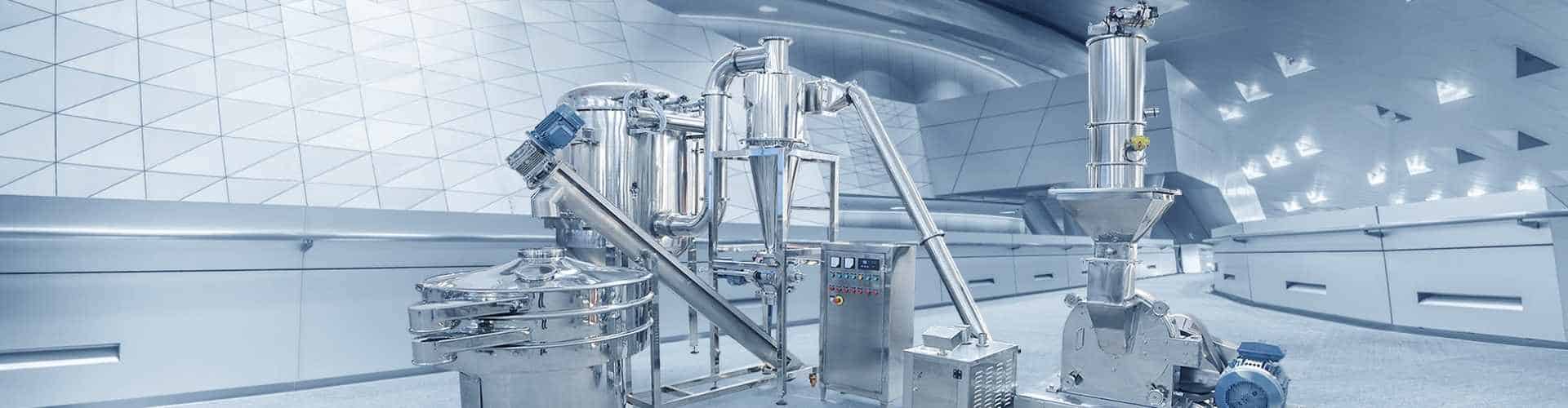
Vibratory Screener
Cost-effective Vibratory Screener Factory
As a professional Vibratory Screener manufacturer and factory in China, we produce and supply all types of Vibratory Screener with quality grades of raw materials and designed according to various quality standards.
Please contact us and let us know how we can assist you with your Vibratory Screener, we are always here to help you.
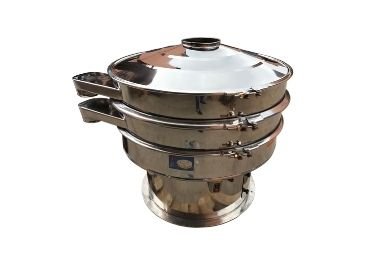
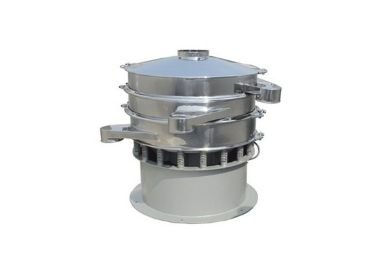
Yinda: Your Reliable Vibratory Screener Supplier In China
1)if your project on powder processing needs to import a Vibratory Screener, then Yinda will be your best choice to manufacture your Vibratory Screener.
2)Yinda is one of the leading Vibratory Screener suppliers and all of our Vibratory Screener can meet ISO/CE/GMP standards, and we will provide a competitive price based on your project.
3)Yinda will give you the best Vibratory Screener solution based on your project’s requirements with our professional technical team, and know more about powder and particle processing that we enjoy sharing with customers.
4) Drop us an email and send your detailed requirement now!
- Specifications
- Main Features
- Package And Shipment
- Ultimate service
- Industrial Applications
| Model | YDGZ-400 | YDGZ-600 | YDGZ-800 | YDGZ-1000 | YDGZ-1200 |
| Capacity(kg/hr) | 20-200 | 150-1200 | 200-2000 | 250-3000 | 300-4000 |
| Dimension(mm) | 600×600×1000 | 800×800×1100 | 1100×950×1150 | 1100×1100×1250 | 1300×1300×1400 |
| Powder(kw) | 0.55 | 0.55 | 0.75 | 1.5 | 1.5 |
| Fineness Size(mesh) | 20-180 | 20-180 | 20-180 | 20-180 | 20-180 |
| Vibration frequency (time/min) | 1500 | 1500 | 1500 | 1500 | 1500 |
| Weight (kg) | 120 | 180 | 220 | 300 | 400 |
Screening plays an important role during the powder processing and helps in separating the material depending on its size. Vibratory Screener are common general purpose machines whose purpose is to separate particles into different sizes. It also removes foreign matter from the material
Features:
- The vibratory screener is versatile and most appropriate for the activities during the manufacturing process.
- The designing of this screener is for the long time and industrial purposes
- The customizing the size of the screens and designing the body is also available.
- There are three different models of vibratory screener present: one, two and three deck models.
- The capacities of these screeners range from 6″ to 1000 mesh
- Positive eccentric activity facilitates the distribution uniformity on the surface of the screening. It has the ability to separate uneven size materials efficiently.
If you are looking for some more particular features in the vibratory screener, customization option is available. It will be totally according to your requirements depending on the lines of production.


Hot-selling Equipments For Your Powder Processing
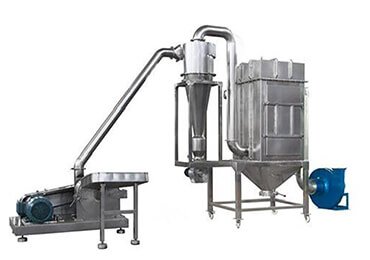

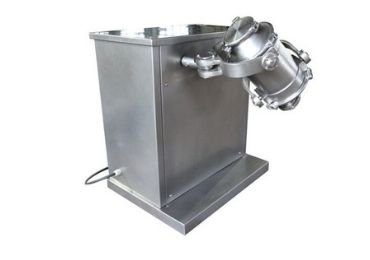
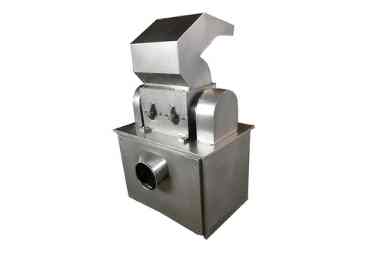

Yinda vibratory screener is used to help efficient remove screen oversized solid particles, or foreign material in different industries such as pharmaceuticals, metallurgy, chemicals, electronics and food,a vibratory screen has a circular shape and helps to classify and separate materials from each other,and it depends on the requirements of the process. It also play an important role in making the particles uniform in size.
When you are looking to buy a vibratory screener, there are a few things that you need to consider. There are a variety of screens on the market, and each has its own set of benefits and drawbacks. In this blog post, we will discuss several things that you need to think about when making your purchase decision. By considering these factors, you can be sure that you are getting the right screen for your needs!
The Size of the vibratory Screen: Available in diameters from 15.8″ to 100″ (400mm to 2540mm) with single or multi-layer screen surfaces, separating particles of 1 to 5 predetermined sizes ranging from 2″ (50mm) to 400 mesh (37 micron)
The capacity of the vibratory screen: In capacities ranging from 10 kg per hour to more than 5 metric tons per hour.
The working principle of yinda vibratory screen:
The vibratory screen is a high-precision fine powder sieving machine, with low noise, high efficiency, quick net change takes 3-5 minutes, fully enclosed structure, suitable for sieving and filtering of granules, powder, viscous liquid and other materials.
Yinda vibratory screen is made of vertical motor as the excitation source, with eccentric weight hammer installed at the upper and lower ends of the motor, which transforms the rotating motion of the motor into horizontal, vertical and inclined three-dimensional motion, and then transmits this motion to the sieve surface.
What are the advantages of using Yinda vibratory screener?
- Designed for long life and industrial scale use
- Available in single, two or three deck models
- Correct eccentric action provides uniform distribution over the screen surface for effective separation of coarse material
- Customization screen sizes and mechanism designs
By considering these factors, you can be sure that you are getting the right vibratory screener for your needs!
Vibratory Screener – The Full FAQ and Buying Guide
Everyone loves to automate the services and actions they do, and that’s what the primary purpose of vibratory screeners are!
Instead of having two (2) workers pushing and pulling sieves to filter smaller particles, vibratory screeners would do this without the need of manpower!
In this guide, we’ll be working with you, hand-in-hand in helping you understand what vibratory screeners are! Furthermore, we’ll also discuss with you the top ways on how you can land working with the best vibratory screener supplier!
What is the Purpose of Using Vibrating Screens?

Figure 1 – Sample image of a rotary vibratory screener
It might be daunting to think about what these vibrating screens are for, but, when you know them deeply, you’ll understand what they really are for.
To tell you in the easiest and simplest way possible, these vibratory screeners are machines and equipment that you use in separating powders and materials, particularly those that contain a mixture of solid and crushed content.
The ideal size of the output from vibratory screeners would be around 200 to 250 µm in size.
How Does a Vibrating Screen Work?

Figure 2 – Image of an operating vibratory screener
Now that you know what the purpose is, it’ll be easier for you to understand how they operate and function. But, for the benefit of everyone, including those that have just entered the market, this is the general structure of how vibratory screeners or vibrating screens work:
- The feed or the materials/powders that are to be screened and separated would be fed into the machine.
- Then, the machine of the screen frame is driven and moved by force, making the screen vibrate.
- This causes the contents, materials, or powders to constantly be filtered through the screen, allowing the separation of particles and materials that are not sized with one another.
- Solid and bigger particles remain on top, while those that fit the size of the screen would go down and flow to the bottom.
- There are vibratory screeners that are able to break down the materials, producing finer and thinner particles in the process.
That is the general structure of how vibratory screeners work. You’ll be able to understand them more when we discuss the parts and components of it.
Different Types of Vibratory Screeners
In the market, you’ll be welcomed by multiple types and kinds of vibratory screeners. However, the most common of them; and particularly, the most famous and popular types include:
Linear Vibrating Screen

Figure 3 – One of the most basic vibratory screeners
Probably the most basic type of vibratory screener is the linear vibrating screen. It’s the simplest because the movement of the frame would be linear, just a constant back and forth motion.
There is an inclined angle on vertical direction of the vibrating screen, which helps with the vibrating and the filtering process.
BEST FOR: Granular materials or dry powders that have particle sizes of about 0.074 to 5mm.
Circular Vibratory Screener

Figure 4 – A circular vibratory screener
Unlike linear vibrating screens, the motion of these circular vibratory screeners would be in a circular motion. It uses inertia to produce and make the vibration happen.
Through the rotation of the screen at high speeds, the materials vibrate and flow down to smaller screens.
BEST FOR: Continuous screening and separating. Commonly used in mining, building, mineral, and energy applications.
Elliptical Vibrating Screen

Figure 5 – An image of a vibratory screener that’s elliptical
It’s pretty self-explanatory, these elliptical vibrating screens move at an elliptical motion. This makes it one of the more efficient and advanced types of vibratory sifters.
BEST FOR: Sand plant, sand, as well as for applications in the mining industry or sector.
Rotary Vibrating Screen

Figure 6 – Image of a rotary vibrating screener
These vibratory screeners are best for the application of materials that contain high-screening efficiency and accuracy. They can guarantee no leakage and no mesh blocking, since the device is fully enclosed.
BEST FOR: particles and powders that need to be screened at a particular range; it usually sieves 0.028 mm to a minimum of about 5 µm.
These are just few of the most common types and kinds of vibratory screeners you’ll find in the market!
Vibrating Screen Parts and Components

Figure 7 – Parts and components of a vibratory screener
If you’ll notice above, there are many different types of vibratory screeners. So, it’ll be difficult and challenging to determine their specific parts.
However, all of them have constant parts and components that make them the vibratory screen they are. So, here’s the list of the components and the parts of vibratory screens that are common to all of them regardless of the type:
- Feed Inlet or Feeder
- Observation Hole
- Frame or Frames
- Dust Covers
- Motor
- Discharge Port
Pros of Vibratory Screeners
Here are some of the reasons why companies and businesses choose to use vibratory screeners than the traditional sieving and sifting method:
- They’re improved when it comes to output quality and size accuracy
- Lower operational costs
- Fully-automated (no workforce needed for the process)
- Less risk of worker accident
- Lower operational costs
- Lower downtime and maintenance
- Better and higher efficiency in screening
These are some of the most notable pros and advantages of choosing vibratory screeners. But, what about the cons and the drawbacks? Are there any?
Cons of Vibratory Screeners
Here’s a list of some of the cons and drawbacks of using vibratory screeners for your operations:
- Easy wearing of the screen holes and the screens themselves
- Blockage of the screen hole
- The bearing could overheat and be subjected to high temperatures
- Pollution could happen if not maintained properly
As you may have noticed, these cons or disadvantages are easy to work around with!
What are vibratory screeners used for?
Vibratory screeners can be used for a variety of purposes, including: sifting through materials to remove large or small particles, separating different types of materials, and removing contaminants from a material.
How do vibratory screeners work?
The vibrating action of vibratory screeners separates materials by size. The larger particles are forced to the top or sides of the vibrating screen, while the smaller particles fall through the screening surface.
What are the benefits of vibratory screeners?
Some of the benefits of vibratory screeners include: they are easy to operate and require little maintenance, they are versatile and can be used for a variety of applications, and they are able to screen a large quantity of material in a short amount of time.
What to Look For in Vibratory Screeners
There are numerous ways on how you can find the best vibratory screeners in the market. But, the best and most ideal ones would include:
Maximum Feed Rate
This will determine the speed on which you’ll be able to insert the materials or the powders that you need to work on.
The maximum feed rate would be the maximum allowable capacity of how much you’ll be able to insert into the machine all at once.
Bulk Density of the Material
This determines the density of the material that would be operated on using the machine. Usually, the measurement of it would be in lb/cu ft or about kg/cu m.
Screening Media
Screening media would be the part or the component that would be responsible for the sifting or the sieving process.
The most common screening media include urethane, profile wedge wires, woven cloth, perforated plate, etc.
Overall Specifications
Last, but most definitely not least would be the overall specifications or the technical parameters of the machine.
The overall or the totality of the screener is important because it’s going to dictate how efficient your procedure will be. So, take a look at the overall capacity, the speed per minute the weight of powder it can work on, filling volume, and so on!
How to Choose the Right Vibratory Screening Equipment?
– Decide what you will be using the Vibratory Screening Equipment for: primary, secondary or tertiary separation.
– Consider the size and shape of the particles you will be separating.
– Choose between a wet or dry application.
– Decide on the type of Vibratory Screen you need: incline, horizontal or circular vibrating screen.
– Vibratory Screening Equipment is not only efficient but also very low maintenance because it has no moving parts other than the Vibro-motor itself, which makes Vibratory Screener ideal for industrial applications where noise pollution can be an issue since there’s no need to worry about any noisy motors running constantly throughout your facility.
– Vibratory Screens come in different sizes and shapes, so it’s important to determine the specific needs that you have before making a purchase.
– Vibratory Screeners are available in both wet and dry applications.
– There are three main types of Vibratory Screener: incline screeners, horizontal screeners and circular vibrating screens.
– Incline screeners are best for smaller particles, while horizontal screeners are better for larger ones.
– Circular vibrating screens can be used for both small and large particles, making them the most versatile type of Vibratory Screener.
– Vibratory Screening Equipment is not only efficient but also very low maintenance because it has no moving parts other than the Vibro-motor itself, which makes Vibratory Screener ideal for industrial applications where noise pollution can be an issue since there’s no need to worry about any noisy motors running constantly throughout your facility.
Where Can You Find High-Quality Vibratory Screeners?
It’s a common note that Chinese manufacturers, regardless of the product, would not yield high-quality machines and equipment.
On the contrary, they’re actually the more trusted and the more relied on by businesses from the West (European and American countries) when it comes to the manufacturing of vibratory screeners.
Chinese vibratory screener suppliers are easy to work with, flexible, and are polite! But, which supplier should you choose? What type of manufacturer can you trust?
Which Chinese Vibratory Screener Supplier Should You Trust?
Yinda Machinery has been tagged and deemed as China’s top supplier or manufacturer of vibratory screeners. For more than a decade, we’ve been producing and manufacturing some of the industry’s best vibratory screeners!
If you’re eager to know the features and the benefits of choosing Yinda Machinery’s vibratory screeners, they include:
- They’re able to support heavy and high load
- Our vibratory screeners are equipped with multiple options and choices for discharge and output.
- It’s mounted with drives (can be at the top or on the side)
- The screen sizes are easily customizable and modifiable
With Yinda Machinery, it’ll only be a matter of time until you get the vibratory screeners that you’re looking for! Whether you’re in the pharmaceutical industry, the food and grains industry, animal or pet food industry, or even the construction or structural industry, our vibratory screeners will be the best you’ll ever have!
Talk to us today and be granted world-class quality vibratory screeners for rates and prices that are cost-effective and efficient! We will make sure that our vibratory screeners would be beyond what you expect!
Dial us today and get the best types of vibratory screeners you’ll ever get! Other than vibratory screeners, you can also have us come to your aid if you require other machines and equipment such as air classifier mills (ACM mills), double cone mixers, tray dryers, trough blenders, and many more!