
Advanced Spice Processing Equipment: Coarse Crushing & Low-Temperature Grinding Solutions for High-Quality Spice Production
Improve spice powder quality, aroma retention, and production efficiency with integrated coarse crushing and low-temperature grinding systems designed for modern spice and masala manufacturing.
For spice and masala manufacturers, one critical question remains: how can you scale production while preserving natural aroma, color, and flavor? The answer lies in two essential processing stages: coarse crushing for stable pre-processing and low-temperature fine grinding for heat-sensitive milling. These two stages directly affect final particle size consistency, essential oil retention, production efficiency, and overall market quality.
1. Why Coarse Crushing Is Essential in Spice Processing
Coarse crushing is the first step in spice processing, where large, fibrous, or bulky raw materials are reduced into more uniform granules before fine grinding. Without proper pre-crushing, grinding efficiency drops, machine clogging increases, and the final particle size becomes inconsistent.
Why It Matters for Manufacturers
- Smooth feeding into downstream grinding systems
- Reduced load on fine grinders
- Higher overall production stability
- More consistent particle size before milling
YDCS Coarse Crusher – Optimized Pre-Crushing Solution
| Modelo | Processing Capacity (kg/h) | Motor Power (kW) | Inlet Size (mm) | Output Size (mm) | Peso (kg) |
|---|---|---|---|---|---|
| YDCS-200 | 50–100 | 7.5 | 10–50 | 3–10 | 250 |
| YDCS-300 | 100–300 | 11 | — | — | 350 |
| YDCS-400 | 200–400 | 11 | — | — | 450 |
| YDCS-600 | 500–600 | 15 | — | — | 600 |
| YDCS-800 | 600–800 | 22 | — | — | 800 |
| YDCS-1000 | 800–1000 | 22 | — | — | 1000 |
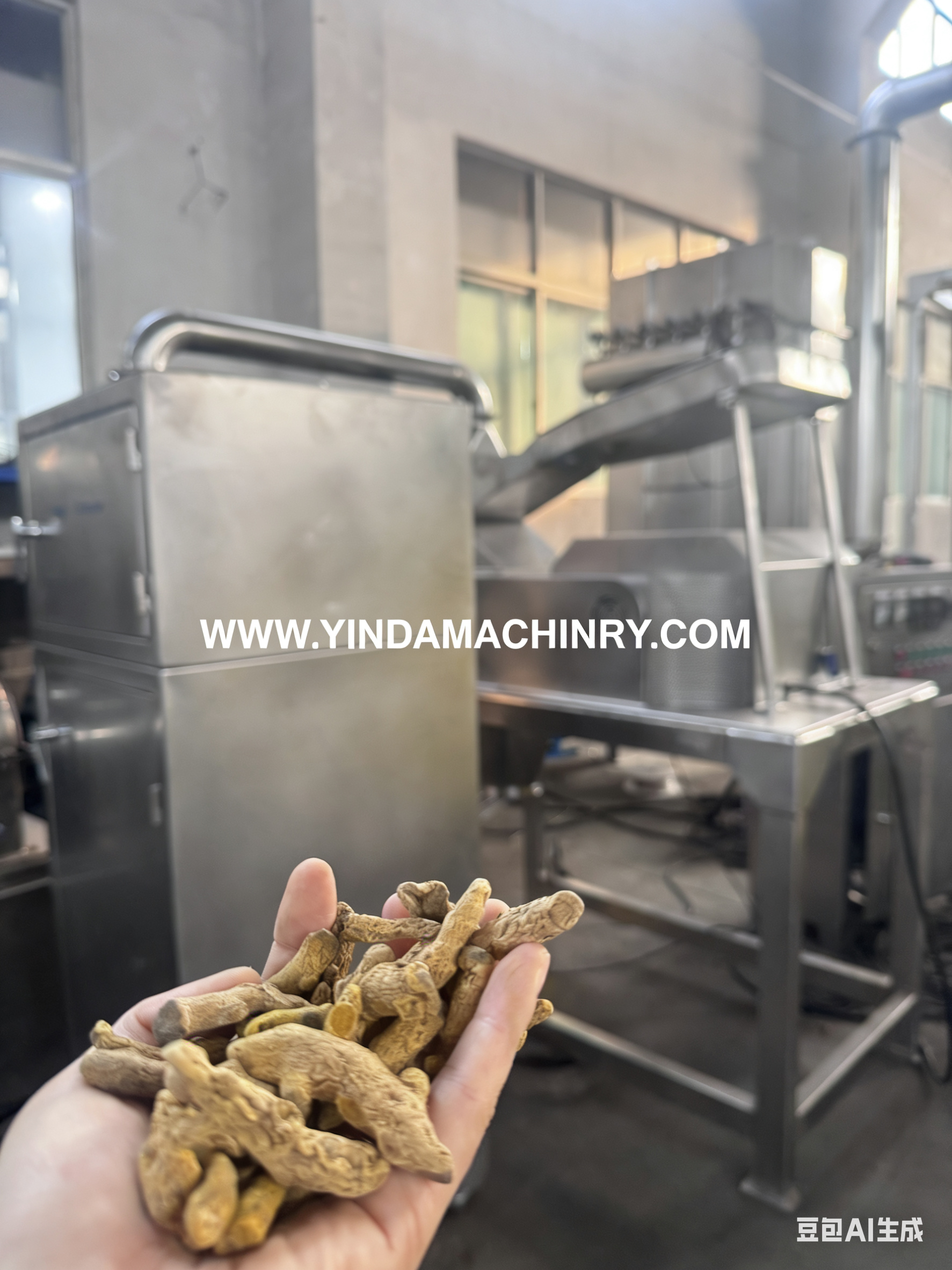
Typical Applications
- Indian bay leaves
- Black cardamom
- Cinnamon (Ceylon)
- Turmeric roots
- Dried garlic, onion, mushrooms
- Various dried herbs
Características clave
- Adjustable particle size
- High throughput capacity
- Low dust design
- Easy cleaning structure
- Reduced cross-contamination
- Heavy-duty stainless steel construction
Handling High-Oil Spices: A Practical Processing Challenge
High-fat spices such as cinnamon and turmeric often create oil release, chamber clogging, and material caking during crushing and grinding.
Yinda solves this with:
- Variable Frequency Drive (VFD) control
- Adjustable crushing speed
- Controlled feeding rate
Result: more stable processing without overheating, blockage, or excessive oil release.
2. Why Low-Temperature Grinding Matters in Spice Processing
Low-temperature grinding is a controlled milling process designed to minimize heat generation during particle size reduction. This is especially important for aromatic and heat-sensitive spices.
Why It Matters
- Protects essential oils
- Maintains natural color appearance
- Preserves aroma intensity
- Improves final product value in the market
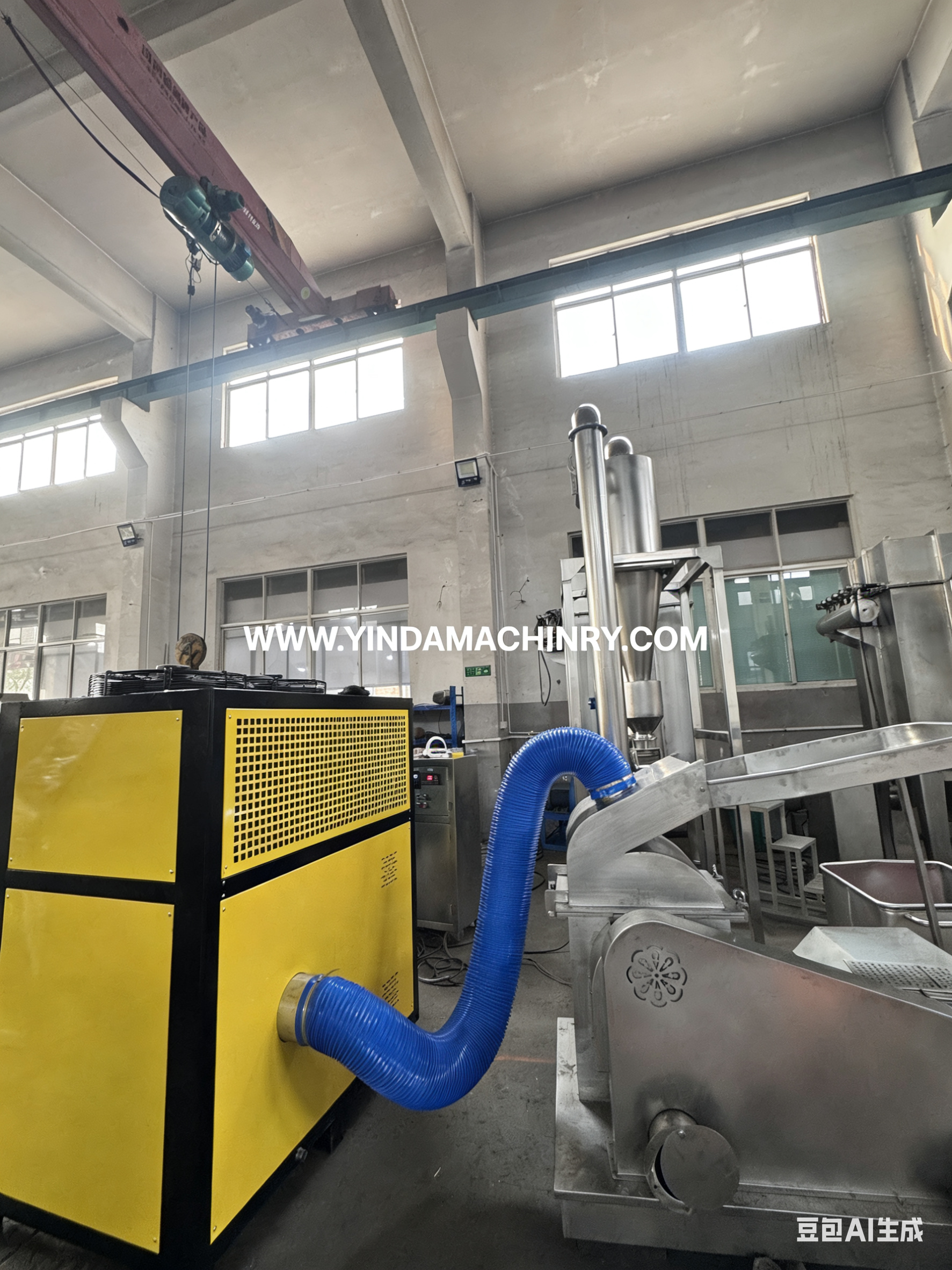
YDGS Low-Temperature Hammer Mill – Precision Grinding System
| Modelo | Processing Capacity (kg/h) | Motor Power (kW) | Inlet Size (mm) | Output Size (mesh) | Peso (kg) | Features & Adaptability |
|---|---|---|---|---|---|---|
| YDGS-300 | 30–150 | 11 | 10–50 | 20–120 adjustable | ≈ 950 | Small-scale, suitable for R&D and small-batch spice grinding |
| YDGS-400 | 200–300 | 18.5 | — | — | ≈ 1550 | Medium-small production line with strong versatility |
| YDGS-600 | 300–500 | 30 | — | — | ≈ 1700 | Medium-scale production, efficient for blended masala grinding |
| YDGS-800 | 500–700 | 45 | — | — | ≈ 2000 | Large-scale standardized line for mass production |
| YDGS-1000 | 600–1000 | 55 | — | — | ≈ 2800 | Ultra-large capacity for high-automation continuous production |
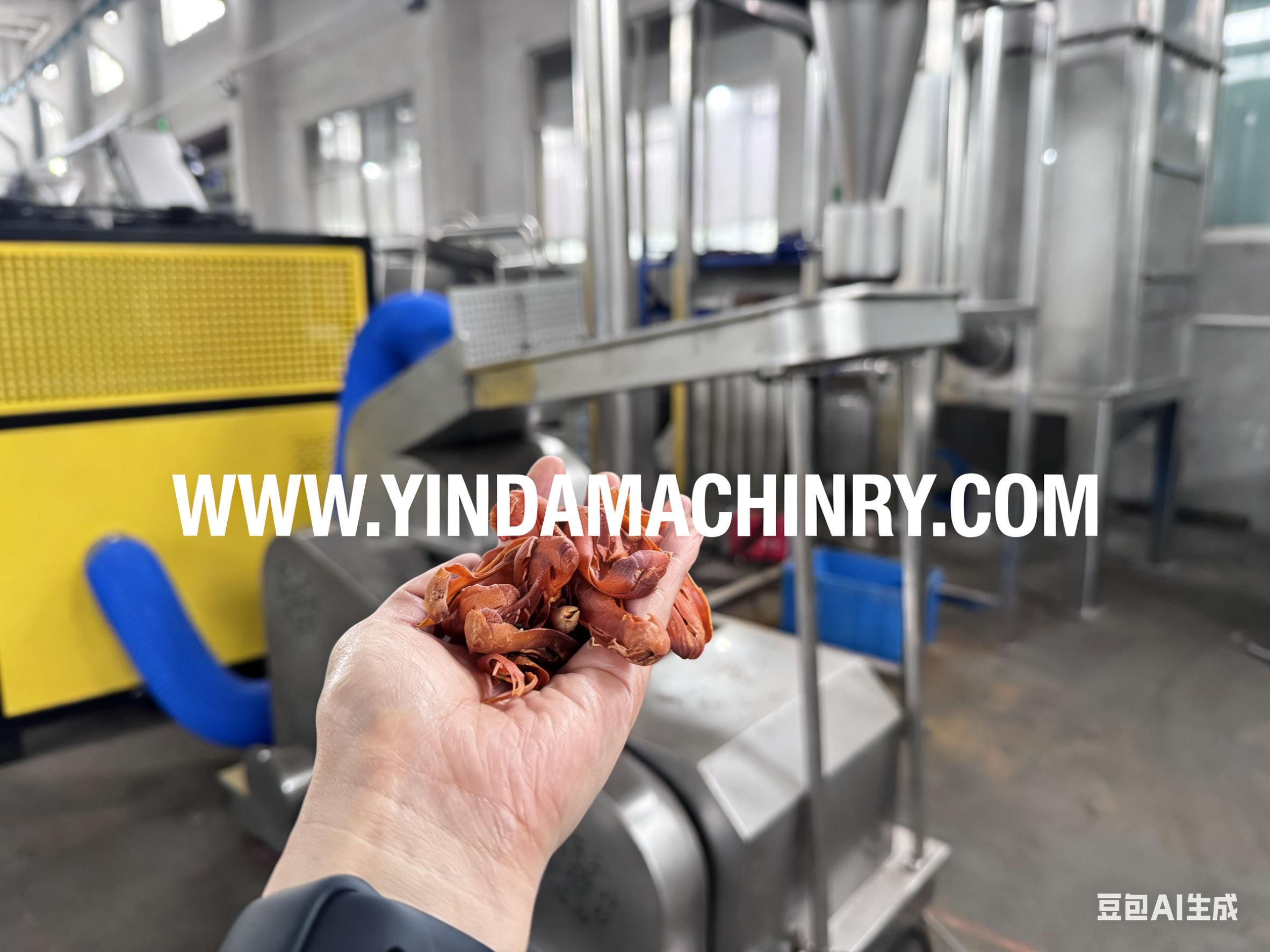
Typical Applications
- Cardamom
- Star anise
- Fennel seeds
- Cloves
- Coriander seeds
- Cumin
Características clave
- Low-temperature milling technology
- Ideal for oily materials
- Stable continuous operation
- Interchangeable screens
- Cleaner production environment
- Modular system design
3. Integrated Spice Processing Line: Coarse Crusher + Low-Temperature Grinder
For many spice powder manufacturers, the most effective setup is a combination of coarse crushing (YDCS) y low-temperature grinding (YDGS). This integrated approach creates a more efficient and controllable spice processing line.
Key Benefits of the Integrated Solution
- Improved production efficiency
- Uniform particle size distribution
- Maximum aroma and color retention
- Flexible processing for multiple spices
- Reduced downtime and easier cleaning
Proven Global Applications
Yinda Machinery’s spice processing solutions have been successfully applied in:
- Middle East
- Sudamerica
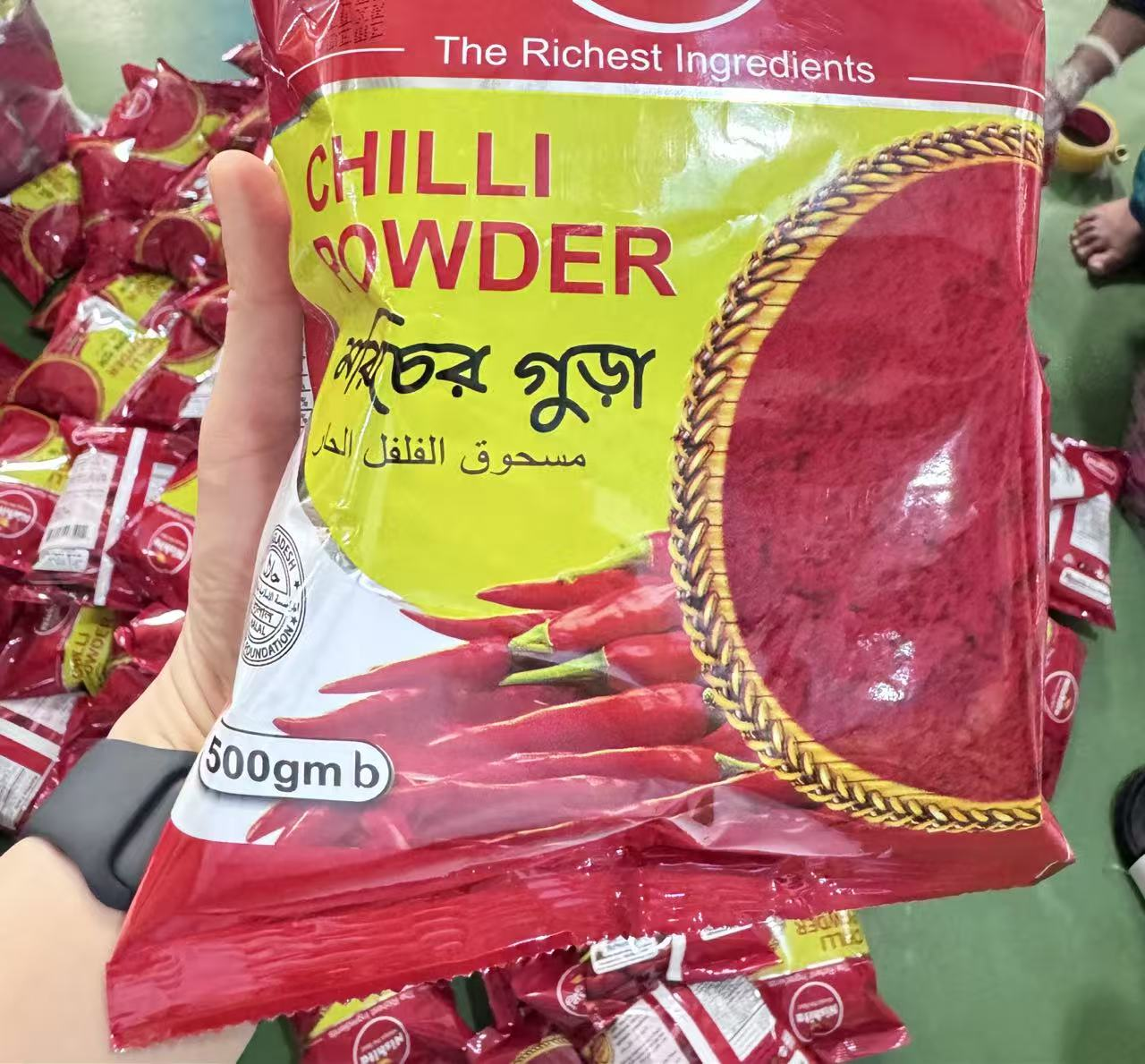
- Bangladesh
- Southeast Asia
These systems are widely used by spice brands, food ingredient manufacturers, and producers scaling up commercial spice powder production.
How to Build a High-Quality Spice Processing Line
For spice manufacturers, success depends on more than just grinding. A well-structured processing system that includes efficient coarse crushing y controlled low-temperature grinding helps ensure consistent product quality, scalable production capacity, and stronger market competitiveness.
With more than 20 years of experience in spice powder processing, Yinda Machinery supports customers with material testing, customized processing solutions, and complete production line design.
Looking for a Reliable Spice Processing Equipment Partner?
Yinda Machinery helps global customers build efficient spice powder production lines with coarse crushers, low-temperature grinders, feeders, sifters, and customized integrated systems.

Related Articles
How to Choose a Spice Grinding Machine
A practical guide to selecting the right grinder for spice powder production.
Low-Temperature Grinding for Aromatic Spices
Why temperature control matters for color, flavor, and essential oil retention.
Complete Spice Powder Production Line Solutions
See how integrated crushing, grinding, and sieving systems improve line efficiency.