
适用于多个行业的高效混合带式混合机
了解带式混合机如何实现粉末和颗粒的均匀混合。了解带式混合机的工作原理、主要优势、应用领域、选型因素,以及银达机械为何是工业粉末加工领域值得信赖的解决方案。
当需要将多种粉末或颗粒混合成均匀的最终产品时,均匀混合至关重要。带式混合机专为此类工业混合而设计,它采用水平槽和特殊形状的带状搅拌器,使物料在整个批次中持续运动。银达机械提供适用于食品、制药、化工、农业、矿物加工等粉末加工行业的带式混合设备,并可根据物料特性和生产要求选择合适的配置。
1. 什么是带式搅拌机?
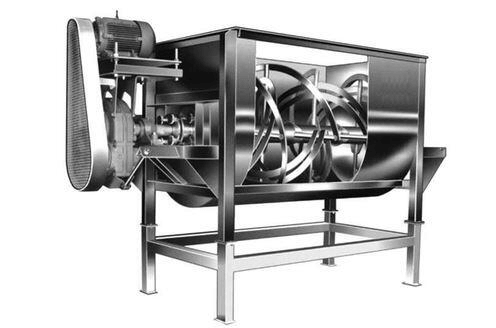
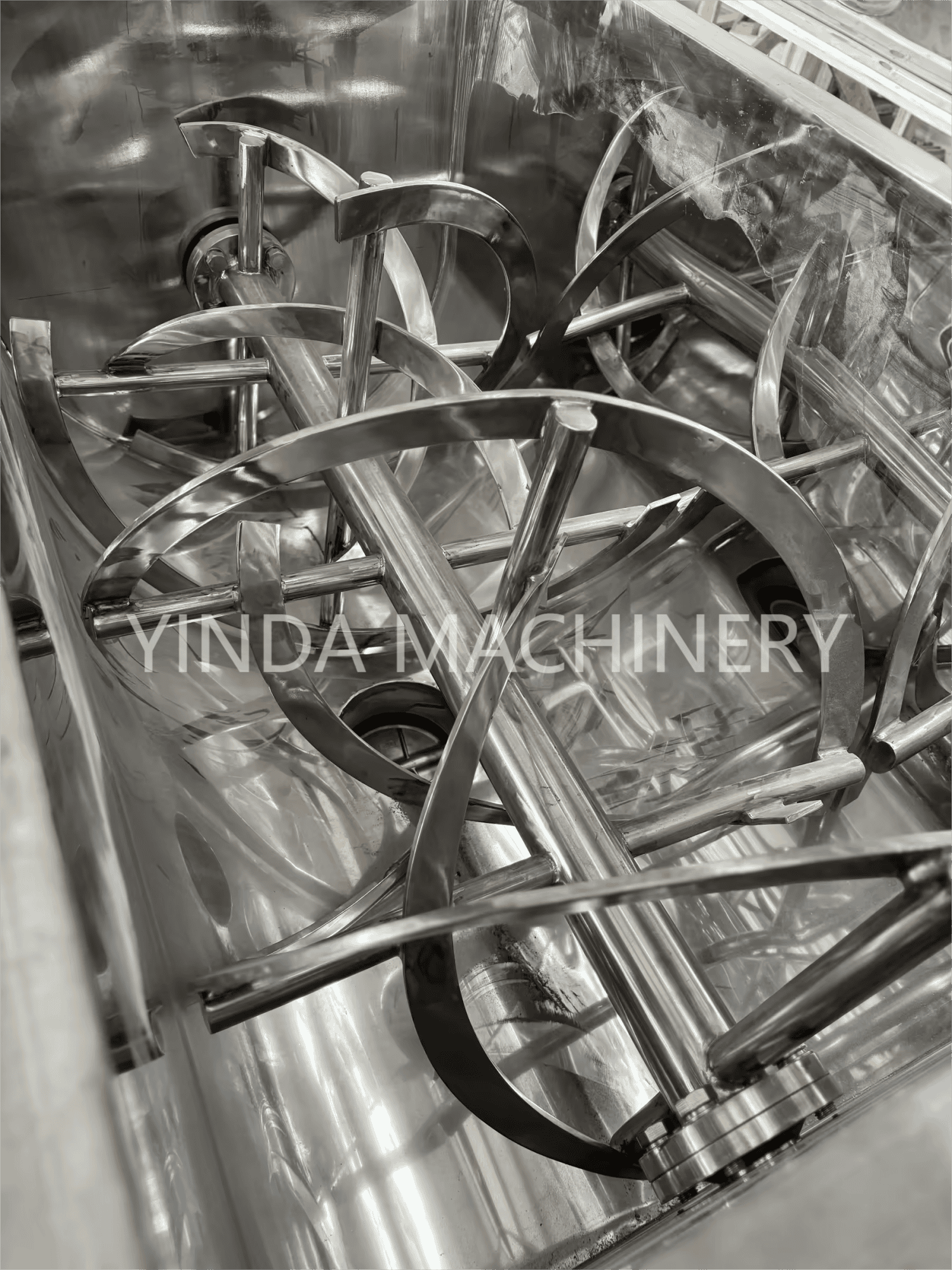
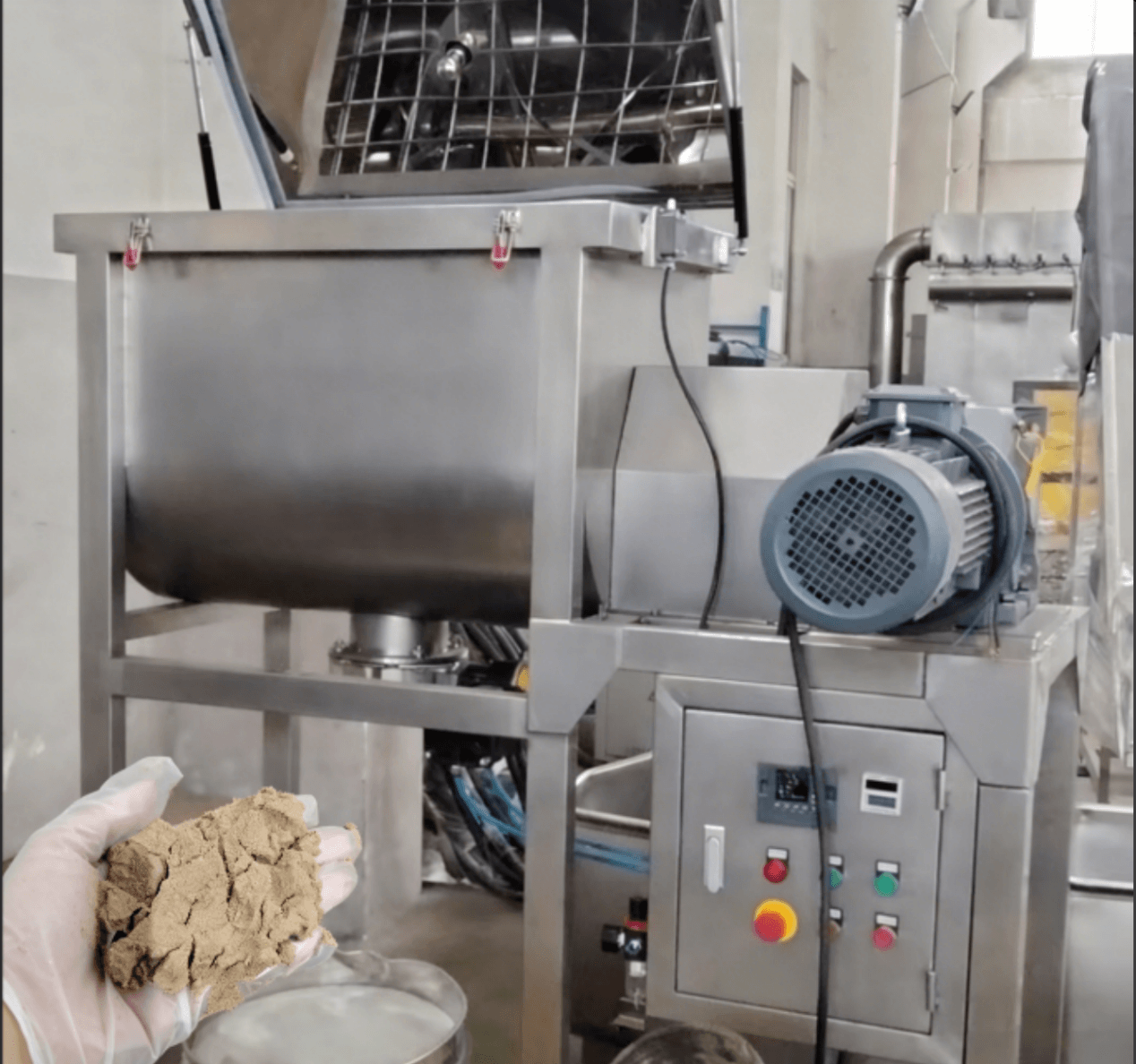
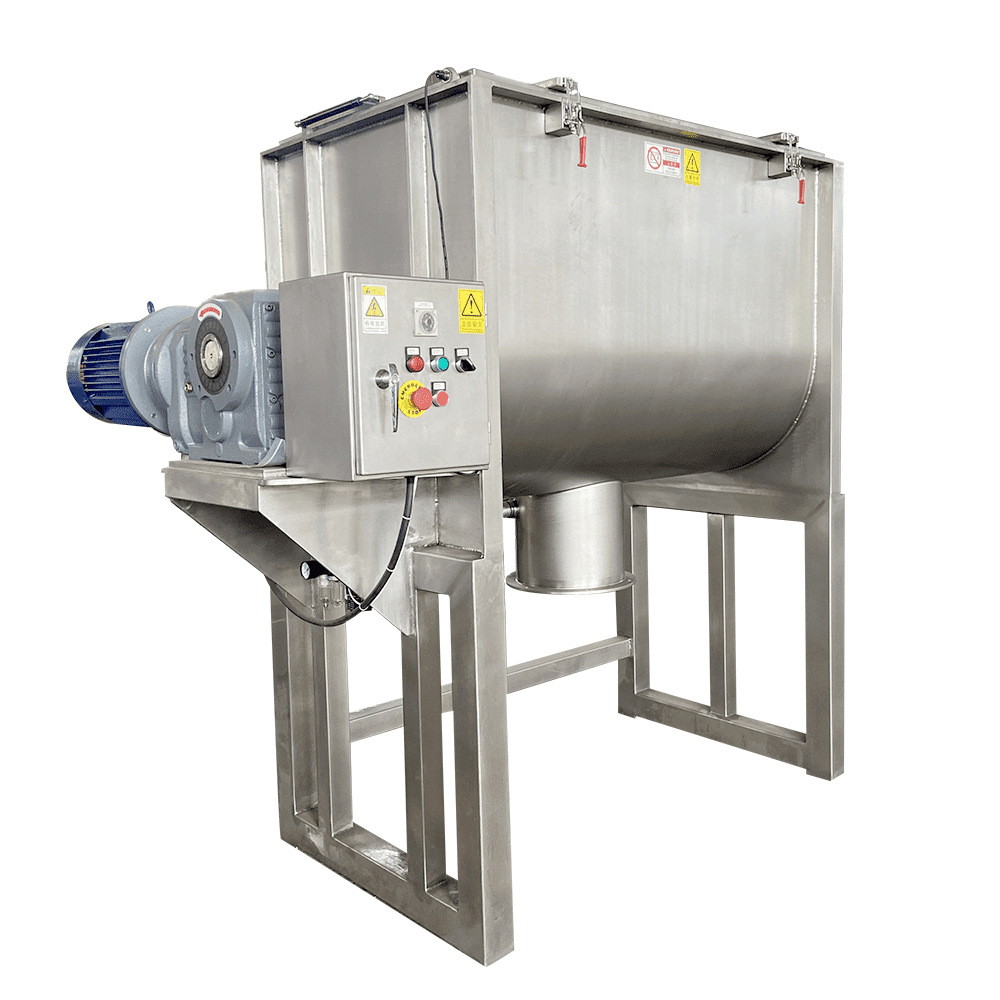
带式混合机是一种卧式工业混合机,主要用于混合干粉、颗粒和其他自由流动的散装物料。其主要部件包括混合槽、水平轴、带式搅拌器、驱动系统和出料装置。
带式搅拌器通常由内外两层螺旋带组成。当轴旋转时,这些螺旋带带动物料朝不同方向运动,在混合室的长度和宽度方向上形成循环模式。这种反复运动使各种成分充分接触,有助于形成更均匀的混合物。
- 用于高效物料循环的水平混合室
- 用于反向运动的内外两条带子
- 适用于多种干粉和颗粒剂配方
- 多种容量和施工方案
- 底部排料配置可实现高效的产品去除
2. 带式搅拌机的工作原理是什么?
带式混合机的工作原理基于可控对流运动。物料装入料槽后,电机带动水平轴和带状组件旋转。外层带状物料沿一个方向流动,而内层带状物料则产生相反方向的流动。
这种逆流作用不断地提升、折叠和重新分配物料。搅拌带不会将各种成分留在单独的区域,而是反复地将它们带入混合区域。最终,各种成分在整个批次中分布得更加均匀。
3. 银达带式混炼机的关键特点
银达机械设计的带式混合设备功能实用,适用于可靠的工业粉末加工。具体配置可根据物料和生产条件进行选择。
水平U形槽
水平容器为带状组件提供了空间,使物料能够在混合室中循环。
双螺旋带
内外层带状物形成相反的流动,有助于将配料均匀分布到整批产品中。
多种容量
Yinda 的 YDLH 系列产品有多种尺寸可供选择,以满足实验室、小批量和工业生产的需求。
灵活施工
根据卫生、腐蚀和工艺要求,可以考虑采用不锈钢或碳钢结构。
4. 使用带式搅拌机的好处
正确选择带式混合机可以提高产品的一致性和日常生产效率。其简单的操作原理也使其适用于各种粉末加工环境。
均匀混合
持续的逆向运动有助于将不同的配料均匀地分布在整个批次中。
多功能处理
该设备可用于处理粉末、颗粒、添加剂、香料、矿物和许多其他散装固体。
可扩展生产
不同尺寸的机器可以让制造商根据自己的批量和生产需求选择设备。
实用维护
水平式设计便于检查、清洁、日常维护和产品更换。
5. 使用带式混合机的行业
带式混合技术的灵活性使其在需要将粉末和颗粒混合成一致配方的各个行业中都非常有用。
- 食品工业:调味料、香料混合物、干粉混合物、食品配料和粉状添加剂。
- 制药行业:适用于需要可控、一致混合的粉末和辅料混合。
- 化学工业:化学粉末、添加剂、化合物及其他干燥制剂。
- 农业:肥料成分、农业添加剂和精选干粉配方。
- 动物饲料:适宜的干饲料原料、补充剂和营养添加剂。
- 矿物加工:在选择合适的机器结构的情况下,将矿物粉末和其他散装固体混合。
6. 带式搅拌机可以处理哪些材料?
A ribbon blender machine can process many dry and free-flowing materials, but equipment selection should always account for the physical properties of the product. Particle size, bulk density, moisture, flowability, abrasiveness, and stickiness can all influence mixing performance.
Common Materials
Dry powders, granules, spices, food ingredients, additives, chemical powders, mineral powders, fertilizer components, and feed ingredients.
Before Selecting Equipment
Evaluate moisture content, particle size, density, flow characteristics, required batch size, and whether the formulation contains abrasive or temperature-sensitive ingredients.
7. How to Choose the Right Ribbon Blender Machine
Choosing a ribbon blender should begin with the process rather than simply the machine’s nominal capacity. The right equipment needs to match the product, batch size, required mixing result, and operating environment.
- Define the Material: Identify particle size, density, moisture, flowability, abrasiveness, and other relevant properties.
- Determine Batch Capacity: Select a vessel size that fits current production while allowing room for practical operating conditions and future demand.
- Choose Construction Material: Stainless steel may be preferred for hygienic or corrosion-sensitive applications, while carbon steel can suit appropriate general industrial processes.
- Review Discharge Requirements: Select a discharge arrangement that supports efficient product removal and minimizes material retention.
- Consider Automation: Larger production lines may benefit from automatic feeding, controls, weighing, or integration with upstream and downstream equipment.
8. Ribbon Blender Machine vs. Other Mixing Equipment
Different industrial mixers are designed around different material characteristics and process goals. A ribbon blender is particularly useful when manufacturers need efficient horizontal mixing of dry powders and granules. The choice should still be based on the specific formulation and required result.
| Equipment | Typical Use | Material Movement | Key Advantage |
|---|---|---|---|
| Mélangeur à ruban | Dry powders and granules | Counter-directional ribbon flow | Efficient uniform blending |
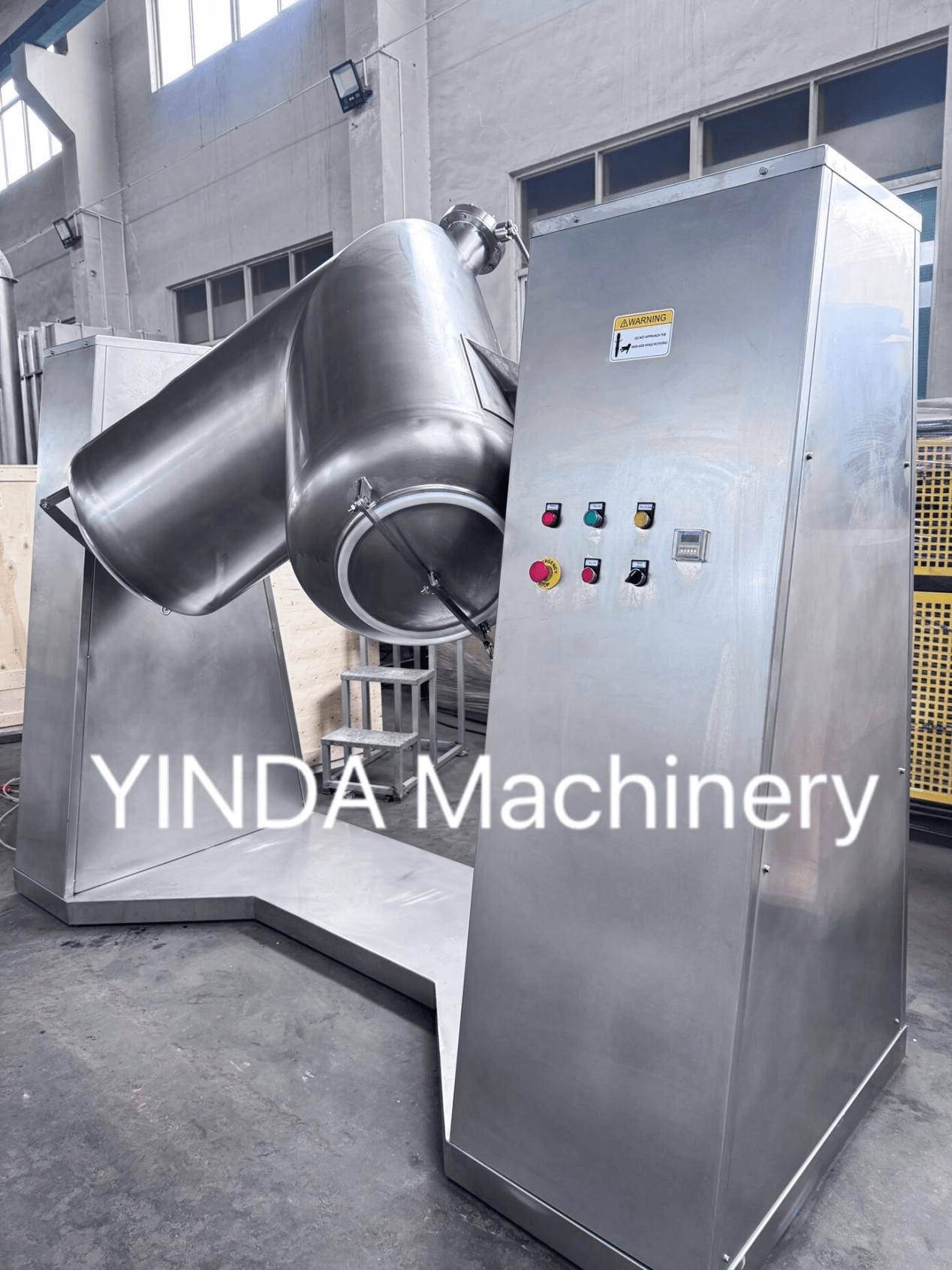
| Mélangeur à palette | Powders and solids requiring paddle action | Paddle-driven circulation | Flexible mixing action |
| Mélangeur en V | Gentle dry blending | Tumbling and splitting | Gentle product handling |
9. Yinda Machinery’s Ribbon Blender Solution
Yinda Machinery focuses on powder-processing equipment and provides ribbon blender solutions for manufacturers that need dependable industrial mixing. Its YDLH series can be configured in different capacities and material options to suit varied production environments.
Application-Based Selection
Yinda can evaluate material characteristics, batch size, construction requirements, and desired production performance before recommending equipment.
Complete Processing Focus
Ribbon blending equipment can be considered as part of a wider powder-processing line alongside feeding, conveying, grinding, screening, and packing equipment.
Flexible Configuration
Construction materials, capacities, discharge arrangements, and other process details can be matched to the application.
10. Typical Ribbon Blender Production Workflow
For a typical powder-blending operation, the ribbon blender is integrated into a straightforward material-handling workflow. The exact sequence depends on the formulation and the rest of the production line.
- Material Preparation – Inspect and prepare ingredients according to the formulation.
- Feeding – Transfer measured ingredients into the mixing vessel.
- Ribbon Mixing – Operate the agitator for the required mixing cycle.
- Quality Check – Verify the blend meets the required consistency and formulation criteria.
- Discharge – Remove the finished blend through the machine’s discharge outlet.
- Downstream Processing – Transfer the blended material to screening, conveying, filling, or packaging equipment when required.
11. Factors That Affect Mixing Performance
Even a well-designed ribbon blender needs the right operating conditions to achieve consistent results. Mixing performance can be influenced by several factors.
Material Properties
Particle size, density, moisture, flowability, and cohesion can change how ingredients circulate inside the vessel.
Fill Level
The amount of material loaded into the mixer affects available space for ribbon movement and circulation.
Temps de mélange
The required cycle depends on the formulation, ingredient ratios, and desired degree of uniformity.
Configuration des machines
Ribbon geometry, capacity, speed, discharge design, and construction can all influence the overall process.
Frequently Asked Questions
What is a ribbon blender machine used for?
A ribbon blender machine is primarily used to mix dry powders, granules, and other bulk solids into a more uniform blend. It is used across food, pharmaceutical, chemical, agricultural, mineral, and related industries.
How does a ribbon blender mixer machine achieve uniform mixing?
Its inner and outer ribbons create opposing material flows. This continuously circulates and redistributes ingredients throughout the horizontal mixing chamber.
带式搅拌机可以处理哪些材料?
只要机器针对物料进行了适当的配置,它就可以处理许多干燥的粉末和颗粒,包括食品配料、香料、添加剂、化学粉末、矿物质、肥料成分和饲料配料。
Yinda可以定制丝带搅拌机吗?
银达机械能够根据材料特性、生产能力、施工要求、出料方式及其他工艺需求,评估应用需求并提供合适的配置。
有哪些建筑材料可供选择?
根据应用场景的不同,带式混合机设备可采用不锈钢或碳钢材质。具体选择取决于卫生条件、耐腐蚀性和工艺条件。
如何选择合适的带式搅拌机容量?
容量的选择应根据批次大小、物料堆积密度、所需生产量、填充条件和未来生产需求,而不是仅仅根据容器的标称容积。
为什么选择银达机械进行带状混纺?
银达机械为寻求实用且应用导向型混合解决方案的制造商提供粉体加工设备。其带式混合机可根据物料、生产要求和整体工艺进行选择和配置。
- 粉末加工设备方面的经验
- 适用于多个行业的带式混合机解决方案
- 不同的容量和结构方案
- 基于应用的设备选择
- 与更广泛的粉末处理系统的潜在集成
- 为设备选型和项目提供技术支持
- 专注于可靠的工业运营

结论
对于需要均匀混合粉末和颗粒的生产商而言,带式混合机是一种实用之选。其卧式设计和双带搅拌器可实现物料的连续循环,有助于不同成分形成均匀的混合物。
合适的设备取决于物料、批量大小、生产能力、结构要求以及所需的混合性能。银达机械提供以应用为导向的设备选型和可定制配置,帮助制造商找到适合其生产工艺的带式混合机。
需要一台带状搅拌机吗?
无论您需要一台独立的带式混合机,还是想将混合设备集成到完整的粉末加工生产线中,银达机械都能帮助您评估适合您的物料和生产要求的正确解决方案。