
Hibiscus Powder Processing for Food and Beverage by Yinda Machinery
A practical industrial solution for hibiscus powder processing, designed to improve particle size consistency, preserve natural color and active compounds, and support stable food and beverage production.
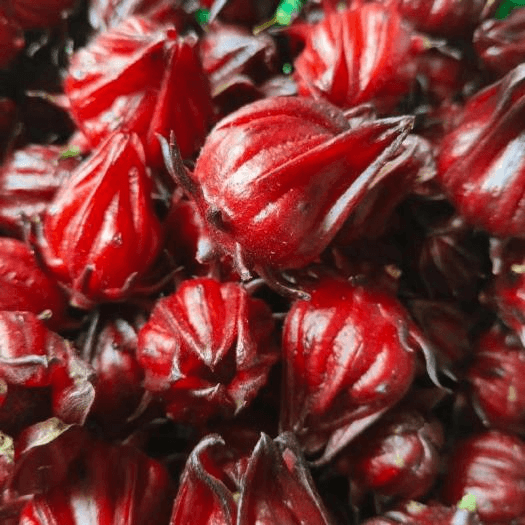
Hibiscus powder processing is widely used in the food and beverage industry for producing natural colorants, functional beverages, herbal teas, and health-related products. Hibiscus, also known as roselle, is rich in anthocyanins, antioxidants, and organic acids, making it a valuable raw material for natural product formulations. However, hibiscus is also a fibrous and heat-sensitive plant material, so an industrial hibiscus powder processing system is usually required instead of simple standalone grinding equipment.
1. Raw Material Characteristics of Hibiscus (Roselle)
Dried hibiscus flowers are lightweight, fibrous, and contain valuable natural active compounds. In raw form, they are usually not suitable for direct fine grinding.
Common Problems Without Proper Processing
- Uneven particle size distribution
- Low grinding efficiency
- Equipment blockage
- Loss of color and nutrients
2. YDCS Series Coarse Crusher for Hibiscus Pretreatment
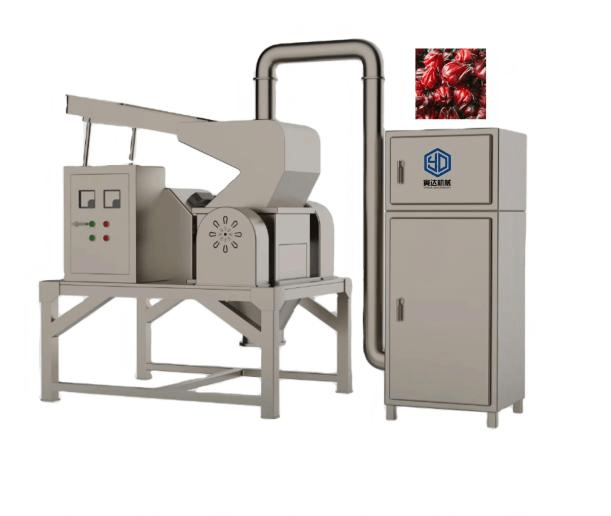
The first step in hibiscus powder processing is coarse crushing. This stage reduces raw hibiscus into uniform small particles to ensure smooth feeding into the fine grinding system.
Principe de fonctionnement
The material enters the crushing chamber and is processed by high-speed rotating blades through cutting, shearing, and impact forces. The crushed material is discharged through a screen with controlled particle size.
Principales caractéristiques
- Food-grade 304 / 316L stainless steel construction
- Adjustable particle size (5–20 mm) by changing screen
- Stable and continuous operation
- Easy cleaning and maintenance
- Suitable for hibiscus, herbs, spices, and other fibrous materials
- Widely used in food, pharmaceutical, and chemical industries
Why This Stage Matters
Coarse pretreatment helps create a more uniform feed size before fine grinding, which supports better grinding efficiency, smoother material flow, and more stable final powder quality.
YDCS Series Coarse Crusher Technical Parameters
| Modèle | Capacity (kg/hr) | Feeding Size (mm) | Output Size (mm) | Motor (kW) | Speed (r/min) | Machine Size (mm) | poids (kg) |
|---|---|---|---|---|---|---|---|
| YDCS-100 | 10–80 | <80 | 5–20 | 1.5 | 960 | 1150×810×1410 | 280 |
| YDCS-200 | 100–200 | <100 | 5–20 | 4 | 960 | 1250×950×1550 | 350 |
| YDCS-300 | 200–300 | <100 | 5–20 | 5.5 | 960 | 1320×1040×1600 | 450 |
| YDCS-400 | 300–400 | <100 | 5–20 | 11 | 960 | 1400×1100×1700 | 550 |
| YDCS-600 | 500–600 | <100 | 5–20 | 15 | 960 | 1510×1200×1720 | 650 |
| YDCS-800 | 800–1000 | <100 | 5–20 | 18.5 | 960 | 1800×1250×1800 | 950 |
| YDCS-1000 | 1000–1200 | <100 | 5–20 | 22 | 960 | 2000×1350×1950 | 1100 |
3. YDWF Series Low-Temperature Air Classifier Mill for Hibiscus Powder Processing
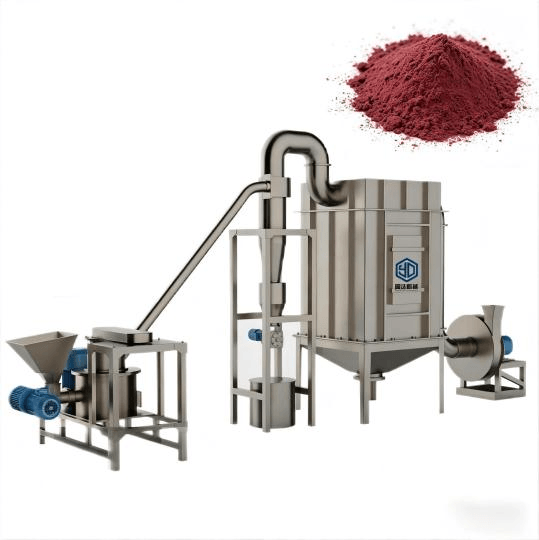
The second and core stage of hibiscus powder processing is superfine grinding. This stage largely determines final powder quality, including fineness, color, and functional properties. To protect heat-sensitive compounds in hibiscus, a low-temperature grinding system is usually recommended.
System Composition
- YDWF Series Air Classifier Mill
- YDLF Series Air Cooling Chiller
Working Principle of the YDWF Series Air Classifier Mill
Pre-crushed hibiscus particles enter the grinding chamber and are subjected to high-speed impact, collision, and shearing. A built-in classifier ensures that only fine particles meeting the required specification are collected, while coarse particles are returned for further grinding. This supports more uniform particle size distribution and more stable production quality.
4. Role of the YDLF Series Air Cooling Chiller
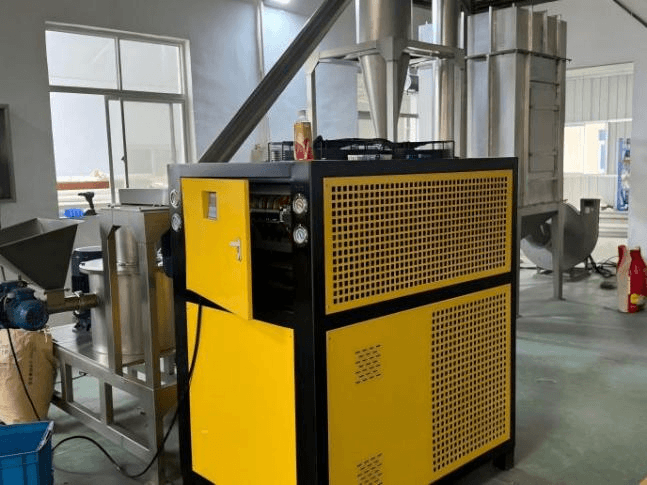
During mechanical grinding, heat is generated by friction. Excess heat may damage anthocyanins, natural color, and nutritional compounds. The YDLF air cooling chiller works together with a high-pressure fan to form a continuous temperature control system.
How It Works
The system draws in ambient air, cools it through the chiller, and continuously delivers it into the grinding chamber. During operation, the circulating airflow removes grinding heat in real time, helping maintain a stable processing temperature of approximately 10–20°C and supporting better preservation of hibiscus powder quality.
5. Key Features of the Low-Temperature Air Classifier Mill System
Integrated Grinding & Classifying
Supports stable superfine powder production with more uniform particle distribution.
Continuous Air Cooling
Helps protect heat-sensitive compounds and reduce thermal damage during grinding.
Adjustable Fineness
Classifier wheel speed can be adjusted to meet different application requirements.
Fully Enclosed Dust-Free System
Cleaner production environment with improved powder recovery and lower contamination risk.
Food-Grade Stainless Steel
Suitable for food, beverage, herbal, and nutrition-related powder applications.
Broad Botanical Application
Suitable for hibiscus, sugar, herbal materials, and other botanical powders.
YDWF Series Air Classifier Mill Technical Parameters
| Modèle | Capacity (kg/hr) | Feeding Size (mm) | Crushing Fineness (mesh) | Motor Power (kW) | Dimensions (mm) |
|---|---|---|---|---|---|
| YDWF-15 | 20–100 | ≤10 | 80–320 | 16.93 | 3000×1600×2600 |
| YDWF-20 | 50–200 | ≤10 | 80–320 | 31.3 | 3500×1900×3300 |
| YDWF-30 | 100–500 | ≤10 | 80–320 | 50.8 | 3800×1900×3300 |
| YDWF-60 | 200–800 | ≤10 | 80–320 | 79.85 | 5000×2600×4300 |
| YDWF-80 | 300–1000 | ≤10 | 80–320 | 99.2 | 5800×2800×4300 |
| YDWF-100 | 800–1500 | ≤10 | 80–320 | 134 | 5800×3000×4300 |
| YDWF-120 | 1500–2000 | ≤10 | 80–320 | 169 | 5800×3200×4300 |
Complete Hibiscus Powder Processing System
A complete hibiscus powder processing line can include:
- YDCS Series Coarse Crusher for pretreatment
- YDWF Series Air Classifier Mill for superfine grinding
- YDLF Series Air Cooling Chiller for temperature control
By combining these technologies, Yinda Machinery provides a more reliable industrial solution for stable production, consistent powder quality, and efficient operation.
6. Applications of Hibiscus Powder
- Functional beverages
- Herbal tea products
- Nutritional supplements
- Natural food colorants
- Health and wellness products
Fine particle size can help improve solubility, dispersion, and formulation stability, which makes the powder more suitable for food and beverage processing.
Why Choose Yinda Machinery
Yinda Machinery focuses on complete powder processing solutions for global customers.
Our Services Include
- Customized process design based on raw materials
- Equipment selection and system integration
- Technical support from testing to production
- Stable industrial-grade machinery manufacturing
- Global service support for food and herbal industries
We help customers improve production efficiency, product quality, and market competitiveness.
7. FAQ – Hibiscus Powder Processing
1. What is hibiscus powder processing?
Hibiscus powder processing is the industrial process of converting dried hibiscus flowers into fine powder through controlled crushing and grinding systems.
2. What equipment is needed for hibiscus powder processing?
A complete system usually includes a YDCS coarse crusher, a YDWF air classifier mill, and a YDLF air cooling chiller.
3. Why is low-temperature grinding important?
Low-temperature grinding helps preserve anthocyanins, natural color, and nutrients in hibiscus by reducing heat damage during processing.
4. What is the role of the coarse crusher?
The coarse crusher reduces raw hibiscus into more uniform particles for smoother feeding into the next fine grinding stage.
5. What industries use hibiscus powder?
Hibiscus powder is widely used in food, beverages, health products, herbal teas, and natural colorant applications.
6. Can the system be customized?
Yes. Yinda Machinery provides customized solutions based on the customer’s material, capacity, and process requirements.
Get a Customized Hibiscus Powder Processing Solution
Yinda Machinery supports global manufacturers with material testing, customized process design, equipment selection, and complete production line solutions for hibiscus and other botanical powders.