
Modern food manufacturers require grinding equipment that delivers precision, hygiene, efficiency, and consistent particle size. Whether producing spice blends, seasoning powders, starches, sugars, dehydrated vegetables, or protein ingredients, selecting the right milling technology is essential for maintaining product quality and production efficiency.
一种 pin mill machine has become one of the most trusted grinding solutions for modern food processing because it combines high-speed impact grinding with exceptional particle size control. Compared with traditional grinding systems, pin mills provide higher efficiency, lower heat generation, and cleaner production, making them suitable for a wide range of food ingredients.
At Yinda Machinery, we manufacture advanced milling equipment that meets international food safety standards. Our horizontal design stainless steel pin mill is engineered for continuous industrial production while maintaining outstanding grinding accuracy. For manufacturers looking to reduce powder loss and improve workplace cleanliness, our pin mill with automatic dust collector provides an efficient and environmentally friendly solution.
This guide explains how pin mill machines work, why they are widely used in food manufacturing, their key advantages, common applications, and how to choose the right model for your production requirements.
What Is a Pin Mill Machine?
A pin mill machine is a high-speed impact grinding system designed to reduce dry materials into fine, uniform powders. Unlike conventional crushing equipment that primarily relies on compression, a pin mill uses hardened pins mounted on one or two rotating discs. As material enters the grinding chamber, these pins generate powerful impact and shearing forces that rapidly reduce particle size.
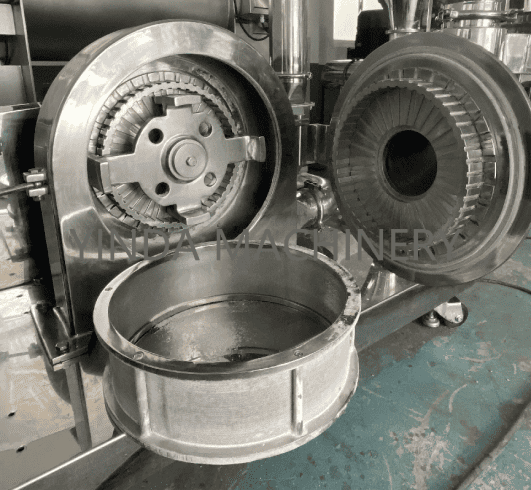
The grinding process is fast, efficient, and highly precise, allowing manufacturers to produce powders ranging from coarse granules to micron-level particles depending on the application. This combination of speed and precision makes pin mills one of the preferred grinding solutions for modern food processing facilities.
Because the grinding action is carefully controlled, pin mills are especially suitable for food ingredients that require:
- Consistent particle size
- Minimal contamination
- High production efficiency
- Uniform mixing performance
- Excellent product appearance
Beyond food manufacturing, pin mill machines are widely used in pharmaceutical, chemical, nutraceutical, and cosmetic industries where precise particle size control and hygienic production are equally important.
Yinda Machinery’s horizontal design stainless steel pin mill is built with food-grade stainless steel for excellent corrosion resistance, easy cleaning, and long-term durability, helping manufacturers meet modern food safety standards while maintaining reliable production performance.

Industries That Use Pin Mill Machines
The versatility, precision, and hygienic design of pin mill machines make them valuable across numerous industries where consistent particle size and reliable production are essential.
Food manufacturers rely on pin mill machines to produce:
- Spice powders
- Seasoning blends
- Powdered sugar
- Rice flour
- Protein powders
- Dehydrated vegetable powders
Uniform particle size improves blending, flavor distribution, product appearance, and packaging consistency.
Pin mills are ideal for producing finely ground:
- Black pepper
- 辣椒
- Turmeric
- Cumin
- Coriander
- Cinnamon
Fast grinding with minimal heat helps preserve essential oils, aroma, and natural flavor.
Manufacturers use pin mills for:
- Active ingredients
- Herbal extracts
- Nutritional supplements
- Protein blends
Excellent particle size control supports consistent formulation and high product quality.
Pin mills are also widely used for:
- Chemical additives
- 颜料
- Powder coatings
- Cosmetic ingredients
- Specialty compounds
Their hygienic stainless steel construction and consistent grinding performance make them suitable for demanding industrial applications.
Why Pin Mill Machines Are Ideal for Food Grinding
Food processing requires more than simply reducing particle size. Grinding equipment must preserve ingredient quality while maintaining hygiene, efficiency, and production consistency. A modern pin mill machine excels in all of these areas.
Excellent Particle Size Uniformity
Uniform particle size improves product appearance, mixing performance, flavor distribution, dissolution, and packaging consistency.
研磨效率高
Repeated high-speed impacts allow manufacturers to process large production volumes while reducing energy consumption and operating costs.
Food-Grade Stainless Steel Construction
Smooth stainless steel surfaces resist corrosion, simplify cleaning, reduce contamination, and comply with modern food processing standards.
Reduced Heat Generation
Efficient airflow and rapid grinding help preserve essential oils, natural aromas, nutrients, and color in heat-sensitive food ingredients.
Common Food Applications
A pin mill machine can efficiently process hundreds of dry food ingredients, including:
- Black pepper
- 辣椒
- Turmeric
- Cumin
- Coriander
- Cinnamon
- Powdered sugar
- Rice flour
- Wheat flour
- Garlic powder
- Onion powder
- 咖啡
- Tea
- Soy protein
- Pea protein
- Plant-based nutritional powders
Benefits of a Pin Mill with Automatic Dust Collector
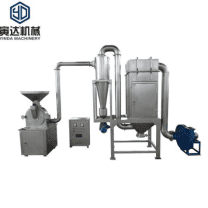
Integrating an automatic dust collection system improves production efficiency while creating a cleaner and safer working environment.
- Cleaner production environment
- Reduced airborne dust
- Higher product recovery
- Lower raw material waste
- Improved worker safety
- Easier equipment maintenance
- Better compliance with food safety standards
-

How to Choose the Right Pin Mill Machine
Before investing, evaluate the following factors:
- Material hardness and moisture content
- Desired particle size
- Production capacity
- Automation requirements
- Cleaning and maintenance accessibility
- Future production expansion plans
Selecting the correct configuration helps maximize productivity while minimizing operating costs over the long term.
为什么选择银达机械?
Yinda Machinery specializes in advanced powder processing equipment for the food, pharmaceutical, chemical, and nutraceutical industries. Our horizontal stainless steel pin mills are engineered for exceptional grinding precision, hygienic operation, and long-term durability.
In addition to standalone pin mills, we provide complete powder processing solutions that include feeding systems, conveying equipment, dust collectors, mixers, vibrating screens, storage systems, and packaging machines. Every solution can be customized to match your material characteristics, required particle size, production capacity, and factory layout.
Whether you’re upgrading an existing production line or building a new facility, Yinda Machinery offers reliable equipment, expert engineering support, and customized solutions that help improve efficiency and product quality.
Industries That Commonly Use Pin Mill Machines
Thanks to their high-speed grinding performance, hygienic construction, and excellent particle size control, pin mill machines are widely used across multiple industries. Their versatility allows manufacturers to process a broad range of dry materials while maintaining consistent product quality.
食品加工
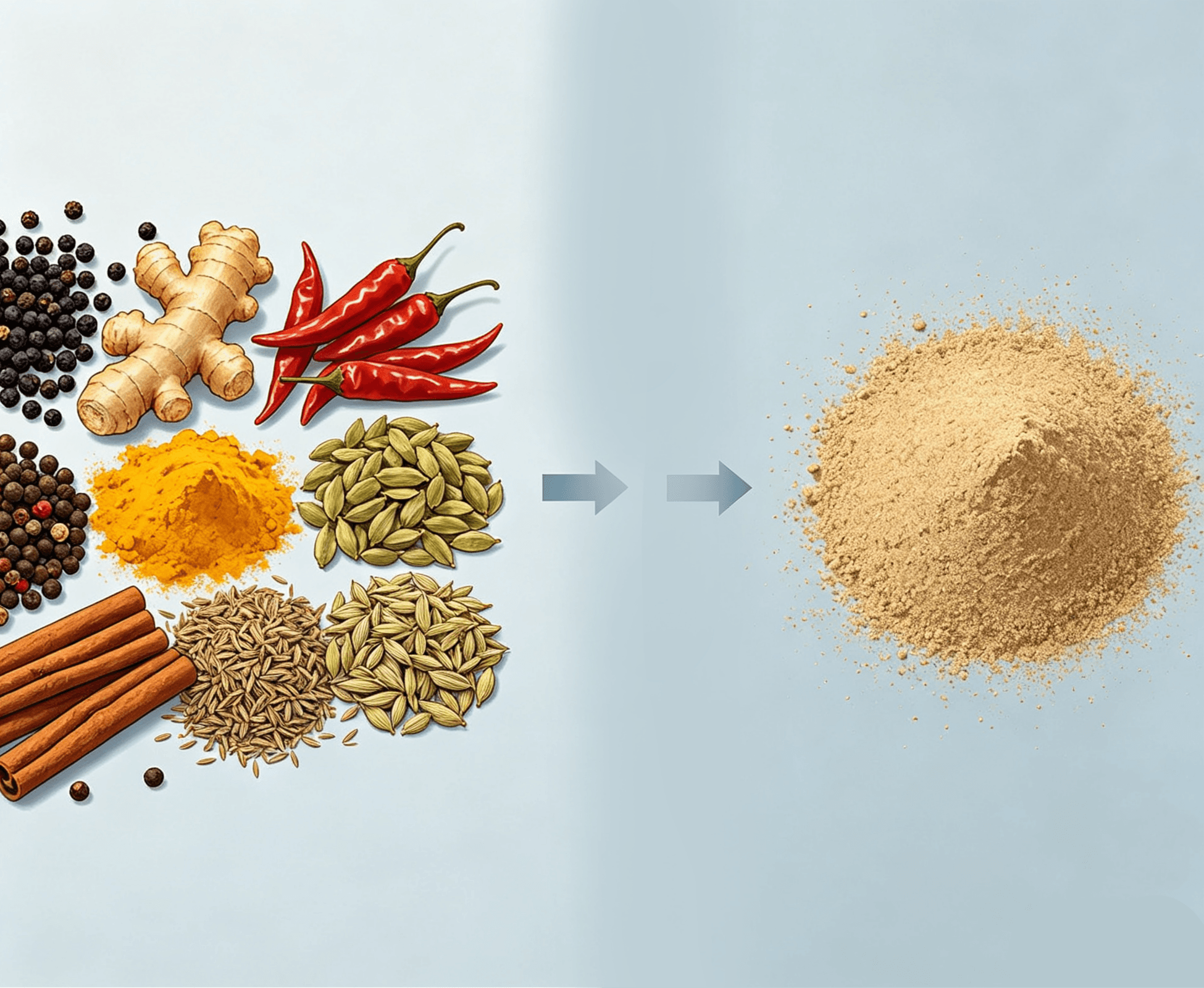
Food manufacturers use pin mills to produce:
- Spice powders
- Seasoning blends
- Powdered sugar
- Rice flour
- Protein powders
- Vegetable powders
Uniform particle size improves blending, flavor consistency, product appearance, and packaging quality.
Spice Manufacturing
Pin mills are ideal for grinding spices while preserving their natural aroma and essential oils.
- Black pepper
- White pepper
- 辣椒
- Turmeric
- Cumin
- Coriander
- Cinnamon
医药行业
High grinding precision makes pin mills suitable for producing pharmaceutical powders requiring controlled particle sizes and hygienic processing.
Chemical Processing
Chemical manufacturers rely on pin mills to process fine powders used in industrial formulations while maintaining production efficiency.
Nutraceutical Production
Protein powders, dietary supplements, functional food ingredients, and nutritional blends can all be processed efficiently using a pin mill machine.
Cosmetic Ingredients
Cosmetic manufacturers use pin mills to create fine, uniform powders for beauty and personal care products that require consistent texture.
For food applications, hygienic construction is equally important as grinding performance. That’s why Yinda Machinery’s Horizontal Design Stainless Steel Pin Mill is manufactured using premium food-grade stainless steel that resists corrosion, simplifies cleaning, and supports international food safety standards.
How Does a Pin Mill Machine Work?
Although pin mills operate at extremely high speeds, their working principle is simple and highly efficient. The grinding process follows four key stages that ensure consistent particle size and high production efficiency.
Material Feeding
The grinding process begins by feeding raw materials into the grinding chamber through a controlled feeding system. Depending on the production line, feeding may be performed manually or automatically using screw conveyors, vacuum feeders, or hopper systems.
Maintaining a steady and consistent feed rate ensures stable grinding performance, maximizes production efficiency, and helps produce uniform particle sizes throughout the process.
High-Speed Impact Grinding
Inside the grinding chamber, hardened steel pins mounted on high-speed rotating discs generate repeated impact and shearing forces. As material passes through these rotating pins, every collision rapidly breaks particles into increasingly finer sizes.
Unlike conventional crushers that mainly rely on compression, pin mills create a much more consistent powder distribution through continuous impact, friction, turbulence, and shearing action.
- High-speed impact
- Shearing force
- Controlled friction
- Powerful airflow turbulence


Particle Size Control
One of the greatest advantages of a pin mill machine is its ability to produce controlled and repeatable particle sizes for different products.
Manufacturers can fine-tune grinding performance by adjusting several operating parameters, including:
- Rotor speed
- Feed rate
- Pin configuration
- Screen size (where applicable)
This flexibility allows processors to manufacture powders ranging from coarse granules to micron-level particles without replacing the entire machine.
Powder Collection
After grinding, the finished powder exits the milling chamber through the airflow generated during operation. Many manufacturers integrate a pin mill with automatic dust collector to improve production efficiency and minimize product loss.
The automatic dust collection system separates powder from the air stream while maintaining a cleaner production environment.
Key benefits include:
- Cleaner production environment
- Reduced airborne dust
- Higher product recovery
- Improved worker safety
- Simplified equipment maintenance
Why Pin Mill Machines Are Perfect for Food Grinding
Food processing requires much more than simply reducing particle size. Grinding equipment must preserve ingredient quality while maintaining strict hygiene standards, production consistency, and high operational efficiency. A modern pin mill machine is specifically engineered to meet these demands, making it one of the preferred grinding solutions for food manufacturers worldwide.
Excellent Particle Size Uniformity
Consistent particle size directly affects product quality. Whether manufacturing seasoning blends, powdered sugar, instant beverages, bakery ingredients, or nutritional powders, a pin mill produces highly uniform particles that improve:
- Product appearance
- Dissolution performance
- Mixing uniformity
- Flavor distribution
- Packaging consistency
By minimizing oversized particles while reducing unnecessary fines, manufacturers achieve reliable product quality from batch to batch.
研磨效率高
Pin mills achieve outstanding grinding performance because materials are subjected to repeated high-speed impacts within milliseconds. This allows manufacturers to process large production volumes while maintaining stable output quality.
The result is:
- Faster production cycles
- Higher throughput
- Reduced processing time
- Improved energy efficiency
- Lower operating costs
For medium and large-scale food manufacturers, these productivity improvements contribute to significant long-term cost savings.
Hygienic Stainless Steel Construction
Food safety remains one of the highest priorities in modern manufacturing. Yinda Machinery designs every horizontal design stainless steel pin mill using premium food-grade stainless steel that resists corrosion while supporting sanitary production.
Its hygienic construction provides:
- Smooth internal surfaces
- Easy cleaning
- Reduced product residue
- Excellent corrosion resistance
- Compliance with food processing standards
Because stainless steel does not react with most food ingredients, it is ideal for processing sugar, salt, spices, herbs, grains, protein powders, coffee, tea, milk powder, and dehydrated vegetables.
Reduced Heat Generation
Some food ingredients lose aroma, flavor, nutrients, or color when exposed to excessive grinding temperatures. A properly designed pin mill minimizes unnecessary heat buildup through efficient airflow and rapid grinding.
Lower grinding temperatures help preserve:
- Essential oils in spices
- Natural aroma
- Ingredient color
- Nutritional value
- Functional food properties
This makes pin mills especially suitable for premium food products where maintaining ingredient quality is essential.
Flexible Processing Capabilities
One of the biggest advantages of a pin mill machine is its versatility. A single machine can process hundreds of dry food ingredients with only minor adjustments, allowing manufacturers to maximize equipment utilization throughout the year.
The same pin mill machine can efficiently process a wide variety of dry food materials with minimal adjustments. This versatility allows manufacturers to maximize equipment utilization while producing different products on the same production line.
| Food Category | Typical Products |
|---|---|
| 香料 | Black pepper, chili, turmeric, cumin, coriander, cinnamon |
| Sugars | White sugar, icing sugar, brown sugar |
| 调味料 | Flavor powders, bouillon, soup mixes |
| 谷物 | Rice flour, wheat flour, corn flour |
| 草药 | Mint, parsley, basil, oregano |
| Tea & Coffee | Tea powder, coffee powder |
| Vegetables | Onion powder, garlic powder, spinach powder |
| Fruits | Apple powder, banana powder, mango powder |
| Proteins | Soy protein, pea protein, nutritional powders |
This broad processing capability enables food manufacturers to maximize production flexibility while reducing the need for multiple grinding systems.
Key Advantages of a Horizontal Design Stainless Steel Pin Mill
Although pin mills are available in several configurations, the horizontal design stainless steel pin mill has become the preferred solution for modern food processing facilities. Its horizontal layout improves production efficiency while making routine maintenance and sanitation significantly easier.
Stable Operation
The horizontal structure provides excellent mechanical balance while reducing vibration during high-speed operation.
Benefits include:
- Longer bearing life
- Reduced maintenance requirements
- Improved grinding consistency
- Greater machine reliability
Easier Cleaning
Food manufacturers frequently switch between different products. A horizontal grinding chamber allows operators to clean the machine quickly, reducing downtime and minimizing the risk of cross-contamination.
Improved Equipment Accessibility
Routine inspection and maintenance become much easier because operators have convenient access to:
- Grinding discs
- Pins
- 轴承
- Screens
- Seals
Long Service Life
Manufactured from premium stainless steel and precision-engineered components, Yinda Machinery’s pin mills provide dependable long-term performance while reducing replacement costs and unexpected production downtime.
Food Processing Applications of a Pin Mill Machine
A pin mill machine is one of the most versatile grinding systems available for the food industry. Its ability to produce consistent particle sizes while maintaining ingredient quality makes it suitable for numerous food manufacturing applications.
Spice Grinding
Spices are among the most common materials processed using pin mills. Since many spices contain natural oils and aromatic compounds, they require a grinding system that minimizes heat while producing a fine and uniform powder.
Typical spices include:
- Black pepper
- White pepper
- 辣椒
- Turmeric
- Cumin
- Coriander
- Cinnamon
- Cardamom
- Nutmeg
- Cloves
- Star anise
- 姜
Consistent grinding improves flavor distribution, blending performance, and the appearance of seasoning products.
Sugar Processing
Food manufacturers widely use pin mills to produce fine sugar powders for bakery, confectionery, and beverage applications.
Common products include:
- Powdered sugar
- Icing sugar
- Fine granulated sugar
- Sugar blends
The high-speed grinding action produces a smooth and uniform texture that dissolves quickly during food production.
Herb Grinding
Dried herbs require gentle grinding to preserve their natural aroma, color, and functional properties. A horizontal stainless steel pin mill provides hygienic processing while making cleaning between production batches much easier.
Examples include:
- Basil
- 牛至
- Parsley
- Rosemary
- Mint
- Thyme
- Dill
Grain & Flour Production
Pin mills are widely used for producing specialty grain flours and powdered food ingredients with controlled particle sizes.
Typical products include:
- Rice flour
- Corn flour
- Wheat flour
- Oat flour
- Chickpea flour
- Millet flour
Dehydrated Vegetable Processing
Modern food manufacturers increasingly use vegetable powders in soups, sauces, seasoning blends, snacks, and instant foods.
Common materials include:
- 蒜
- 洋葱
- Tomato
- Spinach
- Beetroot
- Carrot
- Pumpkin
- Celery
Uniform grinding improves blending efficiency while maintaining a consistent product appearance.
Protein & Nutritional Ingredients
The increasing demand for functional foods has made precision grinding more important than ever.
Pin mills can process:
- Soy protein
- Pea protein
- Rice protein
- Plant-based protein blends
- Dietary fiber
- Nutritional supplements
Fine and consistent powders improve solubility, texture, and mixing performance.
Why Choose a Pin Mill with Automatic Dust Collector?

Powder processing naturally generates airborne dust, particularly when handling lightweight food ingredients. Excess dust not only causes product loss but also affects workplace cleanliness, employee safety, and equipment performance.
一种 pin mill with automatic dust collector addresses these challenges by integrating an efficient dust collection system directly into the grinding process. Instead of allowing fine particles to escape into the production area, the system captures and separates them before filtered air is released.
Cleaner Production Environment
Automatic dust collection significantly reduces suspended powder, helping manufacturers maintain cleaner production lines while lowering contamination risks and housekeeping requirements.
Higher Product Recovery
Capturing valuable fine powders improves production yield, reduces raw material waste, lowers operating costs, and increases overall profitability.
Enhanced Worker Safety
Reducing airborne particles improves visibility, creates a healthier workplace, and helps manufacturers comply with occupational safety requirements.
Easier Equipment Maintenance
Efficient dust collection minimizes powder accumulation on machinery, reduces cleaning time, and helps keep production running smoothly with less maintenance.
How a Horizontal Design Stainless Steel Pin Mill Improves Production Efficiency
Machine design plays a major role in grinding performance. A well-engineered horizontal design stainless steel pin mill offers practical advantages beyond particle size reduction, helping manufacturers improve efficiency, hygiene, and long-term reliability.
Machine design plays an important role in grinding performance. A well-engineered horizontal design stainless steel pin mill offers practical advantages beyond particle size reduction, helping manufacturers improve production efficiency, simplify maintenance, and meet modern food safety requirements.
Better Material Flow
The horizontal configuration allows materials to move evenly through the grinding chamber, reducing clogging while improving grinding consistency.
- Stable production
- Consistent particle size
- Higher throughput
- Reduced downtime
Food-Grade Construction
Manufactured using premium stainless steel, Yinda Machinery’s pin mills offer excellent corrosion resistance, smooth internal surfaces, easy sanitation, reduced product residue, and long equipment life.
Simple Cleaning & Product Changeovers
Operators can quickly disassemble, inspect, and clean major components, reducing downtime between production batches while minimizing cross-contamination.
Pin Mill Machine vs. Other Grinding Equipment
Choosing the right grinding equipment depends on your material characteristics, required particle size, and production capacity. The comparison below highlights the advantages of a pin mill machine for food processing applications.
| 特征 | 针磨机 | 锤磨机 | 空气分级磨 | Ball Mill |
|---|---|---|---|---|
| Grinding Method | High-speed impact & shearing | Impact | Impact + Air Classification | Grinding Media |
| Particle Size Uniformity | Excellent | Moderate | Excellent | Good |
| Food Applications | Excellent | Good | Excellent | Limited |
| Heat Generation | Low | Moderate | Low | Moderate |
| Cleaning Convenience | Easy | Moderate | Easy | Difficult |
| Energy Efficiency | High | Moderate | High | Lower |
| Continuous Production | Excellent | Excellent | Excellent | Moderate |
How to Choose the Right Pin Mill Machine
Material Characteristics
Evaluate hardness, moisture content, oil content, fiber content, bulk density, and abrasiveness before selecting a machine.
Required Particle Size
Configure rotor speed, pin design, and operating parameters according to the desired powder fineness.
生产能力
Select equipment that satisfies current production requirements while allowing room for future expansion.
Automation Requirements
Consider screw conveyors, vacuum feeders, cyclone separators, vibrating screens, packaging machines, and automatic dust collection systems for a complete production line.
Cleaning & Maintenance
Choose machines with smooth stainless steel surfaces, easy access to internal components, and simplified maintenance procedures.
Best Practices for Operating a Pin Mill Machine
- Feed materials evenly to maintain consistent particle size and avoid overloading.
- Inspect grinding components regularly, including pins, rotors, bearings, seals, and screens.
- Clean the equipment after every production run to prevent contamination and maintain food safety.
- Monitor the automatic dust collection system by checking filters, airflow, duct connections, and collection containers.
- Follow a preventive maintenance schedule including lubrication, electrical inspections, bearing checks, calibration, and replacement of worn parts.
Common Mistakes to Avoid When Using a Pin Mill Machine
Avoiding common operating mistakes helps maintain consistent grinding performance, protect equipment, and maximize production efficiency.
Overfeeding the Machine
Feeding excessive material into the grinding chamber reduces efficiency, increases motor load, and produces inconsistent particle sizes. A controlled and steady feed rate ensures stable grinding performance.
Ignoring Routine Maintenance
Regular inspection of pins, bearings, seals, and other wear components helps prevent unexpected downtime while maintaining consistent grinding quality.
Processing Unsuitable Materials
Pin mills perform best with dry materials. Excessive moisture or sticky ingredients may reduce grinding efficiency and cause blockages inside the grinding chamber.
Neglecting Dust Collection
A poorly maintained dust collection system can reduce production efficiency, increase powder loss, and create unnecessary cleaning work. Regular filter inspection keeps the system operating efficiently.
为什么选择银达机械?
Yinda Machinery is a trusted manufacturer of advanced powder processing equipment for the food, pharmaceutical, chemical, nutraceutical, and agricultural industries. With years of engineering experience, we provide complete grinding solutions designed to improve production efficiency, product quality, and operational reliability.
Our horizontal design stainless steel pin mills are manufactured using premium food-grade stainless steel and precision-engineered components to deliver reliable performance, easy cleaning, and long service life. Every machine is designed to meet the demanding requirements of modern industrial production.
Beyond standalone pin mills, Yinda Machinery supplies complete powder processing systems, including vacuum feeders, screw conveyors, cyclone separators, dust collectors, ribbon blenders, vibrating screens, storage silos, and automatic packaging machines. Each solution can be customized according to your raw materials, target particle size, production capacity, and factory layout.
Whether you are upgrading an existing production line or building a new manufacturing facility, our experienced engineering team can recommend the ideal grinding solution to maximize productivity while minimizing operating costs.
Frequently Asked Questions
What materials can a pin mill machine process?
Pin mills are suitable for processing a wide range of dry materials, including spices, herbs, grains, sugars, dehydrated vegetables, protein powders, nutritional ingredients, chemicals, and pharmaceutical materials.
Can a pin mill produce ultra-fine powders?
Yes. Depending on the material properties and machine configuration, a pin mill can produce powders ranging from coarse particles to micron-level fineness with excellent consistency.
Why is stainless steel important for food processing?
Food-grade stainless steel resists corrosion, is easy to clean, reduces contamination risks, and complies with food safety requirements, making it ideal for hygienic food production.
What are the benefits of an automatic dust collector?
An automatic dust collection system improves product recovery, reduces airborne dust, creates a cleaner working environment, enhances worker safety, and minimizes raw material loss.
How do I choose the right pin mill machine?
Consider your raw material characteristics, required particle size, production capacity, cleaning requirements, automation level, and future expansion plans. Working with an experienced manufacturer like Yinda Machinery ensures you receive the most suitable solution.
Conclusion
一种 pin mill machine is one of the most efficient and versatile grinding solutions available for modern food manufacturing. Its ability to produce uniform particle sizes while preserving ingredient quality makes it ideal for processing spices, seasonings, sugars, grains, herbs, dehydrated vegetables, and nutritional ingredients.
When combined with a horizontal stainless steel design and an automatic dust collection system, manufacturers benefit from cleaner production, improved product recovery, easier maintenance, and higher overall efficiency.
If you are looking for a reliable, high-performance pin mill machine, Yinda Machinery offers complete customized grinding solutions designed to meet the unique requirements of your production line. Our experienced engineering team is ready to help you select the ideal equipment to improve productivity and consistently produce high-quality powders.