
The Role of Chemical Mixing Machines in Modern Chemical Manufacturing
Explore how modern chemical mixing machines improve product consistency, batch uniformity, and production efficiency—and learn why Yinda Machinery provides reliable ribbon blenders and customized industrial mixing solutions.
Chemical manufacturing depends heavily on precision, consistency, and process control. Whether producing pigments, detergents, fertilizers, resins, coatings, catalysts, or specialty chemical powders, manufacturers must ensure that every ingredient is distributed evenly throughout the final product.
This is where a reliable chemical mixing machine becomes an essential part of the production process.
Industrial mixing equipment is designed to combine raw materials efficiently while maintaining product uniformity and reducing processing time. The right machine can improve production consistency, minimize material waste, simplify handling, and support large-scale manufacturing operations.
As an experienced mixing machine manufacturer, Yinda Machinery provides a range of industrial mixing and blending solutions designed for chemical powder, granule, and other bulk material applications. From ribbon blenders to V blenders and three-dimensional mixers, Yinda Machinery helps manufacturers select equipment based on their material characteristics and production requirements.
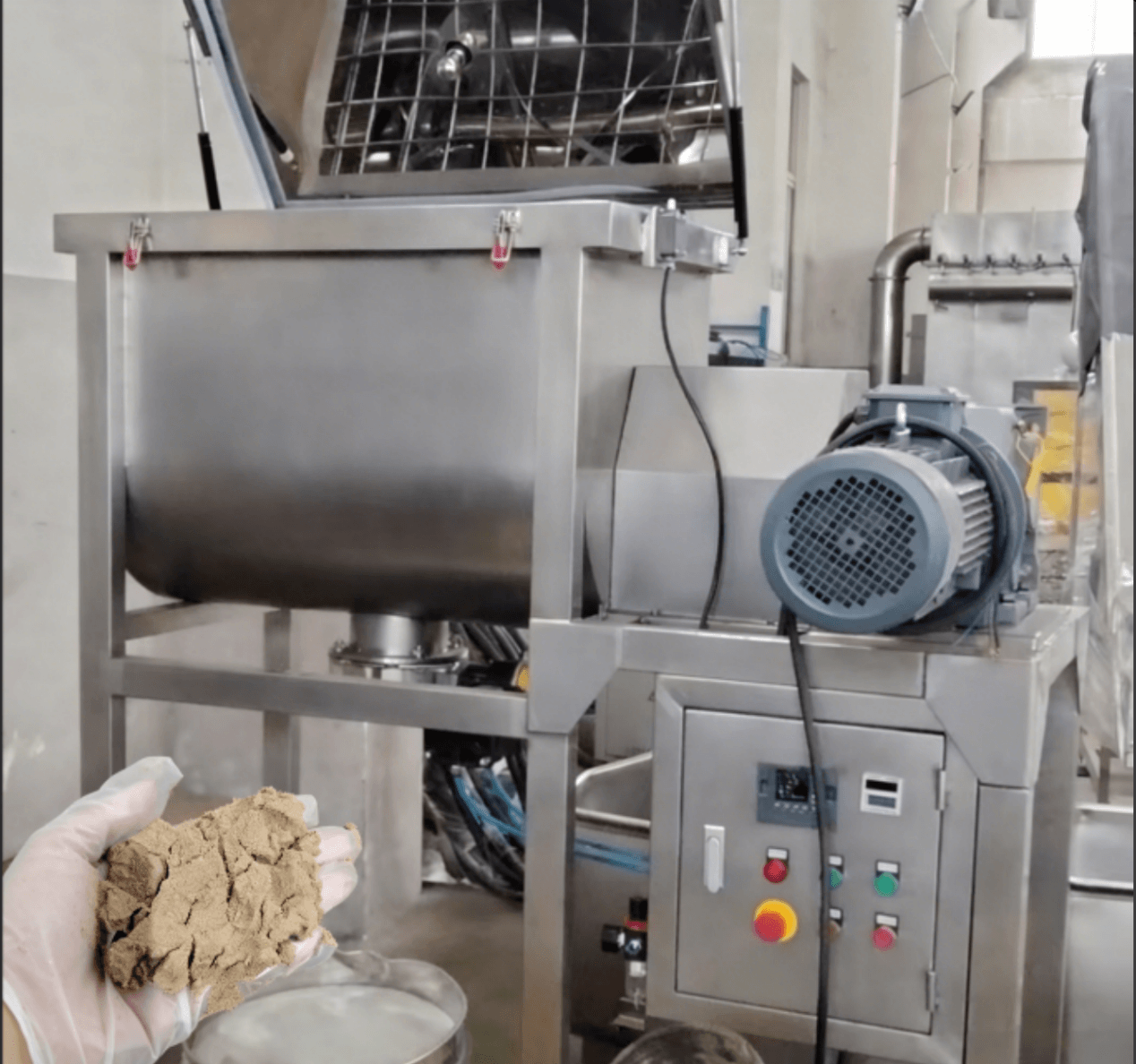
1. Why Mixing Is So Important in Chemical Manufacturing
Mixing may appear to be a simple production step, but in chemical processing, it can directly influence the quality and performance of the finished product.
Chemical products are often made from multiple ingredients with different particle sizes, densities, moisture levels, and flow characteristics. If these materials are not blended properly, the final product may become inconsistent.
Poor mixing can lead to problems such as:
- Uneven ingredient distribution
- Inconsistent product quality
- Material separation
- Longer production cycles
- Increased material waste
- Difficult downstream processing
- Batch-to-batch variations
A properly designed chemical mixing machine helps manufacturers create a more homogeneous mixture by moving materials in controlled directions throughout the mixing chamber.
For chemical manufacturers, this consistency is particularly important when producing products that require precise formulations.
2. The Growing Need for Efficient Chemical Mixing Equipment
Modern chemical production facilities are under constant pressure to improve productivity while maintaining strict quality standards. Manual mixing methods or poorly matched equipment can create bottlenecks that affect the entire production line.
An industrial mixing system should therefore be selected based on more than just batch capacity.
Important considerations include:
- Material properties
- Particle size
- Bulk density
- Moisture content
- Material flowability
- Required mixing accuracy
- Размер партии
- Production frequency
- Cleaning requirements
- Corrosion resistance
Different materials behave differently during mixing. A lightweight powder may require a completely different mixing approach than a dense mineral powder or slightly sticky chemical compound.
This is why working with an experienced mixing machine manufacturer can help businesses choose equipment that matches their actual production process.
3. What Is a Chemical Mixing Machine?
A chemical mixing machine is industrial equipment designed to blend two or more materials into a uniform mixture.
Depending on the application, these machines can process:
- Fine chemical powders
- Granules
- Пигменты
- Resins
- Detergents
- Fertilizer materials
- Additives
- Plastic compounds
- Catalysts
- Coating materials
- Specialty chemicals
The design of the mixing machine determines how materials move inside the chamber.
Some machines rely on rotating ribbons, while others use paddles, tumbling vessels, or multidirectional movement. The best equipment depends on the physical characteristics of the materials and the desired mixing result.
At Yinda Machinery, chemical mixing solutions are available in different designs and capacities to support both small-batch and large-scale industrial production.
4. Ribbon Blender Machine: A Popular Choice for Chemical Mixing
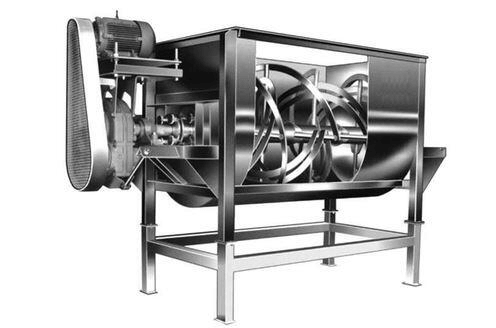
Among the different types of industrial mixing equipment, the Ribbon blender machine is widely used for powder and bulk material blending.
A ribbon blender typically consists of a horizontal U-shaped mixing chamber with inner and outer helical ribbons mounted on a rotating shaft.
As the shaft rotates, the ribbons move materials in opposite directions.
The inner ribbon generally pushes material outward, while the outer ribbon moves material toward the center. This continuous counterflow helps create thorough material circulation throughout the mixing chamber.
How Does a Ribbon Blender Machine Work?
The working principle of a ribbon blender is based on continuous material movement.
During operation:
- Raw materials are loaded into the horizontal mixing chamber.
- The ribbon agitator begins rotating.
- Inner and outer ribbons move materials in different directions.
- Materials circulate throughout the chamber.
- Particles are repeatedly redistributed.
- A more homogeneous mixture is achieved.
- The finished material is discharged through the outlet system.
This mixing action makes the Ribbon blender machine suitable for many dry powder and granular chemical applications.
5. Key Advantages of Using a Ribbon Blender Machine

Ribbon blenders are widely used because they provide an effective combination of efficiency, versatility, and relatively simple operation.
1. Uniform Material Blending
The double-ribbon structure creates continuous movement throughout the mixing chamber.
This helps distribute ingredients more evenly and improves the consistency of the final mixture.
2. Suitable for Different Material Types
A Ribbon blender machine can handle a variety of materials, including powders, granules, and certain slightly moist or cohesive materials.
This makes the equipment useful across multiple chemical manufacturing applications.
3. Efficient Batch Processing
Ribbon blenders are commonly used for batch production.
Manufacturers can process specific quantities of material while maintaining better control over formulation and mixing time.
4. Flexible Capacity Options
Chemical manufacturers have different production requirements.
A laboratory or small-scale facility may need a compact mixer, while a large industrial plant may require equipment with several thousand liters of capacity.
Yinda Machinery provides different equipment sizes and can support customized mixing solutions based on production requirements.
5. Optional Heating and Cooling
Some chemical processes require temperature control during mixing.
Depending on the application, a Ribbon blender machine can be configured with heating or cooling systems to support processes where temperature affects material behavior or product quality.
6. Types of Mixing Machines Used in Chemical Manufacturing
There is no single mixing machine suitable for every chemical application. Different mixer designs offer different movement patterns and mixing characteristics.
Ленточный блендер

Ribbon blenders are commonly used for dry powders, granules, and bulk materials.
Their horizontal design and counterflow ribbon movement provide efficient material circulation.
V Блендер
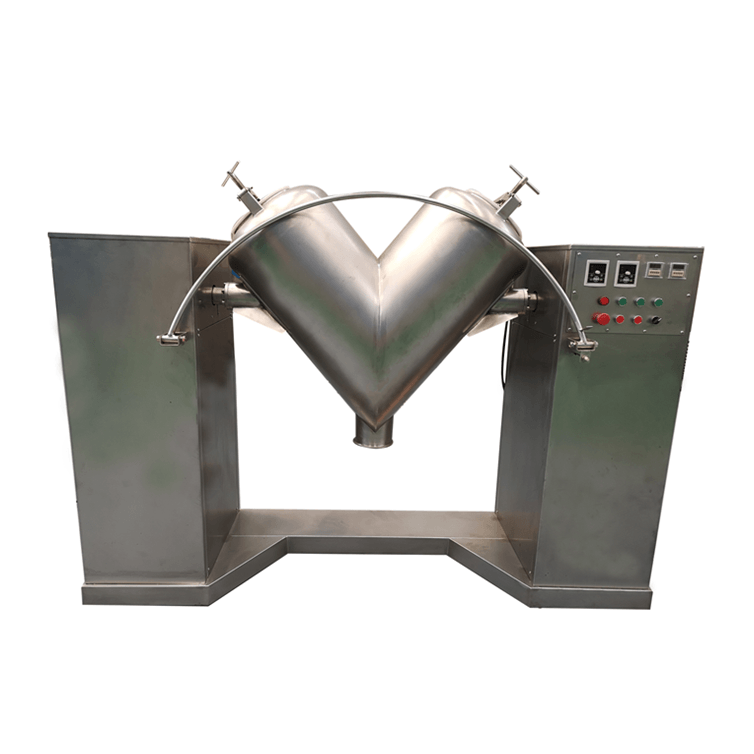
A V blender uses a V-shaped vessel that rotates to create a tumbling mixing action.
It is often suitable for dry powders and free-flowing materials that require gentle blending.
Three-Dimensional Mixer
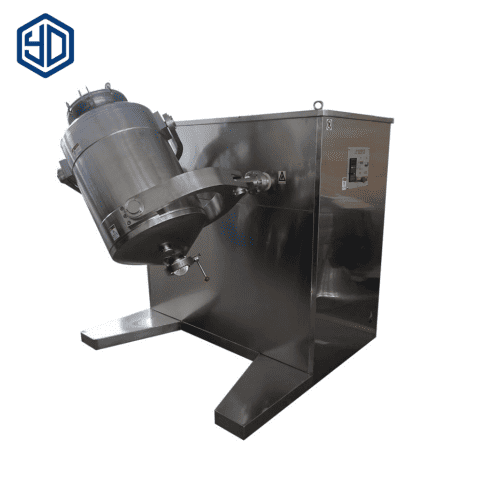
Three-dimensional mixers move materials in multiple directions during operation.
This multidirectional motion can improve material distribution while reducing the possibility of concentrated mixing zones.
Двойной конусный блендер
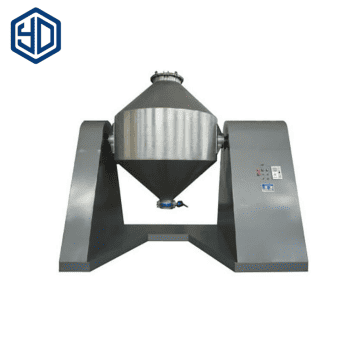
Double cone blenders use a rotating vessel to create a tumbling mixing action.
They are commonly used for dry powders and materials that require gentle blending.
Лопастной миксер
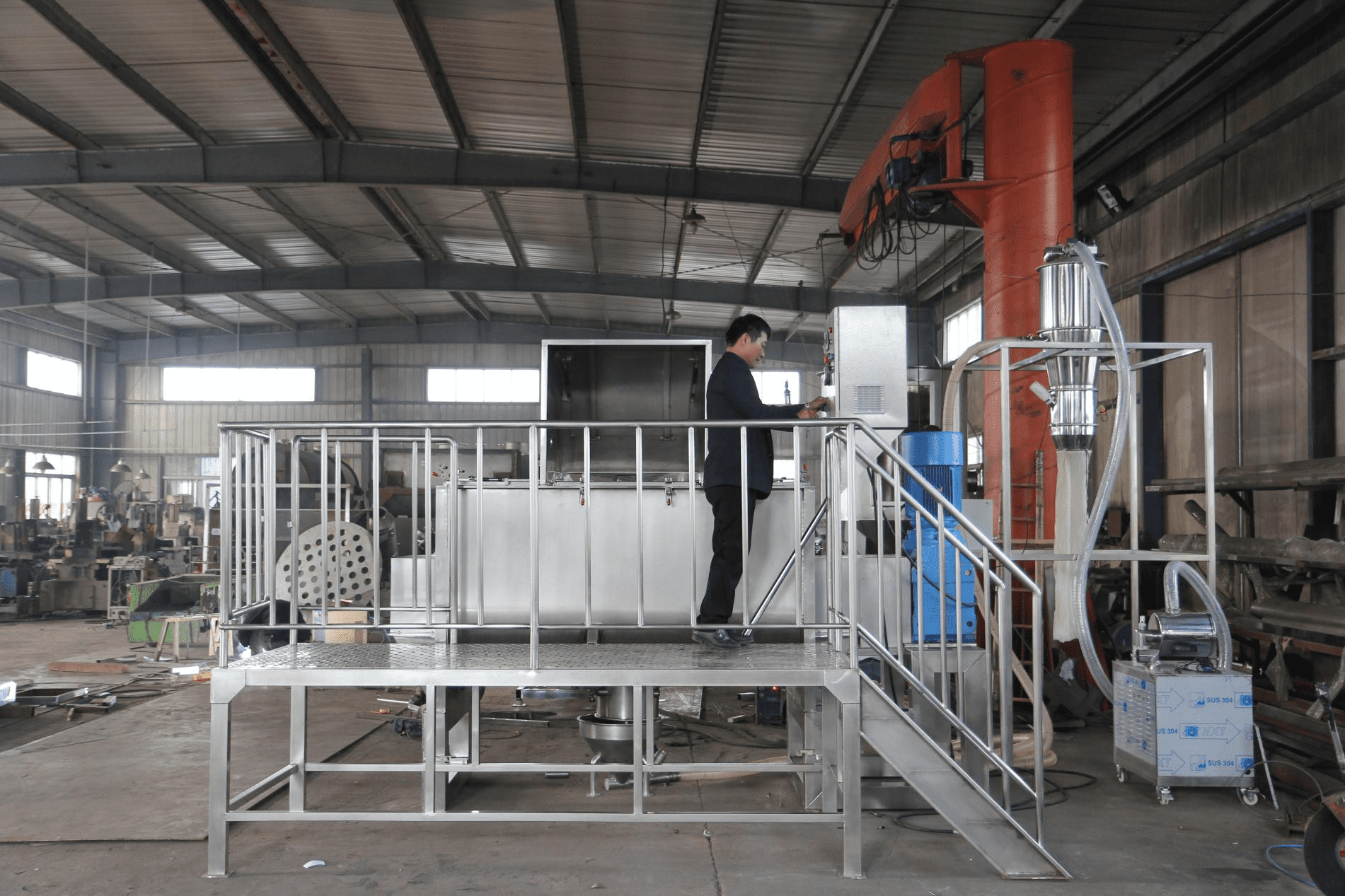
Paddle mixers use rotating paddles to move materials through the mixing chamber.
They can be suitable for certain materials that require faster mixing or different levels of mechanical agitation.
The best choice depends on the material and process requirements.
A professional mixing machine manufacturer should evaluate the application before recommending equipment.
7. Applications of Chemical Mixing Machines
Industrial chemical mixing equipment is used across a wide range of manufacturing processes.
Pigments and Colorants
Pigments must be blended consistently to maintain uniform color distribution and product performance.
Mixing equipment helps manufacturers combine powders and additives more effectively.
Detergents and Cleaning Products
Powder detergents often contain multiple ingredients, including surfactants, builders, fragrances, and other additives.
Efficient mixing helps ensure that these components are distributed consistently.
Resins and Coating Materials
Chemical mixing equipment can be used during the preparation of resin compounds, coating materials, and related formulations.
Material uniformity is important for maintaining consistent product characteristics.
Fertilizer and Agricultural Chemicals
Agricultural chemical products often require multiple powdered ingredients to be blended together.
Industrial mixers can help manufacturers achieve more consistent formulations before packaging or further processing.
Plastic and Polymer Additives
Mixing machines are also used to blend additives, pigments, fillers, and other materials used in plastics and polymer production.
Specialty Chemical Powders
Specialty chemicals often require precise formulations and controlled blending conditions.
The right chemical mixing machine can help manufacturers improve repeatability between production batches.
8. Choosing the Right Chemical Mixing Machine
Selecting a mixing machine based only on capacity can lead to operational problems.
A machine should be selected according to the behavior of the material and the requirements of the production process.
Consider the Material Properties
Manufacturers should evaluate:
- Particle size
- Density
- Flowability
- Moisture content
- Viscosity
- Stickiness
- Corrosiveness
For example, free-flowing powder may be suitable for one type of mixer, while a cohesive or slightly wet material may require a different design.
Determine the Required Batch Size
Production volume plays an important role in equipment selection.
The mixing chamber should provide sufficient working capacity without affecting mixing performance.
Consider Material Compatibility
Chemical materials can sometimes be corrosive or reactive.
For this reason, the contact parts of the machine may need to be manufactured using suitable materials such as stainless steel.
Depending on the application, Yinda Machinery can provide equipment using materials such as stainless steel and other configurations suitable for different industrial requirements.
Evaluate Cleaning Requirements
Some chemical manufacturers process different formulations using the same equipment.
Easy cleaning and accessible machine design can help reduce downtime between production batches.
Consider the Discharge System
Efficient discharge is another important factor.
The outlet system should allow materials to leave the mixing chamber smoothly while minimizing material residue.
9. Why Equipment Customization Matters
Chemical manufacturing processes are rarely identical.
Even companies producing similar products may use different raw materials, production capacities, or formulations.
For this reason, standard equipment is not always the perfect solution.
Customization may include:
- Different mixing capacities
- Material contact options
- Heating or cooling jackets
- Different discharge valves
- Customized motor configurations
- Speed control systems
- Sealing systems
- Automated controls
- Feeding and conveying integration
Working with a capable mixing machine manufacturer allows manufacturers to develop equipment configurations based on actual production needs rather than relying entirely on standard specifications.
10. Yinda Machinery: Your Chemical Mixing Machine Manufacturer
Yinda Machinery specializes in powder processing and industrial mixing equipment for customers across different industries.
As a professional mixing machine manufacturer, Yinda offers multiple mixing solutions for chemical processing applications, including:
- Chemical ribbon mixer blenders
- V blenders
- Three-dimensional mixers
- Double cone blenders
- Paddle mixing equipment
- Powder processing systems
Yinda Machinery understands that chemical materials can vary significantly in terms of particle size, density, flowability, and mixing requirements.
For this reason, equipment selection should begin with an understanding of the customer’s material and production process.
Yinda’s mixing equipment is designed to support efficient material blending while offering different capacity options and configurations.
For manufacturers looking for a reliable chemical mixing machine, selecting the right equipment can help improve product consistency and overall production efficiency.
11. Features of Yinda Chemical Mixing Equipment
Depending on the selected machine model and configuration, Yinda Machinery mixing equipment can offer features such as:
- Durable industrial construction
- Different capacity options
- Stainless steel contact parts
- Efficient mixing mechanisms
- Easy operation
- Flexible discharge configurations
- Optional temperature control
- Customizable designs
- Suitable equipment for powders and granules
- Integration with powder processing systems
Yinda Machinery also provides equipment solutions that can be incorporated into broader processing lines involving crushing, grinding, screening, conveying, and packaging.
12. Improving Production Efficiency with the Right Mixing Equipment
The right mixer can contribute to a more efficient chemical manufacturing operation.
A properly selected machine may help manufacturers:
- Reduce mixing time
- Improve batch consistency
- Minimize material waste
- Increase production capacity
- Improve product quality
- Simplify material handling
- Reduce manual labor
- Support more repeatable production
However, the equipment itself is only one part of the process.
Material characteristics, loading procedures, mixing time, filling ratio, and operational settings can all influence the final mixing result.
This is why manufacturers should evaluate the complete production process when selecting industrial mixing equipment.
13. The Future of Chemical Mixing Technology
Chemical manufacturing continues to move toward greater automation, efficiency, and process control.
Modern mixing systems are increasingly being integrated with automated feeding, conveying, weighing, and control technologies.
These developments can help manufacturers improve production consistency and reduce dependence on manual processes.
Future chemical mixing systems may increasingly focus on:
- Automated process control
- Improved batch repeatability
- Energy efficiency
- Faster cleaning systems
- Better material handling
- Integrated production lines
- Real-time monitoring
- Customized equipment design
As production requirements continue to evolve, working with an experienced equipment supplier becomes increasingly important.
14. Final Thoughts
Industrial mixing plays a critical role in chemical manufacturing. From detergents and pigments to resins, fertilizers, and specialty chemical powders, the quality of the final product often depends on how effectively raw materials are blended.
Choosing the right chemical mixing machine can improve consistency, reduce waste, and support more efficient production.
For many powder and bulk material applications, a Ribbon blender machine provides an effective solution through its continuous counterflow mixing action and flexible design.
However, every chemical manufacturing process is different. Material characteristics, production capacity, and process requirements should all be considered before selecting equipment.
As an experienced mixing machine manufacturer, Yinda Machinery provides a range of industrial mixing solutions designed for chemical and powder processing applications.
Whether you need a chemical ribbon blender, V mixer, three-dimensional mixer, or a customized mixing system, Yinda Machinery can help you identify equipment suitable for your production requirements.
Looking for a Reliable Chemical Mixing Machine?
Improve your chemical production process with industrial mixing equipment designed around your material and capacity requirements.
Contact Yinda Machinery today to discuss your application and receive professional assistance in selecting the right chemical mixing machine or Ribbon blender machine for your production line.
Frequently Asked Questions
What is a chemical mixing machine?
A chemical mixing machine is industrial equipment designed to blend two or more materials into a more uniform mixture for manufacturing and processing applications.
What is a ribbon blender machine used for?
Ribbon blenders are commonly used for dry powders, granules, and bulk materials where controlled circulation and consistent batch blending are required.
How do I choose the right mixing machine?
Selection should consider material properties, particle size, density, moisture, flowability, batch size, cleaning needs, and required mixing accuracy.
Can chemical mixing equipment be customized?
Yes. Depending on the application, mixing equipment can be configured with different capacities, contact materials, temperature-control systems, discharge valves, controls, and feeding integration.
Why Choose Yinda Machinery for Chemical Mixing?
Yinda Machinery provides industrial mixing and powder processing solutions designed around material characteristics and production requirements. From ribbon blenders and V blenders to three-dimensional mixers and customized systems, Yinda supports efficient and reliable chemical processing.
- Professional powder processing expertise
- Multiple mixer designs and capacity options
- Stainless steel and application-specific configurations
- Optional heating, cooling, and automation
- Custom engineering for production requirements
- Integration with broader powder processing lines
Looking for a Reliable Chemical Mixing Machine?
Improve your chemical production process with industrial mixing equipment designed around your material characteristics, batch capacity, and operational requirements. Yinda Machinery can help you select a suitable ribbon blender machine or customized mixing solution.