
Powder Handling Equipment for Chemical Processes: A Complete Guide to Safe and Efficient Material Handling
Discover how modern powder handling equipment improves safety, product quality, and production efficiency in chemical manufacturing. Learn about conveying systems, feeders, mixers, grinding machines, dust collection, automation, and complete integrated powder processing solutions from Yinda Machinery.
Chemical manufacturing depends on precision at every stage of production. Whether producing specialty chemicals, pigments, detergents, food additives, pharmaceuticals, or industrial compounds, handling powders efficiently is essential for maintaining product quality, protecting workers, and maximizing production efficiency. The right equipamento de manuseio de pó minimizes material loss, reduces contamination, improves process consistency, and helps manufacturers comply with strict safety regulations.
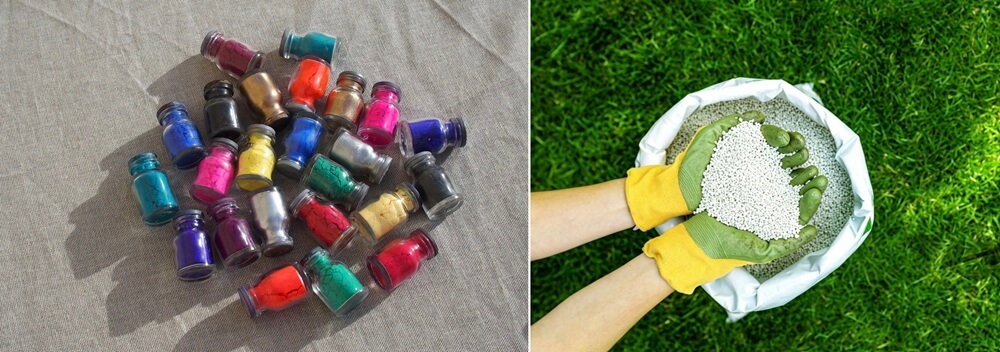
1. What Is Powder Handling Equipment?
Powder handling equipment refers to the machines and integrated systems used to transport, store, process, blend, feed, and package powdered materials throughout a manufacturing facility. Instead of relying on manual handling, these automated systems move materials safely and efficiently between different production stages.
A complete powder handling system may include:
- Powder conveying systems
- Feeding and dosing equipment
- Storage silos and hoppers
- Mixers and blenders
- Grinding and milling machines
- Vibrating screeners
- Dust collection systems
- Packaging machines
Each component plays an important role in ensuring smooth material flow while maintaining product quality and reducing waste. At Máquinas Yinda, these systems can be customized to match different production capacities, powder characteristics, and factory layouts, allowing manufacturers to build a highly efficient production line.
2. Why Powder Handling Equipment Is Essential in Chemical Manufacturing
Handling powdered chemicals presents unique challenges that liquid materials do not. Many powders are lightweight, dusty, abrasive, moisture-sensitive, or even explosive under certain conditions. Without the proper equipment, manufacturers may face production delays, contamination, excessive material loss, and workplace safety risks.
Modern powder handling equipment addresses these challenges by providing automated, enclosed, and controlled material movement throughout the production process.
Improved Product Quality
Consistent handling maintains uniform particle distribution, prevents segregation, and reduces contamination risks.
Higher Production Efficiency
Automated conveying, feeding, and blending systems reduce handling time and support continuous production.
Better Workplace Safety
Enclosed systems reduce airborne dust and help limit operator exposure to potentially hazardous powders.
Reduced Material Waste
Accurate transfer systems minimize spills, dust generation, contamination, and raw material loss.
3. Common Challenges in Chemical Powder Handling
Chemical powders differ greatly in particle size, density, flowability, moisture content, and abrasiveness. These differences create handling challenges that require specialized powder handling equipment to maintain production efficiency and product quality.
Dust Generation
Fine powders easily become airborne during conveying, blending, and packaging, creating safety risks, contamination, and unnecessary material loss.
Material Segregation
Powders containing different particle sizes may separate during transport or storage, leading to inconsistent formulations and reduced product quality.
Poor Flow Characteristics
Sticky or cohesive powders may bridge inside hoppers and feeders, interrupting production and reducing equipment efficiency.
Moisture Sensitivity
Many chemical powders absorb moisture from the environment, resulting in caking, clumping, and changes in particle properties.
Abrasive Materials
Minerals, pigments, ceramics, and industrial chemicals accelerate equipment wear without durable, wear-resistant components.
Cross-Contamination
Facilities processing multiple products require equipment designed for quick cleaning to maintain product purity and reduce downtime.
Modern enclosed conveying systems, dust collectors, stainless-steel construction, and automated controls significantly reduce these challenges while improving workplace safety and production efficiency.
4. Preparing for an Efficient Powder Handling System
Selecting the right powder handling equipment involves much more than purchasing individual machines. Manufacturers should evaluate their complete production workflow, including material characteristics, production capacity, factory layout, and automation requirements.
Key Planning Considerations
- Evaluate Powder Characteristics – Particle size, density, moisture, and flowability determine equipment selection.
- Define Production Capacity – Select equipment capable of supporting both current and future production requirements.
- Optimize Plant Layout – Reduce unnecessary material transfer while improving workflow efficiency.
- Integrate Automation – PLC controls, automated weighing, and monitoring systems improve consistency.
- Plan Complete Production Lines – Combine conveying, grinding, mixing, screening, dust collection, and packaging into one integrated system.
Yinda Recommendation:
Instead of selecting machines individually, design a fully integrated powder handling system that maximizes productivity, minimizes downtime, and reduces long-term operating costs.
5. Powder Conveying Systems
Powder conveying systems transport materials safely between processing stages while minimizing contamination, dust generation, and product loss. Selecting the proper conveying method depends on particle size, conveying distance, material density, and production capacity.
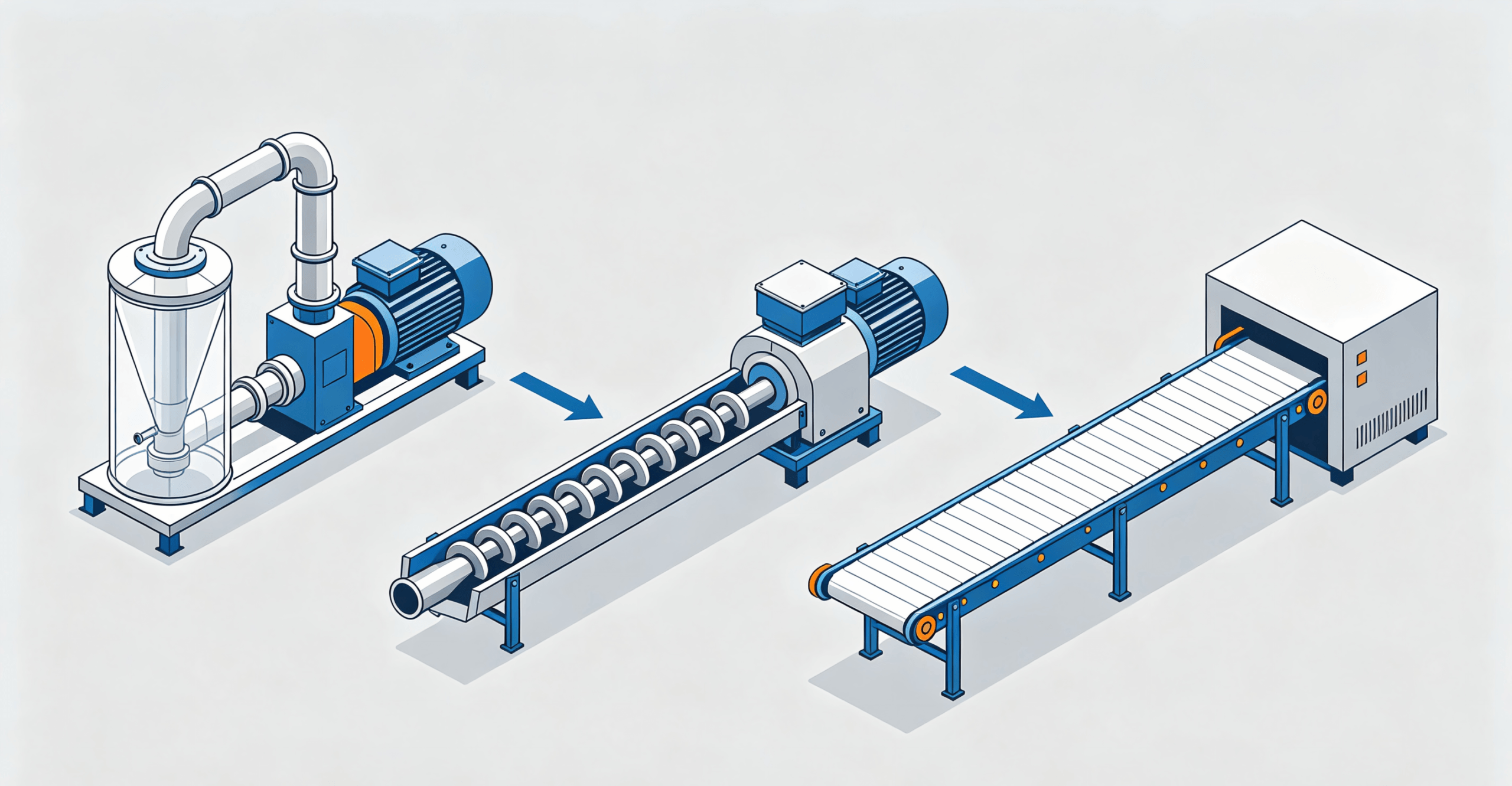
| Conveying Method | Best For | Vantagens |
|---|---|---|
| Pneumatic Conveying | Fine & Lightweight Powders | Enclosed transfer, low contamination, minimal dust. |
| Rosca Transportadora | Short & Medium Distance | Continuous feeding, compact design, low maintenance. |
| Transportador de vácuo | Sensitive Materials | Gentle handling, hygienic transport, reduced product loss. |
Recommended Solution:
Yinda Machinery provides customized pneumatic, vacuum, and screw conveying systems for chemical, food, pharmaceutical, and nutraceutical powder production lines.
6. Feeding and Dosing Equipment
Consistent feeding is essential for maintaining accurate formulations and continuous production. Proper feeding equipment regulates material flow into downstream processing machines while minimizing waste.
Volumetric Feeders
Ideal for free-flowing powders where standard dosing accuracy is sufficient for continuous production.
Gravimetric Feeders
Provide highly accurate weight-based feeding for specialty chemicals, pharmaceuticals, and premium powder products.
Production Benefit:
Accurate feeding improves formulation consistency, reduces raw material waste, and maintains stable downstream processing.
7. Storage and Material Transfer Equipment
Proper storage equipment ensures a consistent material supply while protecting powders from contamination, moisture, and flow interruptions.
- Bulk Storage Silos
- Stainless Steel Hoppers
- Intermediate Storage Bins
- Buffer Tanks
- Material Receiving Stations
- Automated Material Transfer Systems
Modern storage systems also incorporate flow aids, level sensors, vibrators, and agitators to eliminate bridging and ensure consistent powder discharge throughout production.
8. Mixing and Blending Equipment
After powders are conveyed and accurately fed, they must be blended into a homogeneous mixture before further processing or packaging. Selecting the appropriate mixer depends on powder characteristics, production capacity, mixing time, and the desired level of uniformity.
High Mixing Uniformity
Designed to achieve consistent blending of powders with different particle sizes and bulk densities.
Fast Batch Cycles
Efficient mixing shortens production time while maintaining repeatable product quality.
Gentle Material Handling
Suitable for fragile powders that require low-impact blending without particle degradation.
Easy Cleaning
Smooth stainless-steel construction allows fast cleaning and minimizes cross-contamination.
9. Ribbon Blender Machines
Ribbon Blender Machines are among the most widely used powder mixing systems for chemical manufacturing. Their double-helical ribbon agitator continuously moves materials in opposite directions, creating fast, efficient, and highly uniform mixing.
Typical Advantages
- Excellent mixing uniformity
- Short mixing cycles
- Suitable for powders with different densities
- Large production capacities available
- Easy cleaning and maintenance
- Reliable continuous operation
Typical applications include detergents, pigments, fertilizers, chemical additives, construction chemicals, and industrial powders.
10. V Blender Machines & Double Cone Blenders
For fragile or free-flowing powders, gentle mixing equipment produces highly uniform blends while minimizing mechanical stress on sensitive materials.
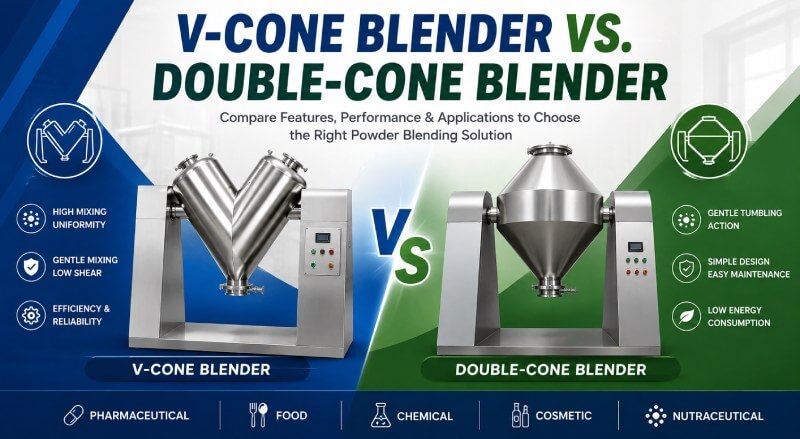
| Máquina | Best For | Vantagens |
|---|---|---|
| V Blender | Free-flowing powders | Gentle mixing with excellent blend uniformity. |
| Liquidificador de cone duplo | Sensitive materials | Low-energy mixing with minimal particle degradation. |
Expert Recommendation:
Select the mixer according to your powder properties, batch size, required mixing time, and desired product uniformity.
11. Powder Grinding and Milling Equipment
Many chemical processes require powders to be reduced to precise particle sizes before blending or packaging. Yinda Machinery offers a complete range of grinding equipment for coarse, fine, and ultra-fine powder production.
Available Grinding Solutions
- Moinhos de Martelo
- Moinhos de pinos
- Air Classifier Mills (ACM)
- Universal Pulverizers
- Fine Grinding Machines
Production Advantage:
Proper grinding technology improves particle size consistency, downstream mixing performance, and final product quality.
12. Vibrating Screening Equipment
After grinding or blending, powders pass through vibrating screening equipment to remove oversized particles and maintain consistent particle size distribution.

Improve Uniformity
Produces a more consistent finished powder.
Remove Contaminants
Separates foreign particles and oversized materials.
Improve Downstream Efficiency
Supports packaging accuracy and product quality standards.
13. Dust Collection Systems
Dust control is an essential component of every powder handling system. Modern dust collectors capture airborne particles at the source, protecting workers while reducing product loss.
Benefits of Dust Collection
- Cleaner production facilities
- Reduced material loss
- Improved workplace safety
- Lower maintenance costs
- Environmental compliance
- Extended equipment lifespan
14. Automation and Process Control
Modern chemical manufacturing increasingly relies on automated powder handling systems to improve productivity, reduce manual intervention, and ensure consistent product quality.
Automation Features
- PLC Control Systems
- Touchscreen HMI Interfaces
- Automatic Weighing
- Recipe Management
- Remote Monitoring
- Alarm & Fault Detection
- Production Data Logging
Why Automation Matters:
Automation improves production consistency, minimizes human error, reduces labor costs, and allows manufacturers to maintain stable quality across every production batch.
15. Integrating Equipment for Maximum Efficiency
Although each machine performs a specific task, the highest productivity comes from integrating every stage of powder processing into one complete production line. A properly engineered system allows materials to move seamlessly from storage and conveying through feeding, grinding, blending, screening, dust collection, and packaging.
Integrated Powder Processing Flow
- Raw Material Storage
- Powder Conveying
- Accurate Feeding & Dosing
- Grinding & Milling
- Mixing & Blending
- Vibrating Screening
- Dust Collection
- Automatic Packaging
Complete Production Line:
Storage → Conveying → Feeding → Grinding → Mixing → Screening → Dust Collection → Packaging
16. Applications Across Chemical Industries
Powder handling equipment is used across numerous industries that process dry bulk materials. Automated systems improve efficiency, reduce waste, and maintain consistent product quality regardless of application.
Specialty Chemicals
Catalysts, pigments, coatings, polymer additives, and performance chemicals.
Produtos farmacêuticos
APIs, tablets, capsules, excipients, and nutritional supplements.
Food & Nutraceuticals
Protein powder, starch, sugar, coffee, cocoa, seasonings, and food additives.
Cosméticos
Face powders, mineral powders, cosmetic pigments, and skincare ingredients.
Fertilizer Production
NPK fertilizers, micronutrients, soil conditioners, and organic fertilizers.
Battery Materials
Lithium compounds, graphite powders, conductive additives, and advanced materials.
Frequently Asked Questions
What is powder handling equipment?
Powder handling equipment includes machines used to convey, feed, store, blend, grind, screen, and package powdered materials safely and efficiently.
Which industries use powder handling systems?
Chemical manufacturing, pharmaceuticals, food processing, nutraceuticals, cosmetics, plastics, fertilizer production, minerals, and battery material manufacturing.
What is the difference between pneumatic and screw conveying?
Pneumatic conveying uses air pressure or vacuum for enclosed transport, while screw conveyors move powders mechanically for short and medium conveying distances.
Why is dust collection important?
Dust collection improves workplace safety, minimizes product loss, protects equipment, and helps manufacturers comply with environmental regulations.
Can powder handling equipment be customized?
Yes. Yinda Machinery designs customized powder handling systems based on material properties, production capacity, factory layout, and automation requirements.
Por que escolher a Máquinas Yinda?
Yinda Machinery provides complete powder processing solutions with advanced engineering, customized system design, reliable performance, and global technical support.
Por que escolher a maquinaria Yinda?
With years of experience in powder processing technology, Yinda Machinery delivers complete powder handling solutions for manufacturers worldwide. Every production line is engineered for reliability, efficiency, and long-term performance.
- Complete powder processing solutions
- Customized equipment design
- Premium stainless-steel construction
- Advanced engineering & automation
- Global installation support
- Professional technical consultation
- Reliable after-sales service
- Long equipment lifespan

How to Choose the Right Powder Handling Equipment
Before investing in equipment, manufacturers should evaluate their production requirements carefully to ensure maximum efficiency and long-term value.
Material Characteristics
Particle size, density, moisture, abrasiveness, and flowability directly influence equipment selection.
Capacidade de produção
Choose machinery capable of meeting current demand while allowing room for future expansion.
Plant Layout
Optimize equipment placement to reduce transfer distances and improve workflow efficiency.
Automation Level
Consider PLC controls, automatic weighing, recipe management, and production monitoring.
Pro Tip:
Share your raw material specifications, target particle size, production capacity, and factory layout with Yinda Machinery to receive the most suitable powder handling solution.
Conclusion
Efficient powder handling equipment plays a critical role in modern chemical manufacturing. From conveying and feeding to grinding, blending, screening, dust collection, and packaging, every stage contributes to safe, consistent, and cost-effective production.
By investing in a fully integrated powder handling system, manufacturers can reduce material waste, improve workplace safety, increase productivity, and maintain exceptional product quality. Yinda Machinery provides customized powder processing solutions engineered to meet the unique requirements of chemical, pharmaceutical, food, nutraceutical, cosmetic, and industrial manufacturers worldwide.
Need a Complete Powder Handling Solution?
Whether you require a single powder handling machine or a fully integrated powder processing line, Yinda Machinery can design a customized solution based on your materials, production capacity, and factory requirements. Our experienced engineering team is ready to help you improve productivity, product quality, and operational efficiency.