
How to Choose the Right Sugar Grinding Machine?
Selecting the right sugar grinding machine is an important investment for businesses that rely on finely ground sugar for food, beverage, pharmaceutical, or confectionery production. Whether you operate a small bakery or a large-scale manufacturing facility, the grinding equipment you choose directly affects product quality, production efficiency, operating costs, and overall profitability.
Powdered sugar is widely used in chocolates, candies, cakes, biscuits, beverage mixes, and pharmaceutical formulations. Producing a consistent particle size requires equipment designed to process sugar efficiently while minimizing heat generation and product loss.
This guide explains the essential factors to consider before purchasing a sugar grinding machine and how choosing the right equipment can improve your manufacturing process while supporting long-term business growth.
Why Choosing the Right Sugar Grinding Machine Matters
A sugar grinding machine does much more than simply reduce sugar crystals into powder. The quality of the grinding process directly influences the texture, appearance, consistency, and performance of the finished product.
Using equipment that is too small, inefficient, or poorly matched to your application can lead to higher energy consumption, inconsistent particle size, increased product waste, more maintenance, and reduced production efficiency.
Investing in a high-quality sugar grinding machine enables manufacturers to produce uniform powdered sugar while maintaining productivity and lowering long-term operating costs.
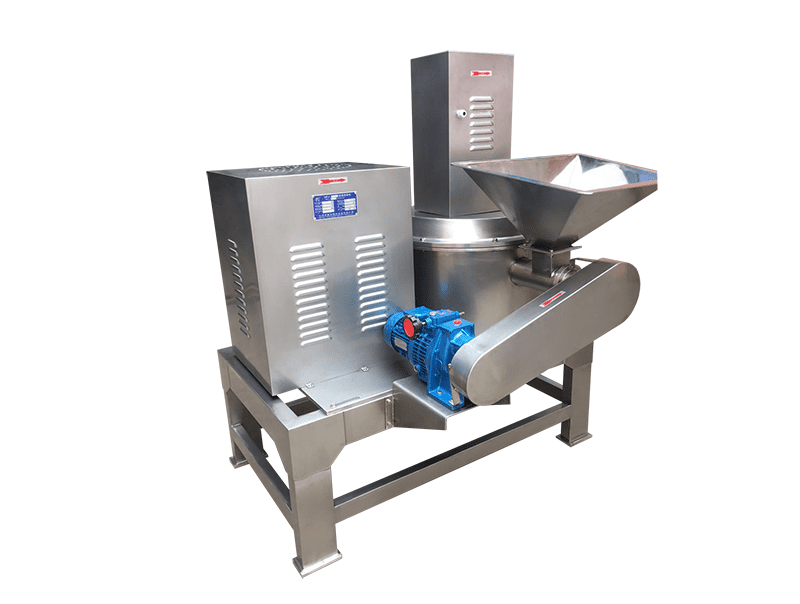
Understanding How a Sugar Grinding Machine Works
A sugar grinding machine is designed to crush and pulverize granulated sugar into fine powder using high-speed rotating components, precision grinding mechanisms, and integrated classification systems.
Granulated sugar is fed into the grinding chamber through a controlled feeding system to ensure stable production.
High-speed blades, pins, or hammers pulverize sugar crystals into fine particles while minimizing heat generation.
Integrated classification systems separate particles according to the required fineness while larger particles continue circulating for further grinding.
Finished powdered sugar is collected through cyclone separators or dust collection systems, ensuring clean and efficient production.
Common Types of Sugar Grinding Machines
Different manufacturing applications require different grinding technologies. Understanding the available options helps you choose equipment that best fits your production goals.
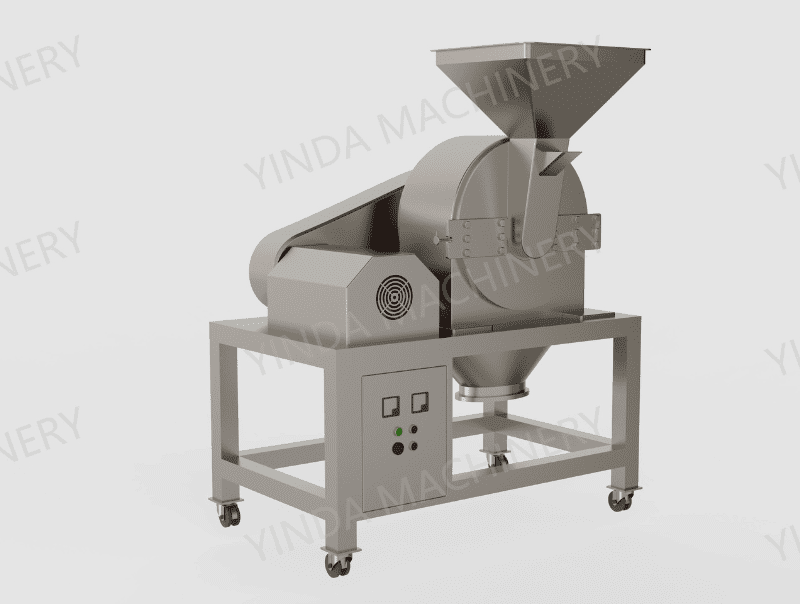
مطحنة الدبوس
Pin mills are among the most popular choices for grinding sugar into fine powder. High-speed rotating pins repeatedly impact sugar crystals to produce uniform particle sizes.
Best Suited For
- Powdered sugar production
- Food processing
- Spice manufacturing
- Chemical applications
مزايا
- Produces fine and consistent powder
- High production efficiency
- Compact design
- Easy cleaning and maintenance
- Suitable for continuous production

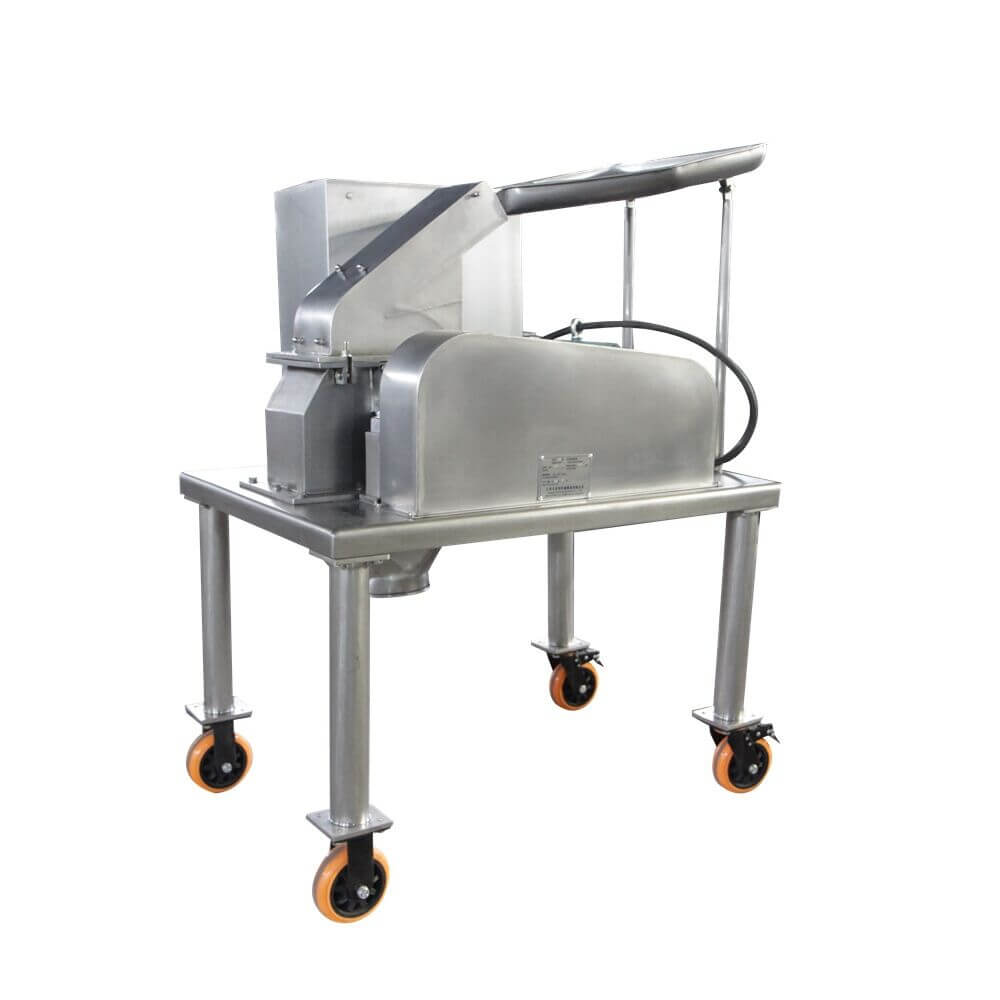
مطحنة المطرقة
Hammer mills use rapidly rotating hammers to crush sugar into smaller particles. They are commonly used for medium- to large-capacity production where ultra-fine particle size is not the primary requirement.
Benefits
- Simple operation
- Durable construction
- Cost-effective
- Suitable for processing various dry materials

مطحنة الهواء
An air classifier mill combines grinding and particle classification in a single system. Only particles meeting the required fineness leave the machine while larger particles continue grinding until they reach the desired size.
Ideal Applications
- Ultra-fine sugar powder
- Pharmaceutical ingredients
- High-quality food products
مزايا
- Precise particle size control
- Excellent product consistency
- Minimal over-grinding
- High production efficiency
Factors to Consider Before Buying a Sugar Grinding Machine
Choosing the right equipment involves much more than comparing prices. Several technical and operational factors should be carefully evaluated before making a purchase.
Choose equipment based on your hourly production requirements. Selecting the proper capacity helps avoid bottlenecks, reduces energy consumption, and supports future production growth.
Different industries require different powder fineness. Selecting equipment capable of producing your desired particle size ensures consistent product quality and minimizes additional processing.
Effective cooling and airflow systems help prevent sugar from melting or clumping while maintaining product quality during continuous grinding.
Stainless steel construction improves hygiene, corrosion resistance, cleaning efficiency, and compliance with food safety standards.
Machines designed with accessible grinding chambers, replaceable wear parts, and simple cleaning procedures reduce downtime and maintenance costs.
Efficient motors and optimized grinding systems lower electricity consumption while maintaining high production performance.
Choosing the Right Particle Size
Not every manufacturing application requires the same level of fineness. Selecting the correct particle size improves product consistency and processing efficiency.
| طلب | Recommended Particle Size |
|---|---|
| مسحوق السكر | Very Fine Powder |
| Confectionery | Fine Powder |
| Beverage Mixes | Medium to Fine Powder |
| Pharmaceutical Ingredients | Ultra-Fine Powder |
Automation Features That Improve Productivity
Modern sugar grinding machines include advanced automation features that simplify production, reduce labor requirements, and improve process consistency.
Common Automation Features
- Touchscreen control panels
- Variable speed controls
- Automatic feeding systems
- Real-time production monitoring
- Overload protection
- Automatic shutdown during faults
- Programmable production settings
These features help reduce human error while improving operational efficiency and production reliability.
Dust Collection and Workplace Safety
Grinding sugar produces fine airborne particles that can affect product quality and workplace cleanliness. Efficient dust collection systems help create a safer production environment.
Benefits of Dust Collection Systems
- Maintains a cleaner production area
- Reduces product loss
- Improves workplace air quality
- Minimizes cleanup time
- Supports workplace safety compliance
- Enhances overall production efficiency
Many industrial sugar grinding machines include cyclone separators, pulse jet dust collectors, and integrated filtration systems to capture fine sugar particles throughout production.
Choosing the Right Sugar Grinding Machine Manufacturer
Selecting the right machine is only part of the investment. An experienced sugar grinding machine manufacturer provides technical guidance, installation support, operator training, spare parts, and dependable after-sales service to maximize long-term equipment performance.
When comparing manufacturers, evaluate their industry experience, equipment quality, customization capabilities, technical support, and commitment to customer service before making your final decision.
Product Quality
The quality of materials and engineering directly affects machine durability, efficiency, and long-term operating costs. Well-built sugar grinding machines require less maintenance while delivering consistent grinding performance.
Look for Machines Featuring:
- Food-grade stainless steel construction
- Heavy-duty components
- Precision-engineered grinding systems
- Reliable motors
- High-quality bearings and seals
Customization Options
Every production facility has unique processing requirements. A reputable sugar grinding machine manufacturer should be able to customize equipment according to your production needs.
Customization May Include:
- Required production capacity
- Desired particle size
- Factory layout
- Automation requirements
- Integration with existing production lines
Reliable After-Sales Support
Technical support should continue long after equipment installation. Reliable manufacturers provide services that help maximize machine uptime and protect your investment.
- Installation assistance
- Operator training
- Spare parts availability
- Preventive maintenance guidance
- Technical troubleshooting
- Equipment upgrades
Common Mistakes to Avoid
Lower-cost machines often result in higher maintenance expenses, frequent breakdowns, and inconsistent product quality.
Selecting equipment with slightly higher capacity helps accommodate future production expansion.
Understand maintenance schedules, spare parts availability, and cleaning procedures before purchasing.
Select machinery based on particle size requirements, production volume, and product characteristics rather than price alone.
Essential Maintenance Tips
Proper maintenance maximizes equipment life and maintains consistent grinding performance.
Best Practices
- Clean the machine after each production run.
- Inspect grinding pins, hammers, and screens regularly.
- Lubricate moving parts according to the manufacturer’s recommendations.
- Monitor vibration, temperature, and machine performance.
- Replace worn components before they affect production.
Industries That Use Sugar Grinding Machines
معالجة الغذاء
Used for cakes, cookies, pastries, frostings, dairy products, and dessert mixes where consistent powdered sugar improves texture and appearance.
Confectionery
Chocolate, candy, fondant, and chewing gum manufacturers depend on fine powdered sugar for smooth textures.
Beverage Industry
Ideal for instant drink mixes, nutritional beverages, flavored powders, and coffee creamers.
صناعة الادوية
Produces consistent particle sizes required for pharmaceutical formulations and excipients.
Sugar Grinding Machine Buying Checklist
- ✔ Determine required production capacity
- ✔ Identify the desired particle size
- ✔ Choose the appropriate grinding technology
- ✔ Verify food-grade stainless steel construction
- ✔ Check energy efficiency
- ✔ Ensure effective dust collection
- ✔ Confirm easy cleaning and maintenance
- ✔ Evaluate automation features
- ✔ Ask about spare parts and technical support
- ✔ Select an experienced manufacturer
Frequently Asked Questions
What is a sugar grinding machine?
An industrial machine designed to grind granulated sugar into fine or ultra-fine powder for food, beverage, confectionery, and pharmaceutical production.
Which grinding machine is best?
Pin mills are ideal for powdered sugar, air classifier mills provide ultra-fine precision, while hammer mills are suitable for higher-capacity production.
Why is stainless steel important?
Food-grade stainless steel improves hygiene, corrosion resistance, cleaning efficiency, and machine lifespan.
How often should the machine be serviced?
Routine cleaning should be performed after every production run, while inspections and lubrication should follow the manufacturer’s maintenance schedule.
Partner with an Experienced Sugar Grinding Machine Manufacturer
Choosing the right sugar grinding machine is essential for producing high-quality powdered sugar efficiently and consistently. By considering production capacity, particle size, energy efficiency, automation, and maintenance requirements, manufacturers can invest in equipment that delivers long-term value.
Working with a trusted sugar grinding machine manufacturer ensures expert guidance, customized solutions, reliable equipment, and dependable after-sales support that helps maximize your return on investment.
Looking to upgrade your sugar grinding process? Contact Yinda Machinery today to discover customized grinding solutions designed specifically for your production requirements.
Related Articles
Choosing the Right Pin Mill Grinder
Learn when a pin mill is the best choice for producing consistent powdered sugar.
Air Classifier Mills Explained
Discover how air classifier mills achieve precise particle size control.
Industrial Powder Processing Solutions
Explore complete grinding, conveying, screening, and packaging systems.