
How to Grind High-Oil Seeds and Nuts Without Clogging the Mill
Match grinding intensity and cooling to oil content, target particle size, and whether the final product should remain dry or become a paste.
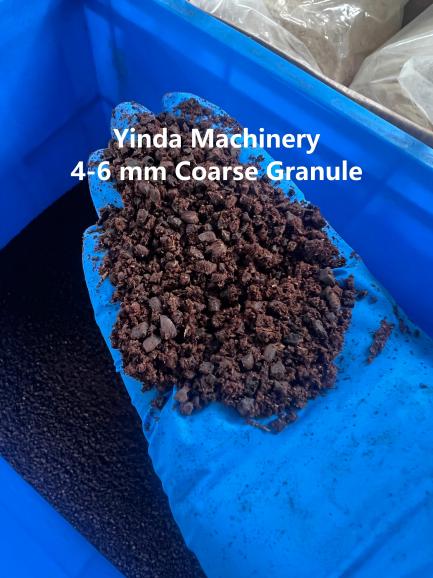
YDCS Coarse Crusher for approx. 2-20 mm
YDGS Hammer Mill + cooling for approx. 20-60 mesh
YDJM Colloid Mill
Finer grinding increases oil release and clogging risk
Grinding high-oil seeds and nuts is very different from grinding dry grains, roots, or crystalline materials.
For materials such as peanuts, nuts, oil-bearing seeds, and certain spice seeds, reducing the particle size too aggressively can release more oil from the material. Combined with frictional heat generated during grinding, this may cause the material to become sticky, smear onto the grinding chamber, block screens, reduce airflow, and eventually clog the mill.
Therefore, the correct grinding machine should not be selected only according to the desired mesh size.
The oil content, final product form, required particle size, material temperature, and grinding mechanism all need to be considered together.
Quick Answer: What Machine Is Suitable for High-Oil Seeds and Nuts?
For many oil-bearing materials, Yinda generally considers the following processing logic:
| Final Product Requirement | Recommended Processing Direction | Typical Equipment |
|---|---|---|
| Approx. 2–20 mm coarse particles | Coarse crushing | YDCS Series Coarse Crusher |
| Approx. 20–60 mesh dry powder | Low-temperature grinding, depending on material | YDGS Series Hammer Mill Grinding Line + cooling system |
| Finer dry powder | Generally not the first recommendation for very high-oil materials | Trial testing required |
| Paste / butter / slurry | Wet or paste grinding | YDJM Series Colloid Mill |
The most important principle is simple:
The higher the oil content and the finer the target particle size, the greater the risk of oil release, sticking, screen blockage, and loss of grinding efficiency.
For this reason, very fine dry grinding is not automatically the correct solution for every seed or nut.
1. Why Are High-Oil Materials Difficult to Grind?
High-oil seeds and nuts behave differently from dry and brittle raw materials.
During grinding, several effects occur at the same time.
1.1 Mechanical force damages the oil-containing cells
Seeds and nuts contain oil within their internal structure.
As the material is repeatedly impacted, cut, compressed, or sheared, the internal structure is broken down.
When the particle size becomes smaller, more oil may be released onto the particle surface.
The powder may then gradually change from:
free-flowing particles → slightly sticky powder → agglomerated material → paste-like material
depending on the material and processing conditions.
This is one of the main reasons why simply using a finer screen does not necessarily produce a better result.
1.2 Grinding generates heat
Grinding energy is partly converted into heat.
The actual product temperature depends on many factors, including:
- Raw material characteristics
- Oil content
- Feed temperature
- Feed rate
- Target particle size
- Grinder structure
- Rotor speed
- Grinding duration
- Airflow
- Ambient temperature
- Cooling configuration
As the material temperature rises, some oil-bearing materials may become softer and more adhesive.
This increases the possibility of material sticking to:
- Grinding chamber surfaces
- الدوار
- Hammer
- شاشة
- Pipes
- Cyclone
- Dust collection system
Therefore, temperature control becomes increasingly important when processing oil-bearing materials.
1.3 Smaller screen openings are easier to block
For screen-controlled mills, a finer screen normally means smaller openings.
If oil is released during grinding, sticky particles can accumulate around these openings.
This may lead to:
- Reduced throughput
- Unstable feeding
- Higher material circulation inside the grinding chamber
- Increased heat generation
- Screen blockage
- Frequent cleaning
- Poor discharge
This is why a machine that works well at a relatively coarse particle size may not perform equally well when the customer requests significantly finer powder.
2. First Determine the Final Product Form
Before choosing a grinder, one question should be answered first:
Does the customer actually need dry particles, dry powder, or a paste?
This distinction is more important than simply asking for a mesh number.
There are generally three practical processing directions.
3. Option 1: Coarse Crushing to Approximately 2–20 mm
If the final product only needs to be broken into coarse pieces or granules, aggressive fine grinding is unnecessary.
For applications requiring approximately 2–20 mm particles, our YINDA YDCS Series Coarse Crusher can be considered.
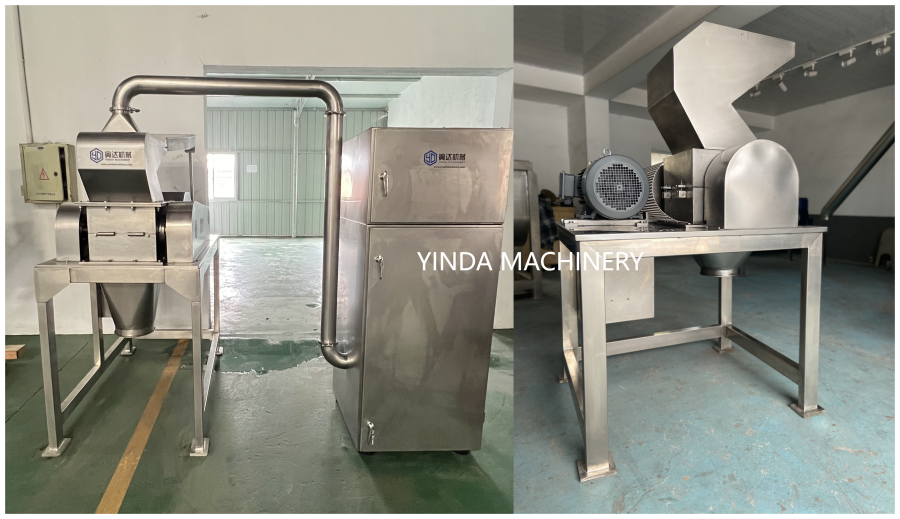
Why coarse crushing is suitable
Coarse crushing requires less particle size reduction than fine grinding.
This generally means:
- Less repeated grinding
- Shorter material residence time
- Lower heat generation compared with fine grinding
- Lower risk of excessive oil release
- Reduced risk of screen blockage
- Easier discharge
For nuts and large seeds, this can be particularly useful when the material only needs to be prepared for:
- Further processing
- خلط
- Extraction
- Food production
- Secondary grinding
- Ingredient preparation
The actual achievable particle size still depends on the raw material and crusher configuration.
Therefore, 2–20 mm should be treated as an application range rather than a guaranteed result for every material.
Link for your reference:
Watch the equipment or material test video
4. Option 2: Low-Temperature Hammer Mill Grinding for Approximately 20–60 Mesh
Some seeds do require a dry powder rather than coarse particles.
For certain oil-bearing spice seeds and similar materials—for example, some cumin-type applications—if the required particle size is around 20–60 mesh, a low-temperature hammer mill grinding line can be considered.
A typical system may include:
Feeding → Hammer Mill → Powder Collection → Dust Collection
with a cooling system added when temperature control is required.
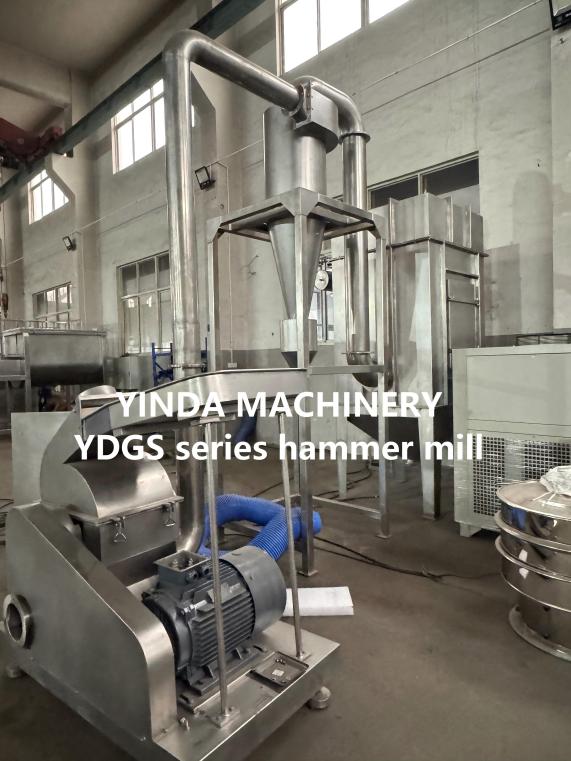
Why use a hammer mill?
The YDGS Series Hammer Mill uses high-speed impact to reduce the material size.
For suitable seeds and spice materials, it can provide a practical balance between:
- Grinding efficiency
- Powder size
- System simplicity
- Temperature control
- Powder collection
However, suitability must still be evaluated according to the material.
A seed that can be ground to 40 mesh successfully does not automatically mean another nut with much higher oil release will behave in the same way.
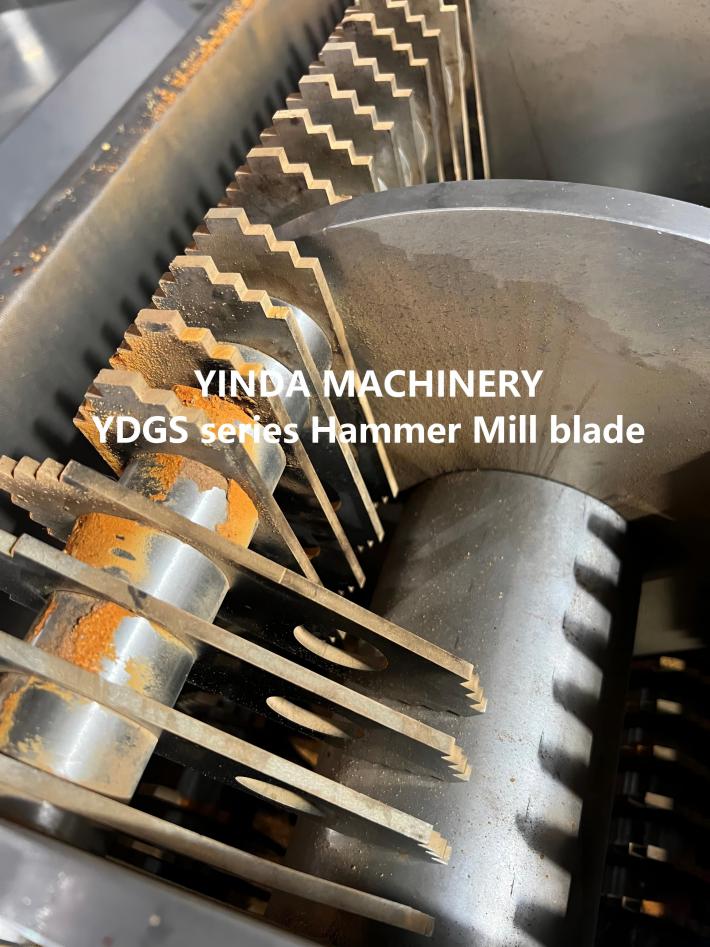
5. Why Low-Temperature Grinding Helps
For oil-bearing seeds, reducing the material temperature during grinding can help control the processing condition.
Yinda can combine the grinding line with a YDLF Series Air-Cooled Chiller to supply cooled air into the grinding system.
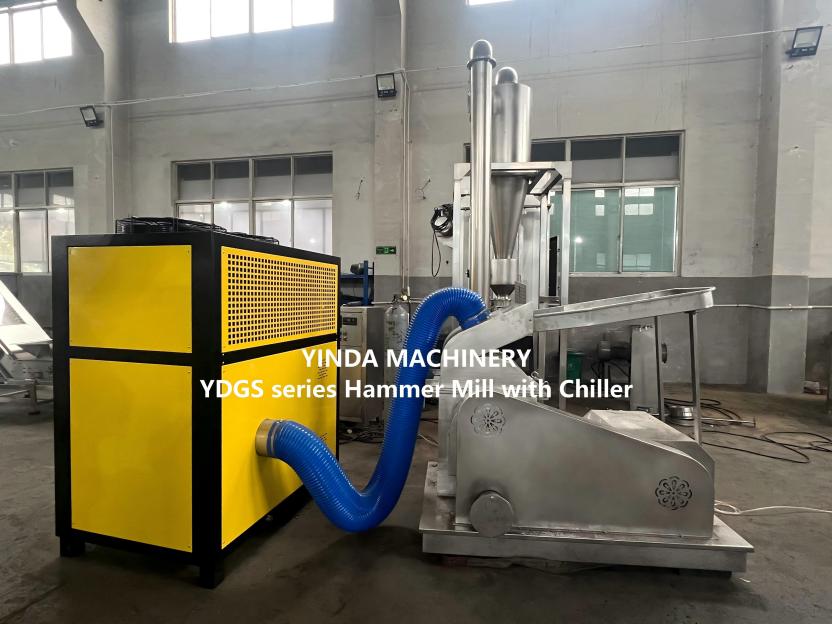
The purpose is not to claim that cooling completely prevents oil release.
Instead, low-temperature grinding can help reduce the influence of frictional heat and improve operating stability for suitable materials.
Possible benefits include:
- Reducing material softening caused by temperature rise
- Reducing the tendency of sticky powder to adhere to equipment surfaces
- Helping maintain better powder flowability
- Reducing the risk of screen blockage
- Improving grinding stability
The actual discharge temperature cannot be determined only from the machine model.
It is affected by the raw material, feed temperature, ambient conditions, target particle size, capacity, airflow, and cooling configuration.
For this reason, material testing is recommended when temperature-sensitive or high-oil materials are involved.
Video link for your reference:
Watch the equipment or material test video
6. Why We Do Not Normally Recommend Grinding Much Finer
Customers sometimes ask:
For high-oil materials, the answer is not necessarily yes.
As the required particle size becomes finer:
- The material needs to experience more intensive grinding.
- Grinding time and mechanical energy increase.
- More internal oil may be released.
- The powder may become increasingly sticky.
- Fine screens or classifier areas become more sensitive to buildup.
- Material may accumulate inside the grinding system.
At some point, the process may stop behaving like conventional dry powder grinding.
Instead of producing a free-flowing fine powder, the material may begin to form agglomerates or paste.
Therefore, for very high-oil seeds and nuts, Yinda generally does not recommend assuming that a Pin Mill or ACM Mill can simply be used to achieve extremely fine dry powder.
Material testing should be conducted before confirming such a solution.
7. Why a Pin Mill Is Not Always the Best Choice
Pin mills are widely used for many dry foods, spices, grains, chemicals, and other brittle materials.
However, high-oil materials introduce a different limitation.
A Pin Mill uses high-speed relative movement between grinding components to generate impact and shear forces.
For dry and brittle materials, this is very effective.
For oily materials, however, intensive grinding may result in:
- Higher oil release
- Powder adhesion
- Material buildup
- Reduced discharge efficiency
- Cleaning difficulty
Therefore, particle size alone should never be used to decide whether a Pin Mill is suitable.
For some relatively dry or moderately oil-bearing seeds, testing may show acceptable results.
For very high-oil nuts, the same grinding method may not be suitable.
8. What About an ACM Mill?
An ACM Mill is designed for fine powder production and particle size classification.
It is particularly useful when the customer requires:
- Fine powder
- Controlled particle size
- Relatively narrow particle size distribution
However, this does not mean that an ACM Mill is automatically suitable for very high-oil materials.
For very oily seeds and nuts, the basic material limitation remains the same:
The finer the grinding, the greater the possibility of oil release and adhesion.
When the material becomes sticky, the internal classifier and powder conveying system can also be affected.
Therefore, Yinda normally evaluates high-oil material applications differently from conventional dry fine-powder applications.
If the target is an extremely fine dry powder, a material test should be performed before equipment selection is finalized.
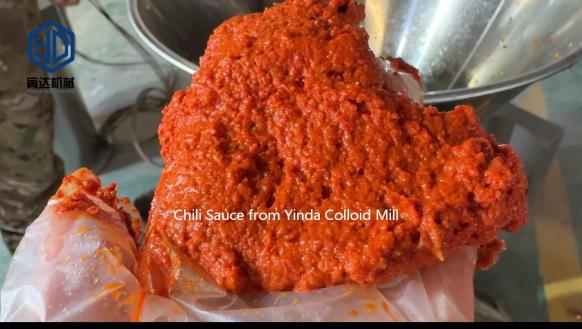
9. Option 3: If the Final Product Is a Paste, Use a Colloid Mill
For some products, trying to maintain a dry powder is unnecessary.
If the final product is intended to become:
- Nut paste
- Seed paste
- Mustard paste
- Peanut butter-type product
- Food slurry
YINDA YDJM series colloid mill may be a more direct processing method.
Instead of trying to prevent the released oil from affecting dry grinding, the process uses the oil and moisture in the material as part of the final paste structure.
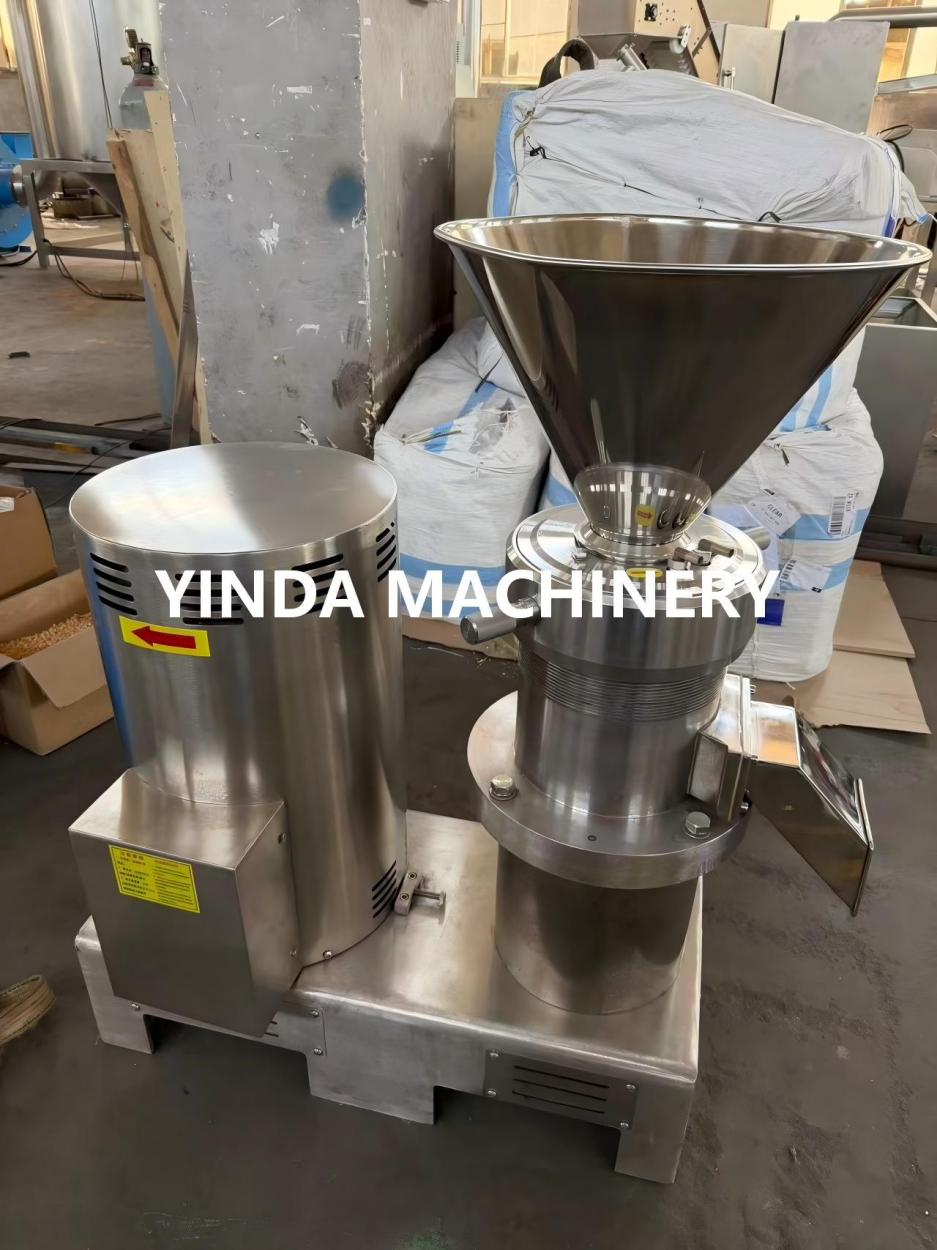
This is particularly relevant for very high-oil materials where continued dry grinding would naturally cause the material to become paste-like.
We have discussed this processing direction separately in our article about dehulled mustard seed grinding, so it will not be expanded further here.
Watch the equipment or material test video
10. Machine Selection Comparison
| آلة | Suitable Product Form | Typical Size Direction | Suitability for High-Oil Materials | Main Consideration |
|---|---|---|---|---|
| YDCS Coarse YDCS series Coarse Crusher | Coarse particles | Approx. 2–20 mm | Good for suitable materials | Low grinding intensity |
| YDGS Hammer Mill + Cooling | Dry powder | Approx. 20–60 mesh | Suitable for selected seeds after evaluation | Temperature and oil release |
| YDWS series Pin Mill | Fine dry powder | Material dependent | Not the first choice for very high-oil materials | Adhesion and heat |
| YDWF series ACM Mill | Fine / superfine powder | Material dependent | Requires careful evaluation | Fine grinding increases sticking risk |
| YDJM series Colloid Mill | Paste / slurry | Paste processing | Suitable when paste is the final product | Product should not remain dry |
The values above describe equipment application directions rather than guaranteed performance for every raw material.
Actual results must be confirmed according to the specific material and operating conditions.
11. How to Select the Correct Grinding Process
A practical selection process can start with four questions.
Step 1: What is the raw material?
Identify whether the material is:
- Spice seed
- Peanut
- Tree nut
- Oilseed
- Roasted seed
- Raw seed
- Dehulled material
- Whole material
Different materials can behave very differently even when the requested mesh size is the same.
Step 2: What is the final particle size?
For example:
2–20 mm
Start with our YDCS series coarse crusher.
There is usually no reason to introduce a high-speed fine grinder if coarse particles are sufficient.
20–60 mesh
For suitable seeds and spice materials, consider our YDGS series low-temperature hammer mill grinding line.
Material testing is recommended for materials with significant oil release.
Finer than approximately 60 mesh
The process should be evaluated carefully.
For very high-oil materials, increasingly fine dry grinding may cause sticking and clogging rather than producing a stable free-flowing powder.
Paste
Consider our YDJM series colloid mill rather than continuing to pursue finer dry grinding.
Step 3: Does the material become oily after crushing?
A useful practical observation is the condition of the material after preliminary crushing.
Questions include:
- Does the material remain free-flowing?
- Does it begin to stick together?
- Is visible oil released?
- Does it smear when compressed?
- Does temperature noticeably change its texture?
These observations are highly useful when determining whether dry grinding remains practical.
Step 4: Is material testing required?
For high-oil grinding applications, sample testing is particularly valuable.
A test can help evaluate:
- Actual grinding behavior
- Powder flowability
- Oil release
- Material buildup
- Screen condition
- Final particle size
- Discharge condition
- Product temperature trend
This provides much more useful information than selecting the machine only according to a mesh number.
12. Example Process Configurations
Configuration A: Coarse Nut or Seed Crushing
Raw Material → YDCS Coarse Crusher → Collection
Suitable when the customer only needs coarse particles.
Configuration B: Low-Temperature Seed Grinding
Raw Material → Feeding → YDGS Hammer Mill → Powder Collection → Dust Collection
Optional:
YDLF Air-Cooled Chiller
Suitable for selected seeds where approximately 20–60 mesh dry powder is required.

Configuration C: Paste Production
Raw Material Preparation → Colloid Mill → Paste Collection
Suitable when the final product is naturally intended to be a paste or slurry.
13. Common Mistakes When Grinding High-Oil Materials
Mistake 1: Selecting the grinder only according to mesh size
Mesh size is important, but it is not sufficient.
Oil content and material behavior may determine whether dry grinding is practical at all.
Mistake 2: Assuming a finer screen will always produce finer powder
For oily materials, reducing the screen opening may instead increase:
- Material retention
- Heat generation
- Oil release
- Screen blockage
The result may be lower efficiency rather than better powder.
Mistake 3: Ignoring temperature
A machine may operate normally at the beginning of a test but gradually experience more sticking as the grinding chamber becomes warmer.
For this reason, continuous operation should be considered separately from a very short trial.
Mistake 4: Trying to produce dry powder when the final product is actually paste
If the customer’s downstream process requires a paste, forcing a very high-oil material through increasingly fine dry grinding stages may add unnecessary complexity.
A colloid mill may provide a more direct process.
FAQ
Can peanuts be ground into dry powder with a hammer mill?
It depends on the raw material condition, oil content, target particle size, and operating conditions.
Peanuts contain substantial oil and can become paste-like when ground intensively.
If only coarse particles are required, coarse crushing is much easier.
Fine dry powder production should be evaluated through testing rather than assumed from the hammer mill’s nominal grinding range.
What is the best grinder for high-oil seeds?
There is no single grinder suitable for every high-oil seed.
A practical starting point is:
- 2–20 mm: YINDA YDCS series coarse crusher
- 20–60 mesh: YINDA YDGS series low-temperature hammer mill for suitable materials
- Very fine dry powder: evaluate carefully and test first
- Paste: YINDA YDJM series colloid mill
Can cooling completely prevent oily material from sticking?
No.
Cooling can help reduce temperature-related softening and adhesion, but it cannot change the fundamental oil content of the material.
If intensive grinding causes significant oil release, cooling alone may not make extremely fine dry grinding feasible.
Can a Pin Mill grind oily seeds?
Some seeds may be processed successfully depending on their characteristics and target particle size.
However, for very high-oil materials, Pin Mills are not automatically recommended because intensive grinding can increase oil release and material adhesion.
Testing is recommended before machine selection.
Can an ACM Mill produce superfine nut powder?
An ACM Mill is capable of producing fine powders from many suitable dry materials.
However, machine capability and material suitability are two different questions.
If a nut releases significant oil during fine grinding, the material may become sticky before the required fineness is achieved.
Therefore, very high-oil nut applications should be tested before an ACM system is confirmed.
Why does my mill clog when grinding seeds?
Common reasons include:
- Oil released from the raw material
- Excessive grinding temperature
- Target particle size being too fine
- Screen openings becoming blocked
- Excessive feed rate
- Insufficient airflow
- Material recirculating inside the grinding chamber
The correct solution depends on which of these factors is causing the problem.
خاتمة
Grinding high-oil seeds and nuts successfully is mainly about choosing the correct processing route, rather than simply choosing a more powerful grinder.
For many applications:
Coarse particles → YDCS Coarse Crusher
20–60 mesh dry powder → YDGS Hammer Mill with low-temperature grinding configuration for suitable materials
Very fine dry powder → material testing required; not automatically recommended for very high-oil materials
Paste → YDJM Colloid Mill
When the oil content is high, trying to grind finer and finer can eventually turn a dry grinding problem into a sticking and clogging problem.
Therefore, the raw material characteristics and final product form should always be evaluated before confirming the machine.
If you are not sure which grinding method is suitable for your seed or nut material, send Yinda the following information:
- Raw material name
- Raw material photos
- حجم العلف
- Required final particle size
- Required capacity
- Whether the final product should remain dry powder or become a paste
- Moisture content, if available
Based on this information, we can evaluate the appropriate grinding process and determine whether a material test is recommended before machine selection.
Contact YINDA
البريد الإلكتروني: dennie@yindamachinery.com
WhatsApp: +86-13914192807
Website: https://www.yindamachinery.com/
Yinda supports global customers with material testing, customized machine selection, complete powder processing line design, and technical support for the powder production.
Get a Customized Powder Processing Solution
Please share your raw material, feeding size, target particle size, required capacity, moisture or oil content, heat sensitivity, voltage, cleaning requirements, and final application. Yinda Machinery will evaluate a suitable configuration.
Your Powder Processing Contact
Dennie Yuan | Powder Processing Solution Specialist
Email: dennie@yindamachinery.com
WhatsApp / WeChat: +86-13914192807
Website: www.yindamachinery.com