
In many seafood processing industries, fish bones are often treated as waste. However, based on my experience with powder processing systems, fish bones have significant value when properly processed into fine powder. With the right Fish Bone Grinding Machine Air Classifier Mill, fish bone can be transformed into a high-value ingredient used in food, nutrition, agriculture, and animal feed industries.
In this article, I would like to share how we typically process fish bones into powder using our YDCS series coarse crusher and YDWF series air classifier mill system, and which equipment configuration works best for stable, efficient production.
1- Fish Bone Applications
Once fish bones are properly dried and pulverized, they become a very useful raw material. The key advantage of fish bone powder is that it is naturally rich in calcium, phosphorus, and collagen-related minerals.
From the projects I have worked on, fish bone powder is commonly used in the following applications:
- Food & Nutritional Supplements–Very fine fish bone powder (often 200–300 mesh)
- Pet Food and Aquaculture Feed
- Organic Fertilizer
- Functional Food Ingredients
However, to reach these applications, the key step is efficient and controlled pulverization.
2- YDCS series Fish Bone Crushing Coarse Crusher
Before fine grinding, fish bones must first be reduced to small granules. In most projects we handle, whole or large fish bones are too hard and irregular to enter a fine grinding mill directly.
That is why we usually recommend a two-stage crushing solution, starting with the YDCS series coarse crusher.
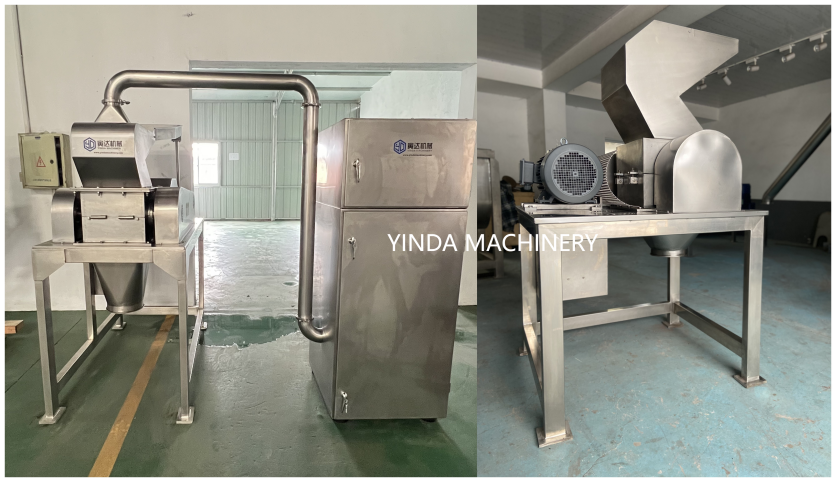
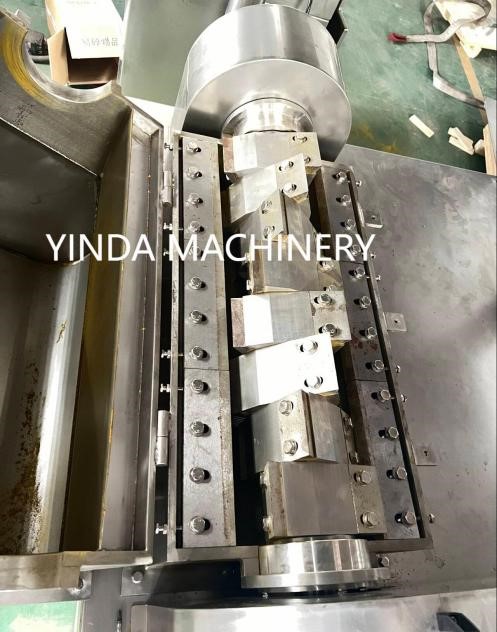
From a practical engineering perspective, the YDCS coarse crusher offers several advantages when handling fish bones:
Strong crushing structure
Fish bones are relatively hard and brittle. The YDCS crusher uses high-strength blades and a robust rotor design, which allows it to break large fish bones efficiently.
Uniform granule output
After coarse crushing, fish bones are typically reduced to 5–20 mm granules, which are ideal for the next grinding step.
High throughput
For seafood processing plants, raw material volume can be quite large. The YDCS crusher is designed for continuous feeding and stable operation, ensuring the upstream production line runs smoothly.
Easy cleaning and maintenance
For food-grade processing, equipment hygiene is important. The structure allows easy access for cleaning and blade inspection.
Once fish bones are crushed into granules, they can be fed into the next stage: the YDWF series Fish Bone Grinding Air Classifier Mill
3- YDWF Series Fish Bone Grinding Air Classifier Mill
After coarse crushing, the next step is to produce fine powder. For fish bone processing, we usually recommend the YDWF Series Air Classifier Mill (ACM Mill).
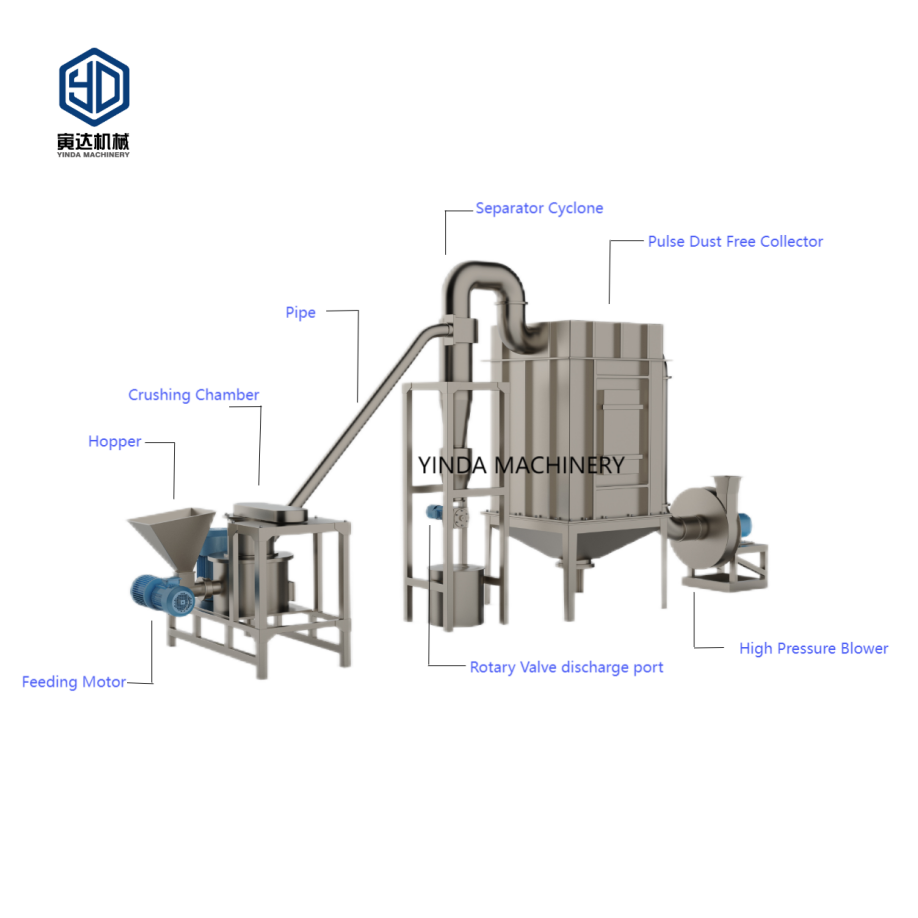
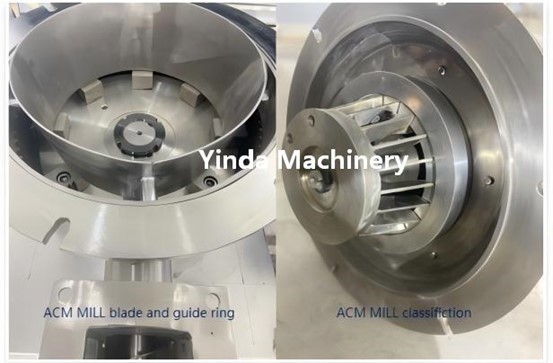
The reason we prefer the ACM mill for fish bone powder production is that it can grind and classify particles at the same time, ensuring consistent powder fineness.
Some key features of the YDWF Series Fish Bone Grinding Air Classifier Mill include:
Integrated grinding and classification
Inside the mill, the grinding rotor and classifier wheel work together. Fine particles pass through the classifier while oversized particles are returned for further grinding.
This system allows manufacturers to achieve stable powder sizes such as 100 mesh, 200 mesh, or even finer.
Adjustable particle size
By adjusting the classifier wheel speed which is also called the VFD system, operators can easily control the final powder fineness without changing screens.
Dust-free and hygienic design
The system usually includes cyclone separators, dust collectors, and negative pressure blower, making it suitable for food-grade processing environments.
High efficiency
Compared with traditional grinding equipment, the ACM mill provides higher grinding efficiency and more consistent powder quality, which is critical for commercial fish bone powder production.
4- Related Equipment Recommendation – YDLH series Ribbon Blender
After fish bone powder is produced, many manufacturers need to mix it with other ingredients, especially in feed, fertilizer, or nutrition product formulations.
For this step, we often recommend the YDLH Series Ribbon Blender.
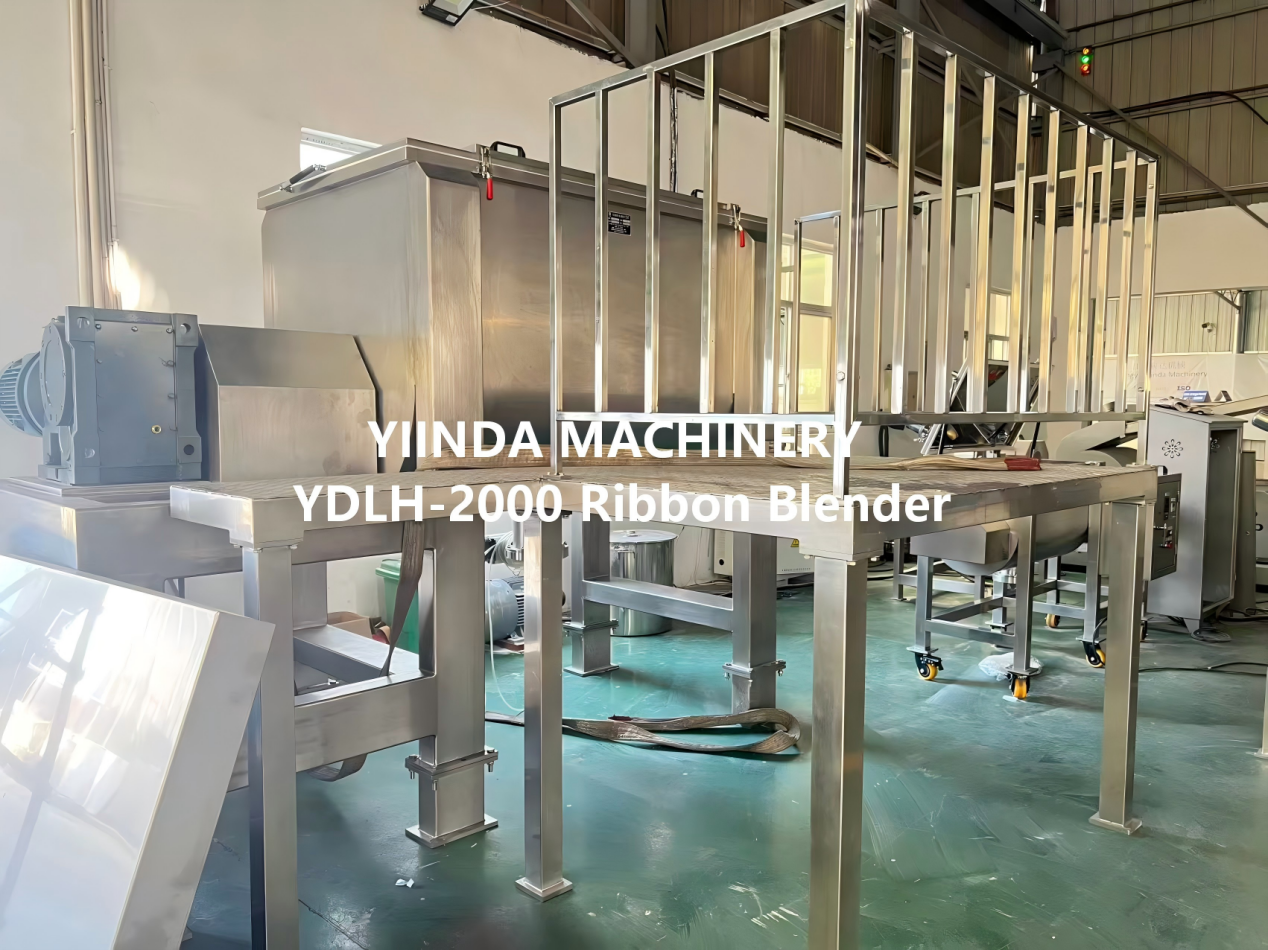
The ribbon blender uses double helical ribbons to move materials both radially and axially, which ensures fast and uniform mixing.
Typical advantages include:
- Uniform mixing performance
- Large batch capacity
- Short mixing time
- Suitable for powders and granules
For example, fish bone powder can be blended with:
- vitamins and mineral premixes
- feed additives
- plant-based powders
- seasoning ingredients
The ribbon blender is a reliable solution when consistent mixing quality is required.
If you are planning to process fish bones into powder, selecting the right equipment configuration is critical.
From my experience, a YDCS Coarse Crusher + YDWF Air Classifier Mill + YDLH Ribbon Blender forms a very practical production solution for fish bone powder processing.
If you would like to learn more about:
- Fish bone pulverizing solutions
- Recommended machine models
- Powder fineness options
- Complete processing lines
Feel free to contact us.
E-mail: dennie@yindamachinery.com
Website: www.yindamachinery.com
WhatsApp/TEL: +8613914192807
At Jiangyin Yinda Machinery, we focus on particle and powder processing systems for the food, chemical, and pharmaceutical industries. I would be happy to discuss your material and help you find the most suitable solution.
Sometimes, a small raw material like fish bone can open up a completely new product opportunity—once it is processed into the right powder form.